
Marketing automation has become a game-changer for businesses looking to streamline their processes and boost efficiency. However, many companies struggle to harness its full potential.
At Tosten Marketing, we’ve seen firsthand how the right approach can transform marketing automation from a mere tool into a powerful growth engine. In this post, we’ll share our top 8 tips to make marketing automation more effective, helping you maximize your ROI and drive better results.
What’s Your Customer’s Journey?
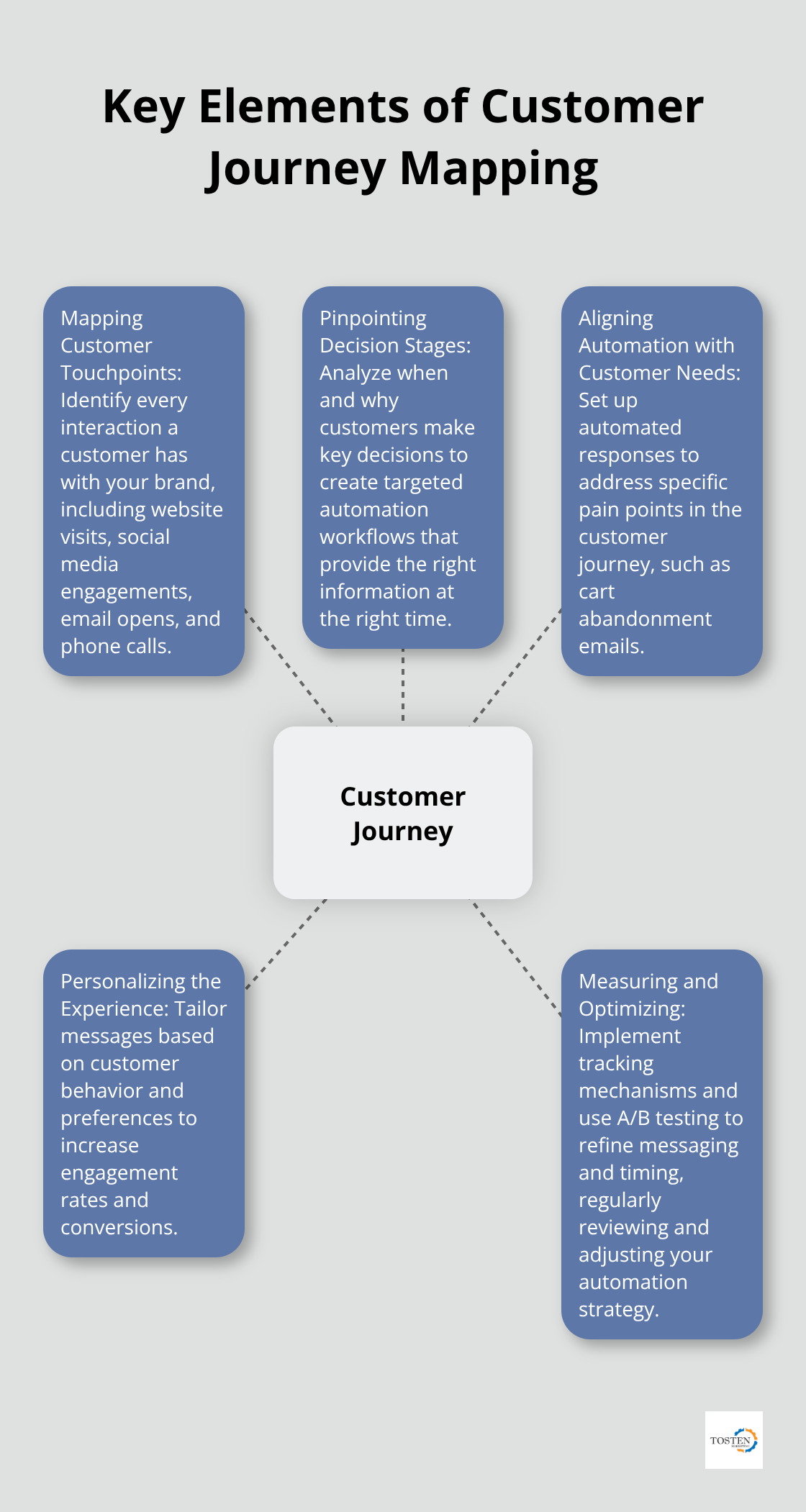
Mapping Customer Touchpoints
Understanding your customer’s journey forms the bedrock of effective marketing automation. It’s not just about sending emails; it’s about crafting a seamless experience that guides potential customers from awareness to purchase (and beyond).
Start by identifying every interaction a customer has with your brand. This includes website visits, social media engagements, email opens, and phone calls. Use tools like Google Analytics to track online behavior and CRM systems to log offline interactions. This comprehensive view helps you spot opportunities for automation and personalization.
Pinpointing Decision Stages
Analyze when and why customers make key decisions. Are they comparing prices? Do they look for educational content? Do they seek social proof? Understanding these pivotal moments allows you to create targeted automation workflows that provide the right information at the right time.
Aligning Automation with Customer Needs
After you map the journey and identify decision points, it’s time to align your automation efforts. For example, if customers often abandon their cart after viewing shipping costs, set up an automated email offering free shipping for orders over a certain amount. This targeted approach addresses a specific pain point in the customer journey.
Personalizing the Experience
The goal is to make each automated interaction feel personal and valuable. Try to tailor your messages based on customer behavior and preferences (e.g., past purchases, browsing history, or demographic information). This level of personalization can significantly increase engagement rates and conversions.
Measuring and Optimizing
Implement tracking mechanisms to measure the effectiveness of your automated touchpoints. Use A/B testing to refine your messaging and timing. Regularly review your customer journey map and adjust your automation strategy based on new insights and changing customer behaviors.
As you move forward with your marketing automation strategy, it’s essential to segment your audience effectively. This segmentation will allow you to create even more targeted and personalized experiences for different customer groups.
How to Segment Your Audience for Maximum Impact
Leverage Data for Precise Segmentation
Effective audience segmentation unlocks the full potential of marketing automation. Divide your audience into distinct groups to create highly targeted campaigns that resonate with each segment’s specific needs and preferences.
Analyze your customer data thoroughly. Look at demographics like age, location, and income, but don’t stop there. Examine behavioral data such as purchase history, website interactions, and email engagement. Tools like Google Analytics and your CRM system provide valuable information for this purpose.
An insurance agency saw a 35% increase in email open rates after they segmented their audience based on policy types and renewal dates. This allowed them to send highly relevant, timely information to each group.
Create Detailed Buyer Personas
Move beyond basic demographics and develop detailed buyer personas. Include job roles, challenges, goals, and preferred communication channels. For B2B companies, consider factors like company size and industry.
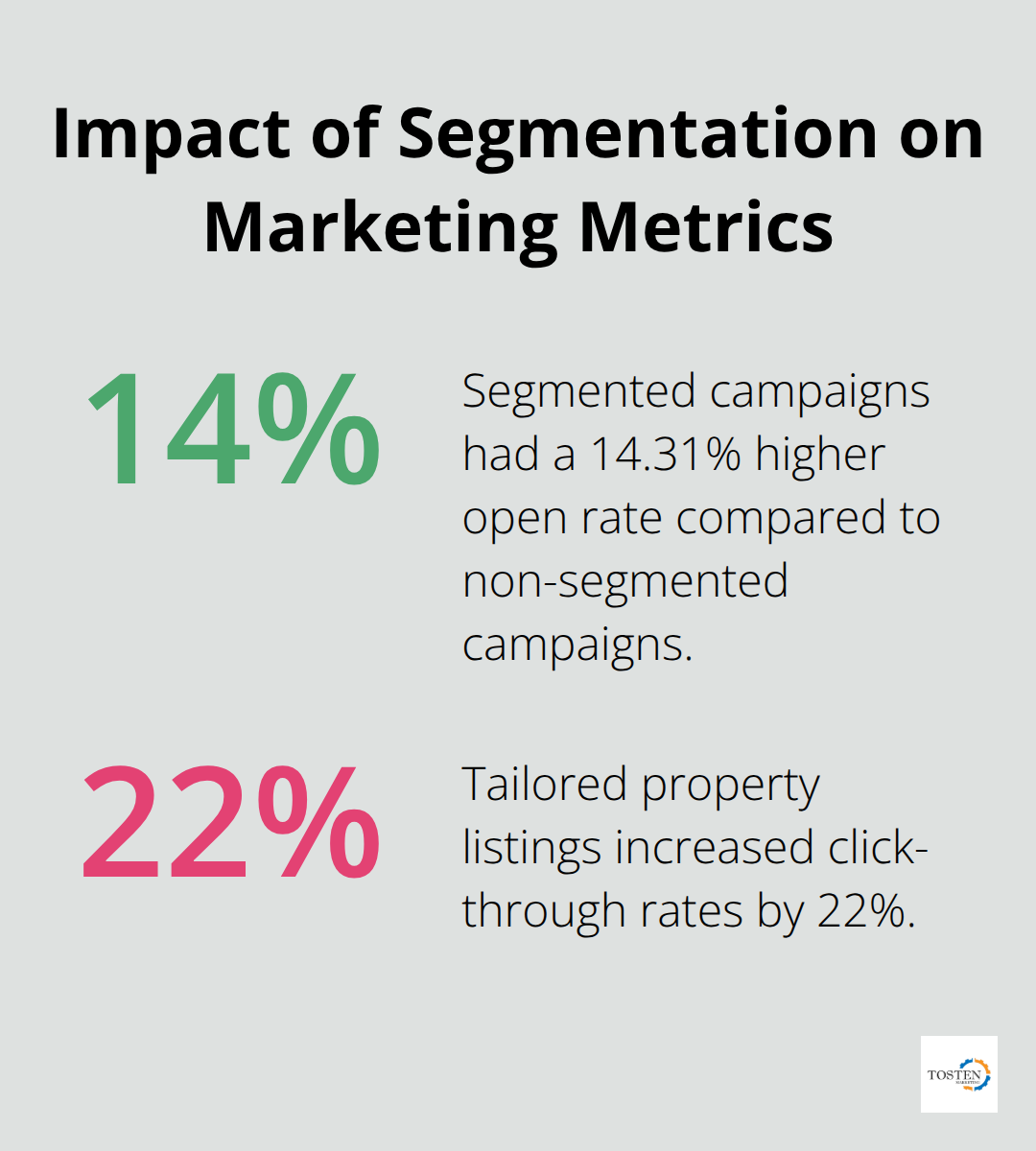
A Mailchimp study found that segmented campaigns had a 14.31% higher open rate compared to non-segmented campaigns. This underscores the importance of understanding your audience deeply.
Tailor Your Messaging
After you segment your audience and create personas, customize your content. This doesn’t require entirely new campaigns for each segment. Instead, adjust key elements like subject lines, offers, and call-to-actions to match each group’s interests and needs.
A real estate agency increased their click-through rates by 22% when they tailored their property listings based on buyers’ preferred neighborhoods and price ranges.
Implement Dynamic Content
Use dynamic content in your emails and on your website to personalize the user experience. This technique allows you to show different content to different segments based on their preferences or behavior.
For example, an e-commerce site might display different product recommendations to first-time visitors versus returning customers (who have a purchase history to draw from).
Continuously Refine Your Segments
Segmentation isn’t a set-it-and-forget-it task. Review and update your segments regularly based on new data and changing customer behaviors. This ongoing refinement ensures your marketing automation remains effective and relevant over time.
As you perfect your audience segmentation, you’ll be well-positioned to implement and optimize powerful marketing automation workflows. These workflows will help you nurture leads, score prospects, and ultimately drive more conversions.
How to Optimize Your Marketing Automation Workflows
Marketing automation workflows can transform a business when designed and implemented effectively. This chapter explores key strategies to enhance your automation processes and drive better results.
Create Powerful Trigger-Based Email Sequences
Trigger-based emails form the foundation of effective marketing automation. These automated messages respond to specific user actions or behaviors. For example, when a potential client downloads a whitepaper, it initiates a series of follow-up emails with related content.
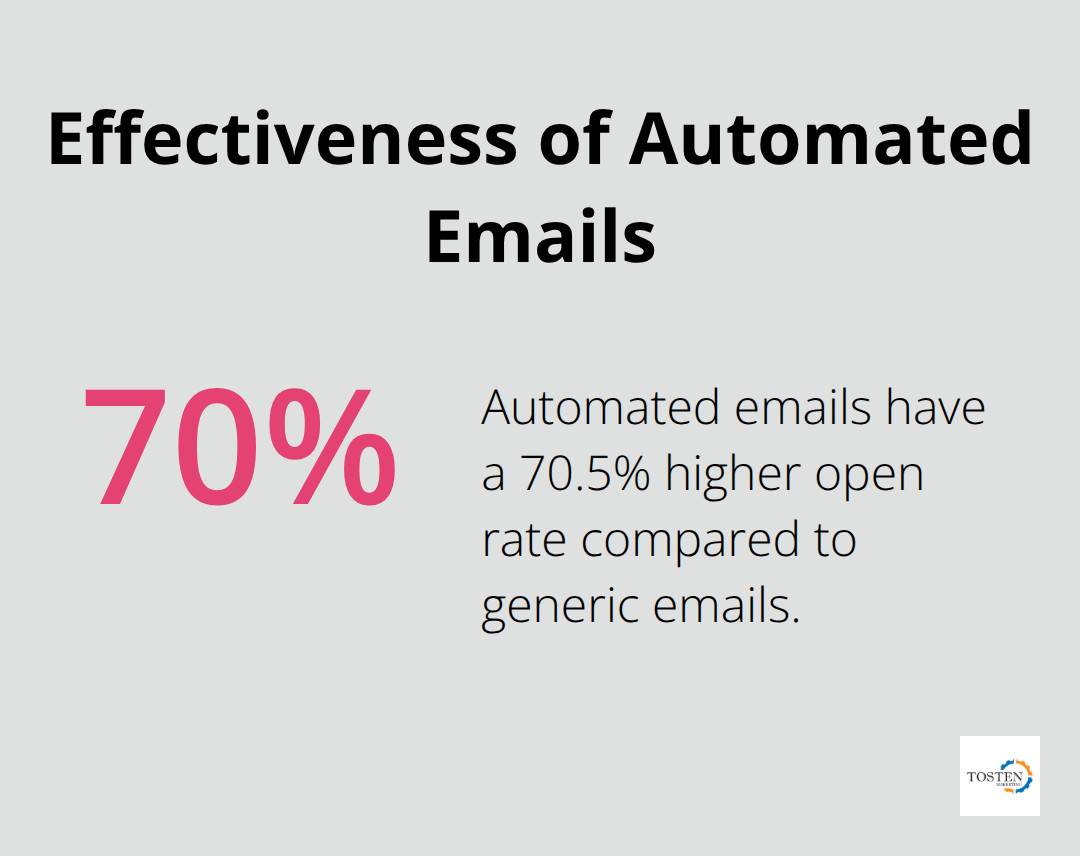
Automated emails have a 70.5% higher open rate compared to generic emails. Automated emails are also 133% more likely to provide relevant messages to subscribers. To implement this strategy:
- Identify key triggers in your customer journey (e.g., newsletter sign-ups, cart abandonment, or periods of inactivity).
- Develop a series of emails for each trigger. (For instance, send a cart abandonment reminder after an hour, followed by a discount offer after 24 hours if the customer hasn’t returned.)
- Ensure each email provides value and guides the customer towards conversion.
Develop a Smart Lead Scoring System
Lead scoring helps prioritize sales efforts by assigning points to leads based on their actions and characteristics. For example, downloading a pricing guide might earn 10 points, while visiting the ‘About Us’ page could be worth 2 points.
To implement an effective lead scoring system:
- Define actions that indicate sales-readiness for your business.
- Assign point values to these actions in your marketing automation system.
- Use negative scoring (e.g., subtract points if a lead hasn’t engaged with emails in six months) to maintain an accurate representation of lead quality.
Integrate Your Marketing Tools Seamlessly
Effective marketing automation requires your tools to communicate with each other. This integration includes your CRM, email marketing platform, social media tools, and analytics software.
To overcome integration challenges:
- Map out all the tools you use and the data each one holds.
- Use integration platforms (like Zapier) or native integrations to connect these tools.
- Ensure data flows seamlessly (e.g., when a lead fills out a website form, the information should automatically update in your CRM and trigger the appropriate email sequence).
Personalize Content Dynamically
Dynamic content personalization enhances user experience by tailoring content based on user data and behavior. This technique allows you to display different content to different segments based on their preferences or past interactions.
Try to implement dynamic content in various ways:
- Customize email content based on the recipient’s industry, job role, or past purchases.
- Adjust website content to reflect the visitor’s interests or browsing history.
- Personalize product recommendations based on previous purchases or viewed items.
Monitor and Refine Your Workflows
Continuous improvement is key to maintaining effective marketing automation workflows. Regular monitoring and refinement ensure your processes remain relevant and impactful.
- Set up tracking for key performance indicators (KPIs) relevant to your automation goals.
- Conduct A/B tests on elements like email subject lines, content, and send times.
- Analyze the results and make data-driven adjustments to your workflows.
- Stay updated on industry trends and new automation features to incorporate into your strategy.
Final Thoughts
Marketing automation transforms businesses when implemented effectively. Our eight tips to make marketing automation more effective provide a roadmap for success. You will create personalized experiences, segment your audience precisely, and optimize your workflows for maximum impact.
Tosten Marketing specializes in helping insurance agencies boost their online visibility and generate more leads. We tailor digital marketing strategies to your specific needs (with over 20 years of experience in the field). Our team commits to helping businesses succeed in the digital landscape.
Visit Tosten Marketing to learn how we can help you implement effective marketing automation strategies. We will work with you to unlock the full potential of marketing automation and drive substantial growth for your business.