

Digital lead generation is the lifeblood of modern businesses. In today’s fast-paced online world, companies need effective strategies to attract and convert potential customers.
At Tosten Marketing, we’ve seen firsthand how the right digital lead generation tactics can transform a business’s growth trajectory. This post will explore proven strategies that deliver results and help you stay ahead in the competitive digital landscape.
What Is Digital Lead Generation?
The Core of Online Customer Acquisition
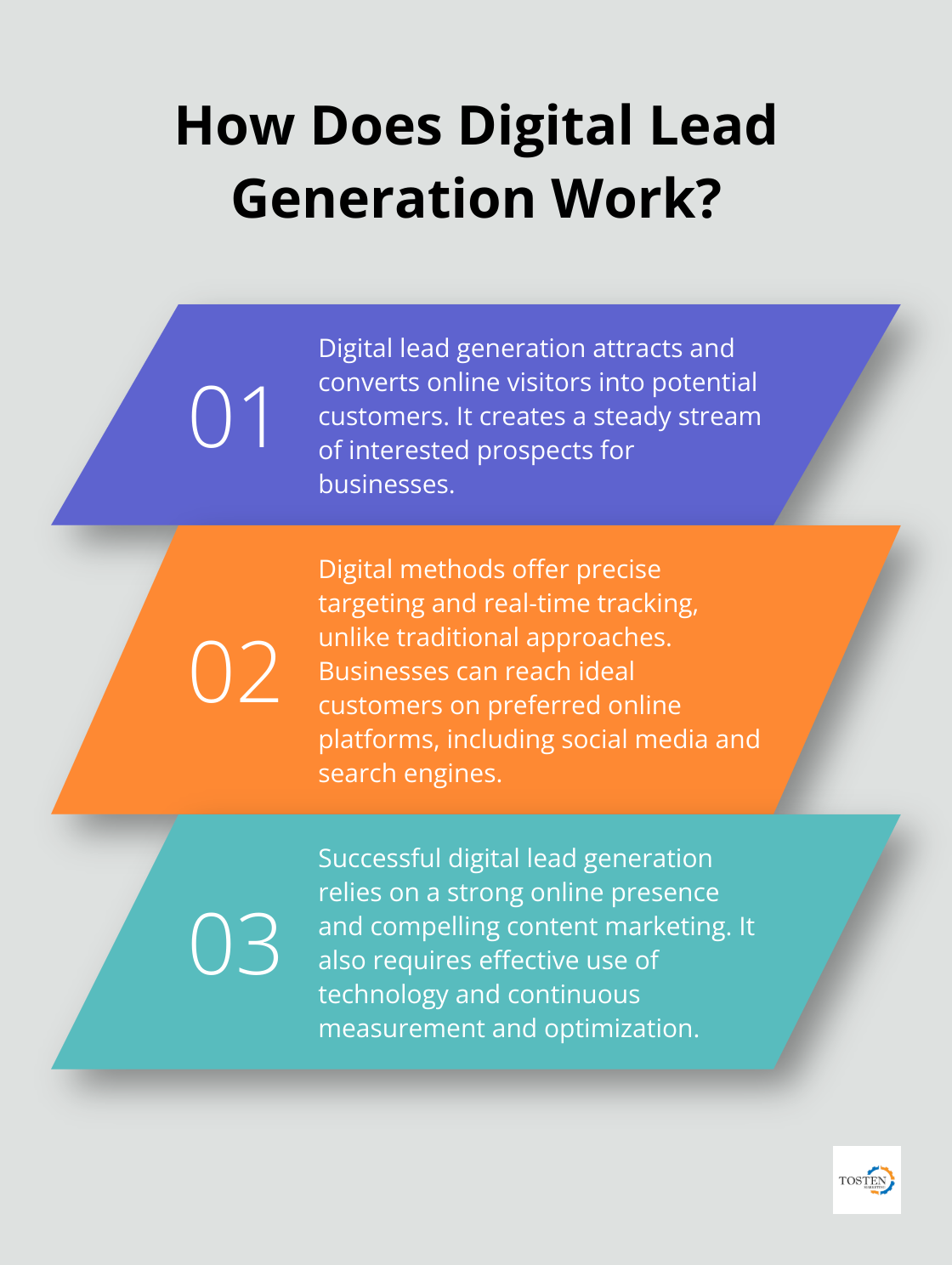
Digital lead generation is the process that attracts and converts online visitors into potential customers. It creates a steady stream of interested prospects for your business. Effective digital lead generation can significantly boost a company’s growth and revenue.
The Digital Edge
Digital lead generation offers precise targeting and real-time tracking, unlike traditional methods. You can reach your ideal customers on their preferred online platforms, whether through social media, search engines, or industry-specific sites. This targeted approach often yields higher quality leads and improved conversion rates.
Essential Elements for Success
Successful digital lead generation relies on several critical components:
- A strong online presence (including a well-designed, optimized website)
- Compelling content marketing
- Effective use of technology
- Continuous measurement and optimization
Harnessing Technology for Results
Technology transforms digital lead generation. Marketing automation tools help nurture leads more effectively. These tools enable personalized messaging at scale, user behavior tracking, and lead scoring based on content interactions.
Tracking and Improving Performance
Real-time measurement and optimization are major advantages of digital lead generation. Tools like Google Analytics provide valuable insights into website performance and user behavior. This data allows you to refine your strategies continuously for better outcomes.
A/B testing landing pages can significantly improve conversion rates.
Digital lead generation extends beyond collecting contact information. It builds relationships and provides value to potential customers throughout their buying journey. The next section will explore specific strategies that can power your digital marketing efforts and drive sustainable growth for your business.
Proven Digital Lead Generation Tactics
At Tosten Marketing, we’ve identified several effective strategies that can boost your lead generation efforts. Let’s explore these tactics that have consistently delivered results for businesses across various industries.
Content Marketing: The Foundation of Digital Lead Gen
Content marketing stands as a cornerstone for attracting and nurturing leads. Eighty-seven percent of B2B marketers say content marketing created brand awareness in the last 12 months. However, success lies not just in creating content, but in crafting the right content.
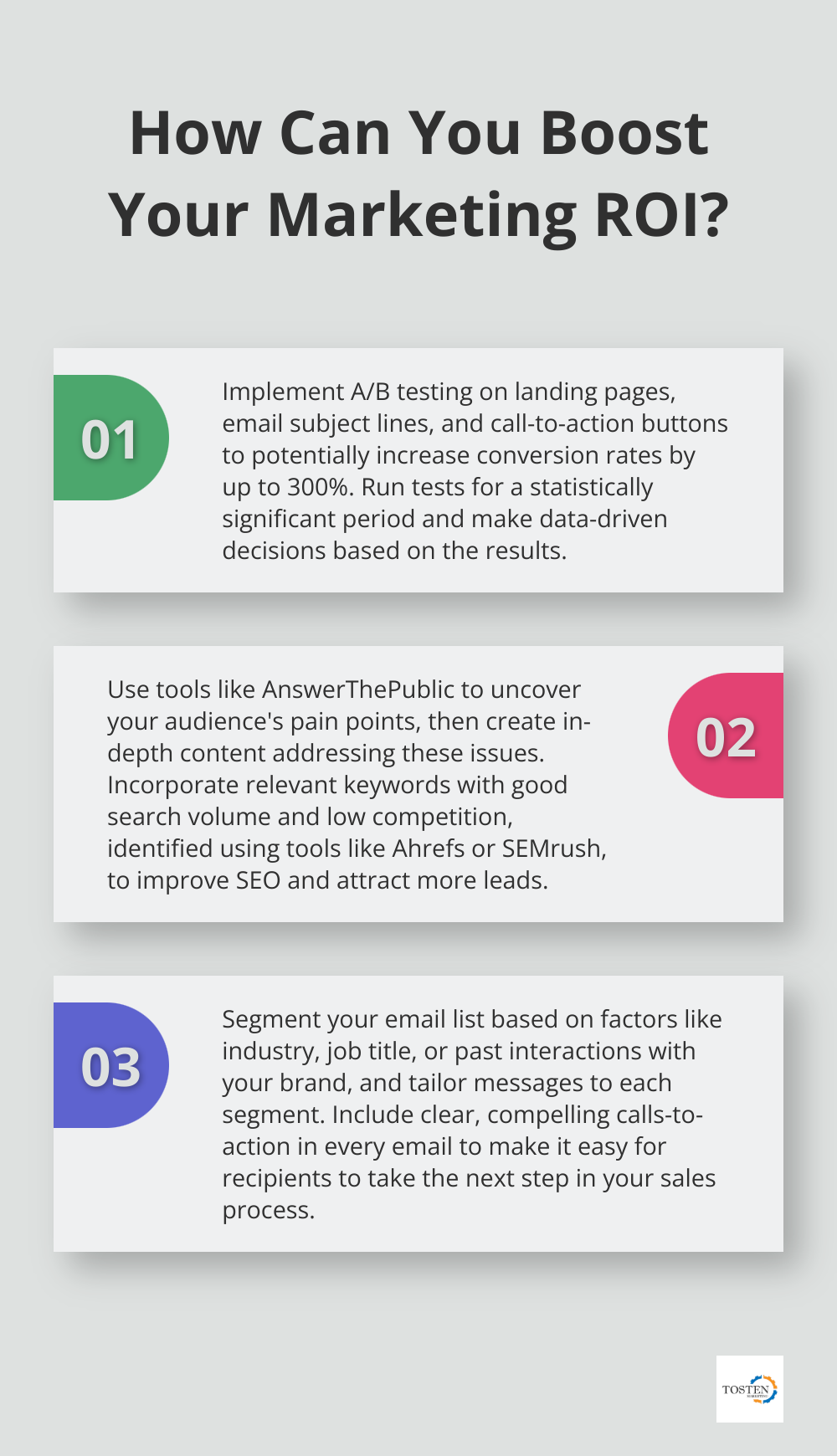
Address your audience’s pain points head-on. Tools like AnswerThePublic can help uncover the questions your potential customers ask. Create in-depth, valuable content that answers these questions. This approach attracts leads and establishes your brand as an industry authority.
Search engine optimization (SEO) plays a vital role in content marketing. Use tools like Ahrefs or SEMrush to identify relevant keywords with good search volume and low competition. Incorporate these keywords naturally into your content, meta descriptions, and headers for maximum impact.
Social Media: A Lead Generation Goldmine
Social media platforms offer rich opportunities for lead generation. LinkedIn, in particular, excels for B2B lead generation. HubSpot reports that LinkedIn is 277% more effective at generating leads than Facebook and Twitter.
Effective social media lead generation requires more than just posting content. Engage with your audience actively. Respond to comments, participate in relevant groups, and share valuable insights. Social listening tools (such as Hootsuite or Sprout Social) allow you to monitor conversations about your brand and industry, enabling timely and helpful interactions.
Email Marketing: A Proven Performer
Email marketing continues to deliver impressive results for lead generation. Campaign Monitor states that email marketing generates $44 for every $1 spent, an astounding 4400% ROI.
Personalization is key to successful email marketing. Segment your email list based on factors like industry, job title, or past interactions with your brand. Tailor your messages to each segment. Use A/B testing to optimize your subject lines, content, and calls-to-action.
Include clear, compelling calls-to-action in every email. Whether it’s downloading a whitepaper, signing up for a webinar, or scheduling a consultation, make it easy for recipients to take the next step.
PPC Advertising: Quick Results with Precision
Pay-per-click (PPC) advertising can deliver rapid results when executed effectively. While Google Ads remains dominant, consider other platforms like Bing Ads or industry-specific ad networks.
Targeting is crucial for PPC success. Utilize demographic, geographic, and behavioral targeting options to ensure your ads reach the most relevant audience. Pay close attention to your ad copy and landing pages. WordStream reports that the top 10% of landing pages convert at 11.45% or higher, emphasizing the importance of compelling ad copy and landing pages that resonate with your target audience.
Webinars and Virtual Events: Real-Time Lead Engagement
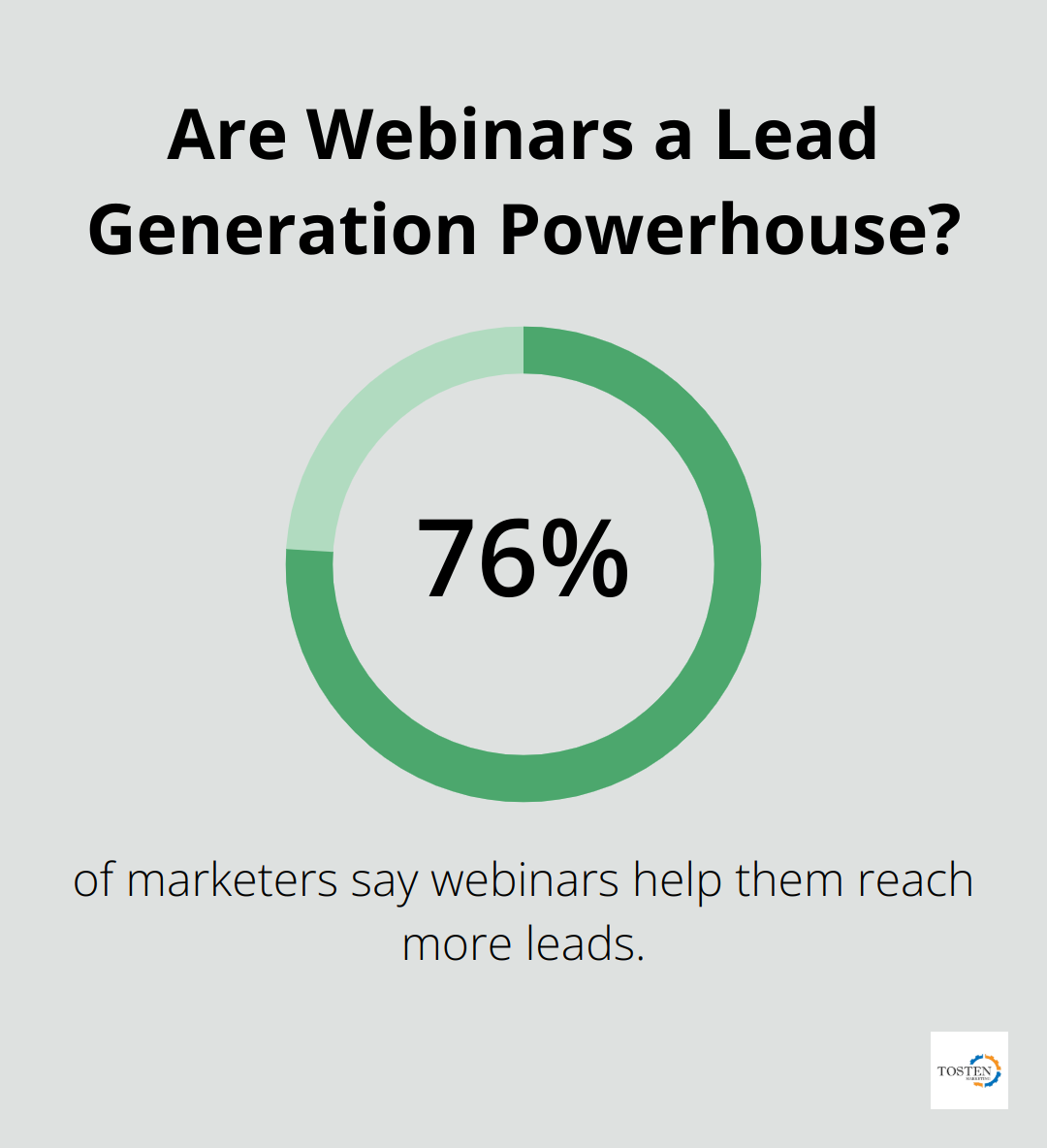
Webinars and virtual events have gained popularity as lead generation tools, especially in the B2B space. ON24 reports that 76% of marketers say webinars help them reach more leads.
When planning a webinar, select topics that address your audience’s key challenges or interests. Promote your webinar through multiple channels, including email, social media, and your website. During the event, provide valuable, actionable information, and include opportunities for audience interaction.
Follow up with attendees promptly after the webinar. Send additional resources related to the webinar topic, and invite them to take the next step in your sales process.
As we move forward, it’s important to understand how to measure and optimize these lead generation efforts. The next section will explore key performance indicators and tools that can help you track and improve your digital lead generation strategies.
How to Measure and Optimize Lead Generation
Key Performance Indicators (KPIs) for Lead Generation
Effective measurement of lead generation efforts requires focus on the right metrics. Essential KPIs to track include:
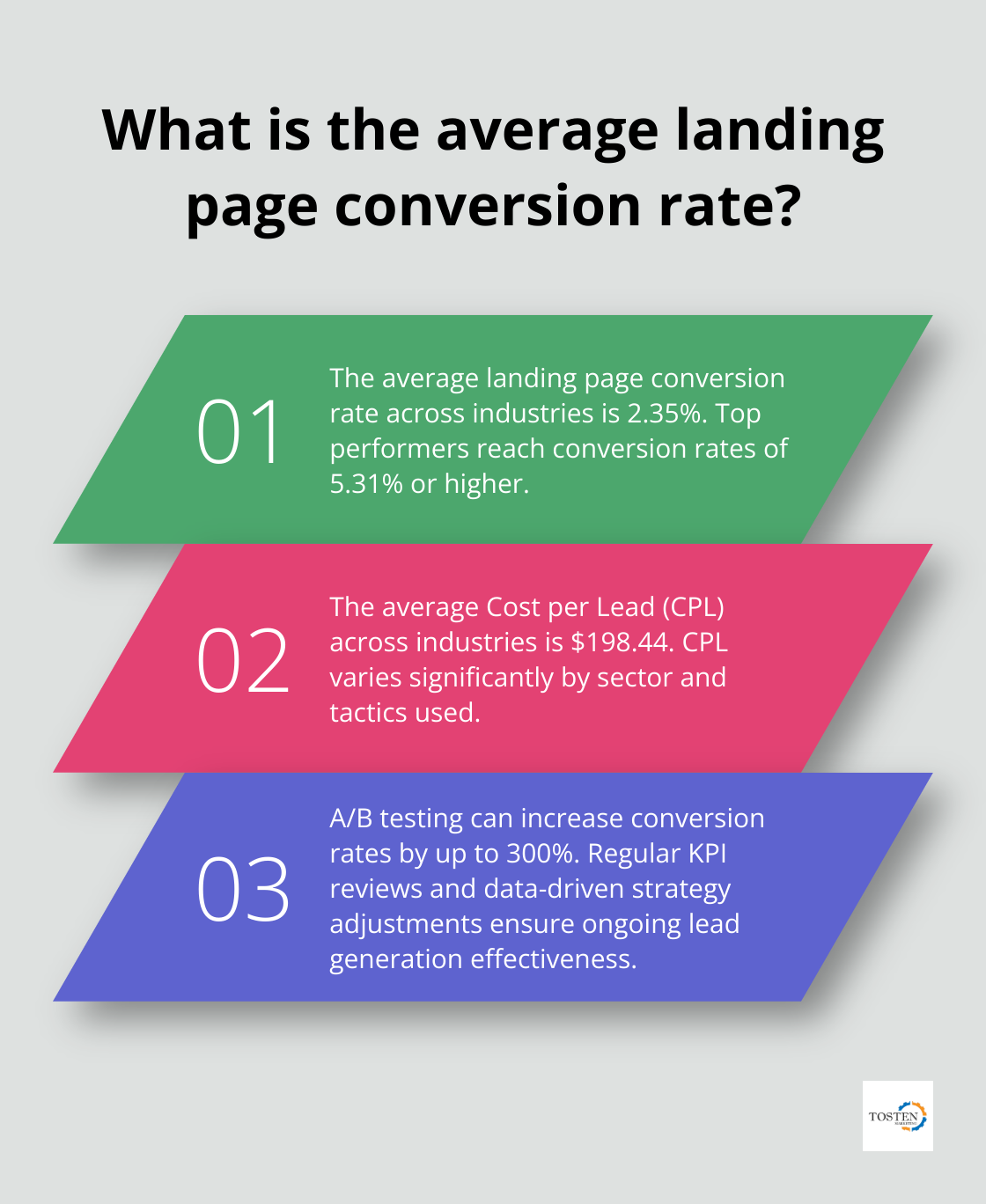
- Conversion Rate: This measures the percentage of visitors who take a desired action (e.g., form completion or purchase). The average landing page conversion rate across industries is 2.35%, with top performers reaching 5.31% or higher.
- Cost per Lead (CPL): This metric reveals the expense of acquiring each lead. The average CPL across industries is $198.44, but varies significantly by sector and tactics.
- Lead Quality Score: Assign scores to leads based on factors like demographics, engagement level, and conversion likelihood. This prioritizes follow-ups and improves efficiency.
- Time to Conversion: Tracking the duration for a lead to move through your funnel indicates nurturing process effectiveness.
- Return on Investment (ROI): Calculate the revenue generated from leads against acquisition costs to determine profitability.
Tools for Tracking and Analyzing Lead Generation Data
Effective KPI measurement requires the right tools. Consider these powerful options:
- Google Analytics: This free tool provides insights into website traffic, user behavior, and conversion rates.
- HubSpot: Offers comprehensive marketing, sales, and CRM tools with robust lead tracking and nurturing features.
- Salesforce: A powerful CRM that tracks leads from initial contact through conversion and beyond.
- Hotjar: Provides heatmaps and user recordings to understand website visitor interactions and identify potential lead generation roadblocks.
- SEMrush: Offers excellent tools for tracking PPC and social media performance (crucial for many lead generation strategies).
Continuous Improvement Through A/B Testing
A/B testing (or split testing) optimizes lead generation efforts. Follow these steps for effective testing:
- Identify Elements to Test: Select components like email subject lines, landing page layouts, or call-to-action buttons.
- Create Variations: Develop two versions (A and B) of the chosen element, changing only one variable at a time.
- Split Your Audience: Randomly divide your audience between the two versions.
- Analyze Results: Use analytics tools to determine which version performed better.
- Implement and Iterate: Apply the winning version and move to test another element.
A/B testing can increase conversion rates by up to 300%. Run tests for a statistically significant period and make data-driven decisions.
Optimization as an Ongoing Process
The digital landscape evolves constantly, and today’s effective strategies might not work tomorrow. Regular KPI reviews, data-driven strategy adjustments, and continuous testing ensure lead generation efforts remain effective and drive business growth.
Final Thoughts
Digital lead generation has transformed modern business growth. Content marketing, SEO, social media engagement, email campaigns, PPC advertising, and virtual events all play vital roles in attracting and nurturing potential customers. These strategies require constant adaptation to the evolving digital landscape for long-term success. Continuous measurement and optimization through KPI tracking, analytics tools, and A/B testing help refine strategies and maintain a competitive edge.
Successful implementation of digital lead generation tactics starts with an assessment of current efforts and identification of improvement areas. Focus on one or two strategies initially, then expand your approach as you gain insights and see results. Consistency and patience prove essential, as effective lead generation demands ongoing effort and refinement.
Tosten Marketing specializes in boosting online visibility and generating high-quality leads for insurance agencies. We offer tailored strategies that drive results, including custom-built websites, ongoing SEO, and social media management. Our comprehensive solutions enhance digital lead generation efforts, backed by over two decades of experience in digital marketing.