
At Tosten Marketing, we know that measuring SEO performance is key to digital success.
SEO performance marketing goes beyond simply tracking rankings. It’s about understanding how your efforts translate into real business results.
In this post, we’ll explore the essential metrics, tools, and strategies for evaluating your SEO performance effectively.
Key SEO Performance Metrics to Track
SEO performance marketing requires a comprehensive understanding of various metrics that indicate success. These indicators not only show how well your website performs in search engines but also how effectively it converts visitors into customers.
Organic Traffic Growth
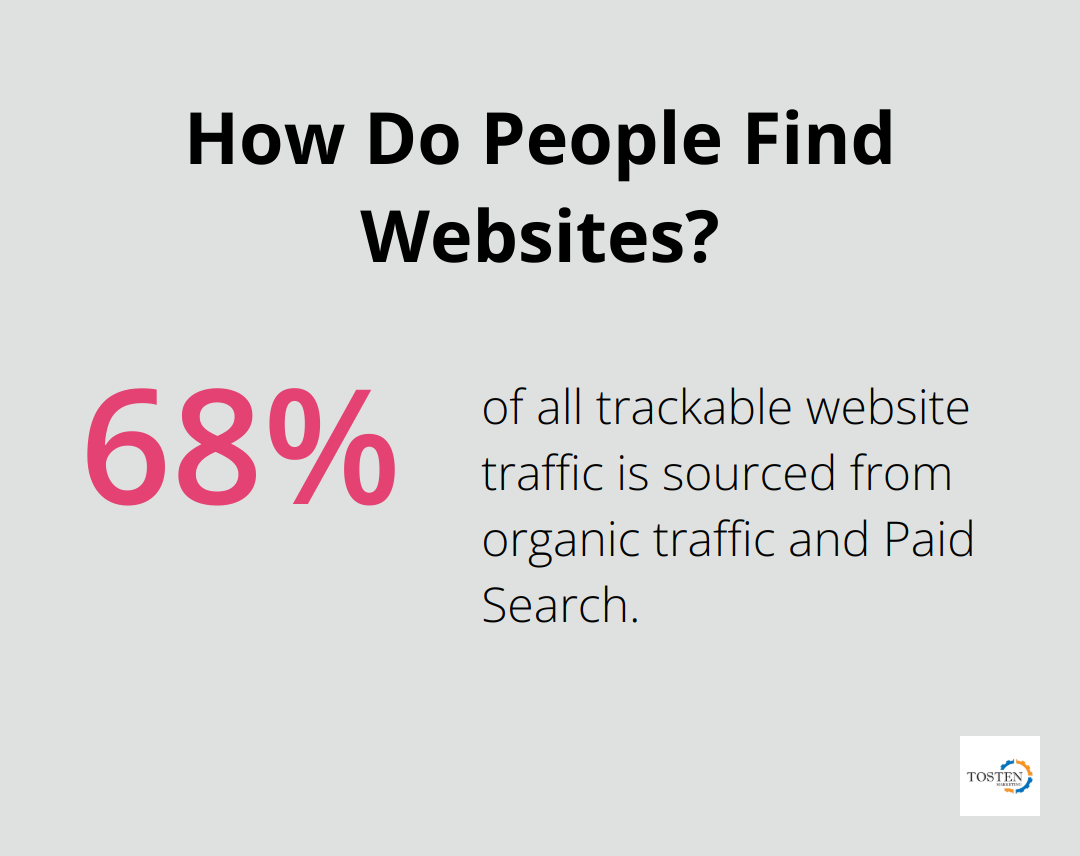
Organic traffic represents the number of visitors coming to your site through unpaid search results. A study by BrightEdge reveals that 68% of all trackable website traffic is sourced from organic traffic and Paid Search, vastly exceeding all other channels, including Display and Social Media. This metric should be tracked month-over-month and year-over-year to identify trends and seasonal fluctuations. A steady increase in organic traffic often signals effective SEO strategies.
Keyword Rankings
Keyword rankings remain relevant (though not the sole focus) as they demonstrate your website’s visibility for specific search terms. It’s essential to track rankings for keywords that drive conversions, not just high-volume terms. A Backlinko study found that the #1 result in Google’s organic search results has an average click-through rate of 31.7%, highlighting the importance of pushing valuable keywords to top positions.
Conversion Rates
While traffic is important, conversions truly matter. Whether it’s lead form submissions, phone calls, or online purchases, measuring how many visitors take desired actions on your site is critical. According to WordStream, the average conversion rate for websites is around 2.35%. However, top-performing websites see rates of 11% or higher. Continuous optimization can help push conversion rates above industry averages.
User Engagement Metrics
Bounce rate and time on page serve as crucial indicators of content quality and user satisfaction. A high bounce rate (over 70% for most industries) may signal that visitors don’t find what they need. Conversely, a longer time on page often indicates engaging content. Contentsquare’s 2021 Digital Experience Benchmark report states that the average time spent on a page across industries is 54 seconds. Creating compelling, relevant content can help surpass these benchmarks and keep visitors engaged.
Local SEO Metrics
For businesses with a physical presence, local SEO metrics are vital. These include Google My Business insights (views, clicks, calls), local pack rankings, and citation consistency across directories. Monitoring these metrics helps improve visibility in local search results and attracts nearby customers.
These key metrics work together to provide a comprehensive view of SEO performance and guide strategic decisions for ongoing improvement. The next section will explore the essential tools that help track and analyze these metrics effectively.
Essential Tools for SEO Performance Tracking
At Tosten Marketing, we use a suite of powerful tools to measure and analyze SEO performance effectively. These tools provide invaluable insights that drive our strategies and help our clients achieve remarkable results.
Google Analytics: The Foundation of Web Analytics
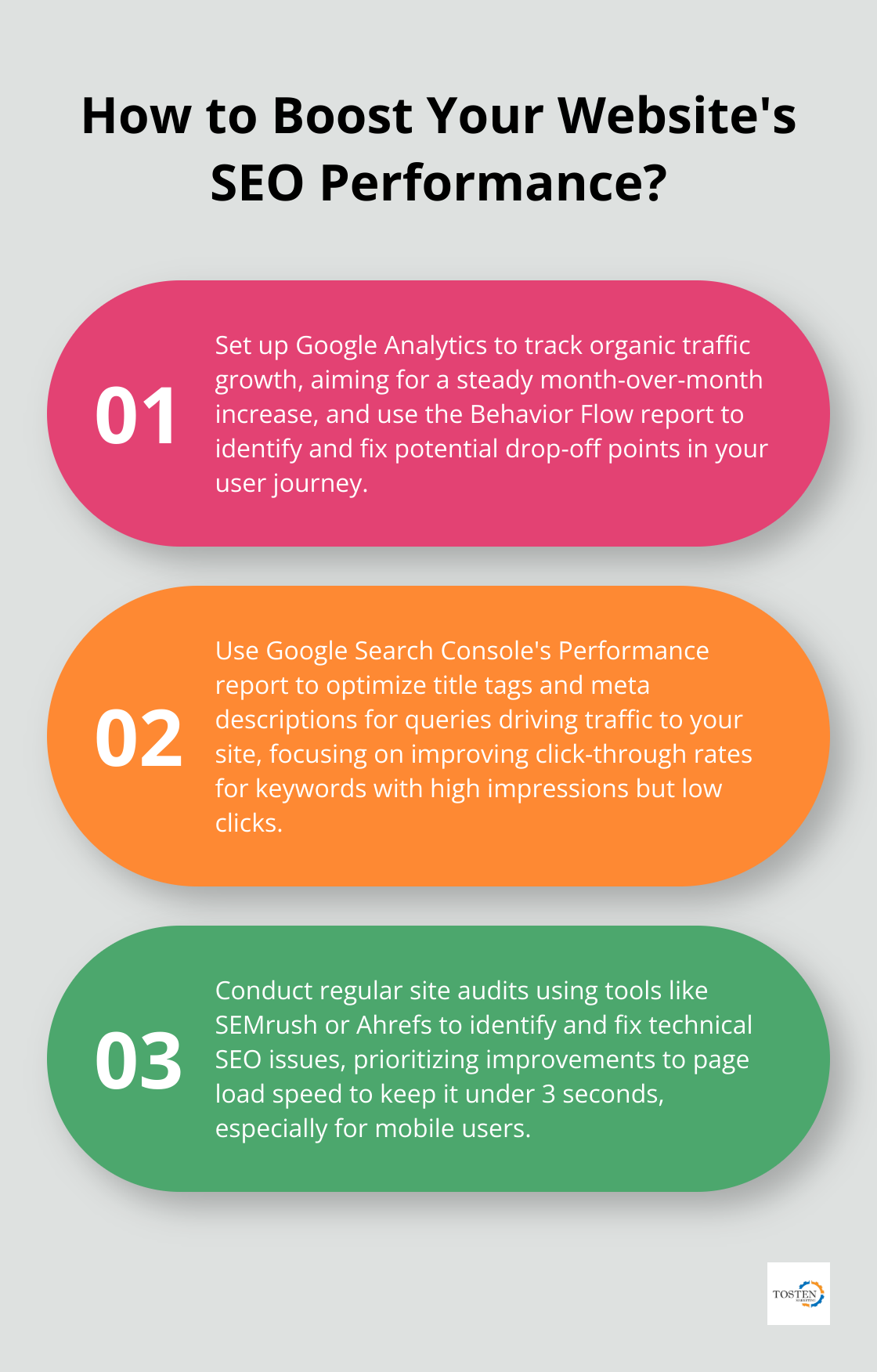
Google Analytics remains the cornerstone of SEO performance tracking. This tool helps improve SEO by tracking website performance, collecting visitor data, and assessing marketing efforts. We value its ability to segment organic traffic, which allows us to isolate and analyze SEO-driven visits. The Behavior Flow report proves especially useful, as it shows how users navigate through your site and identifies potential drop-off points.
Google Search Console: Direct Insights from Google
Google Search Console (GSC) provides data straight from the source. It helps us understand how Google views your site and identifies technical issues that may impact your SEO performance. The Performance report in GSC shows which queries drive traffic to your site, along with click-through rates (CTR) for each. This data helps pinpoint opportunities for title tag and meta description optimization.
Advanced SEO Tools: SEMrush and Ahrefs
While Google’s free tools excel, professional SEO often requires more advanced capabilities. SEMrush and Ahrefs are two industry-leading platforms that offer comprehensive SEO analysis.
SEMrush excels in competitive analysis and keyword research. Its Position Tracking feature allows you to monitor your rankings for specific keywords over time, while the Site Audit tool helps identify technical SEO issues.
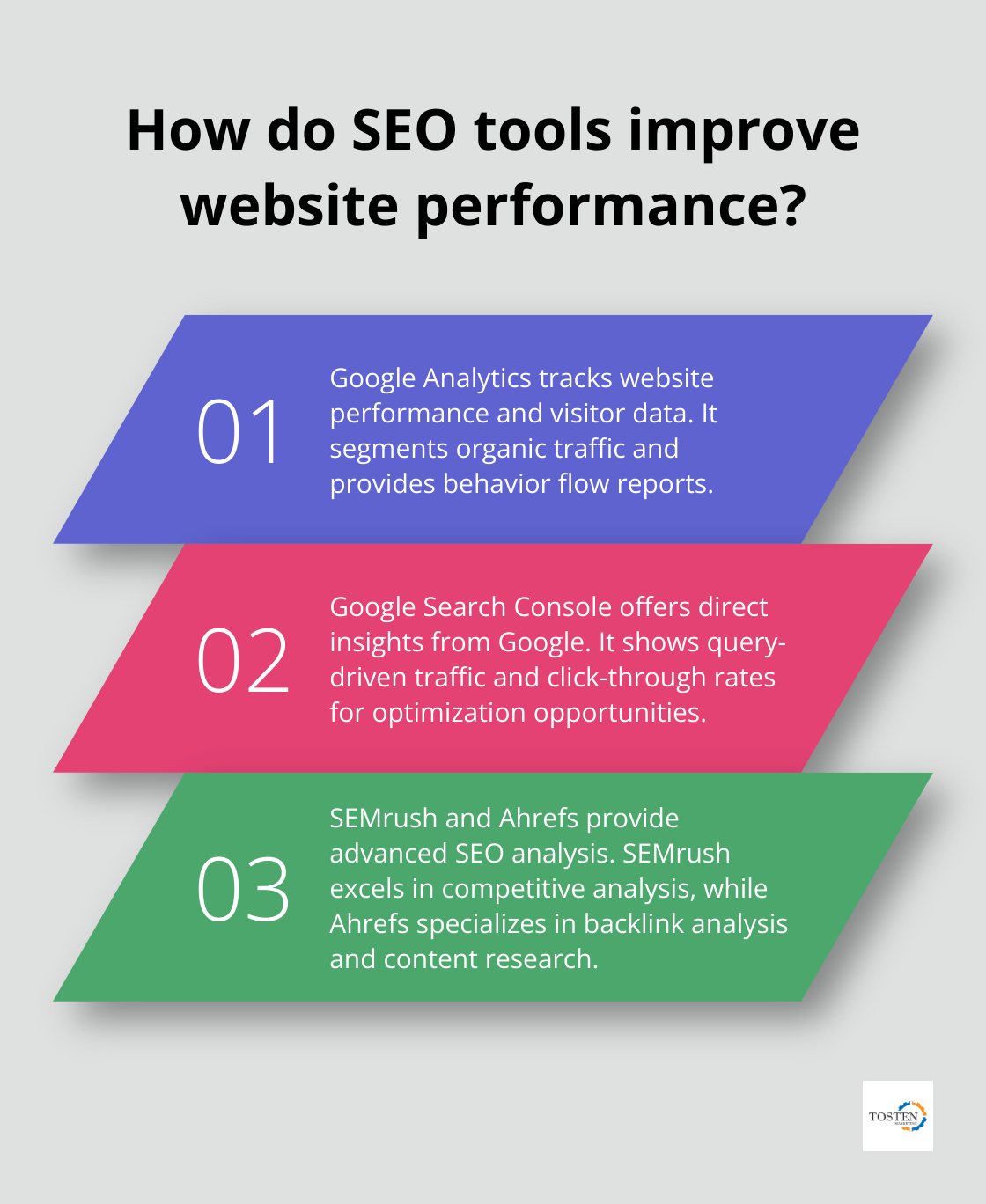
Ahrefs stands out in backlink analysis and content research. Its Content Explorer feature helps identify top-performing content in your niche, providing inspiration for your own content strategy. The Ahrefs Rank Tracker offers detailed insights into your keyword rankings (including SERP feature tracking).
Leveraging Tools for Maximum Impact
While these tools are powerful, they require expertise to use effectively. That’s where partnering with an experienced agency like Tosten Marketing can make a significant difference. We use these tools daily to drive results for our clients, combining data-driven insights with years of industry experience.
The next section will explore how to interpret the data from these tools to gain actionable insights and improve your organic search marketing strategy.
Turning SEO Data into Action
Identify Your Content Champions
Start by finding your top-performing pages. These pages drive the most organic traffic, have the highest conversion rates, or rank for valuable keywords. A study by Ahrefs shows that only 1.94% of all pages get between one and ten monthly search visits from Google. Focus on understanding what makes these pages successful. Is it the content quality, the keyword targeting, or perhaps the user experience? Apply these factors to other pages to boost overall site performance.
Decode User Behavior
User behavior metrics (like bounce rate, time on page, and pages per session) offer valuable insights into content engagement. A high bounce rate might indicate a mismatch between user intent and your content. CXL Institute reports that the average click-through rate across all industries is 6.64% for search. If your rate is significantly lower, reassess your content strategy or page design.
Pay attention to your site’s internal linking structure. Pages with high exit rates might benefit from strategic internal links to keep users engaged. Google Analytics’ Behavior Flow report can help you visualize user journeys and identify where you lose visitors.
Uncover Technical Roadblocks
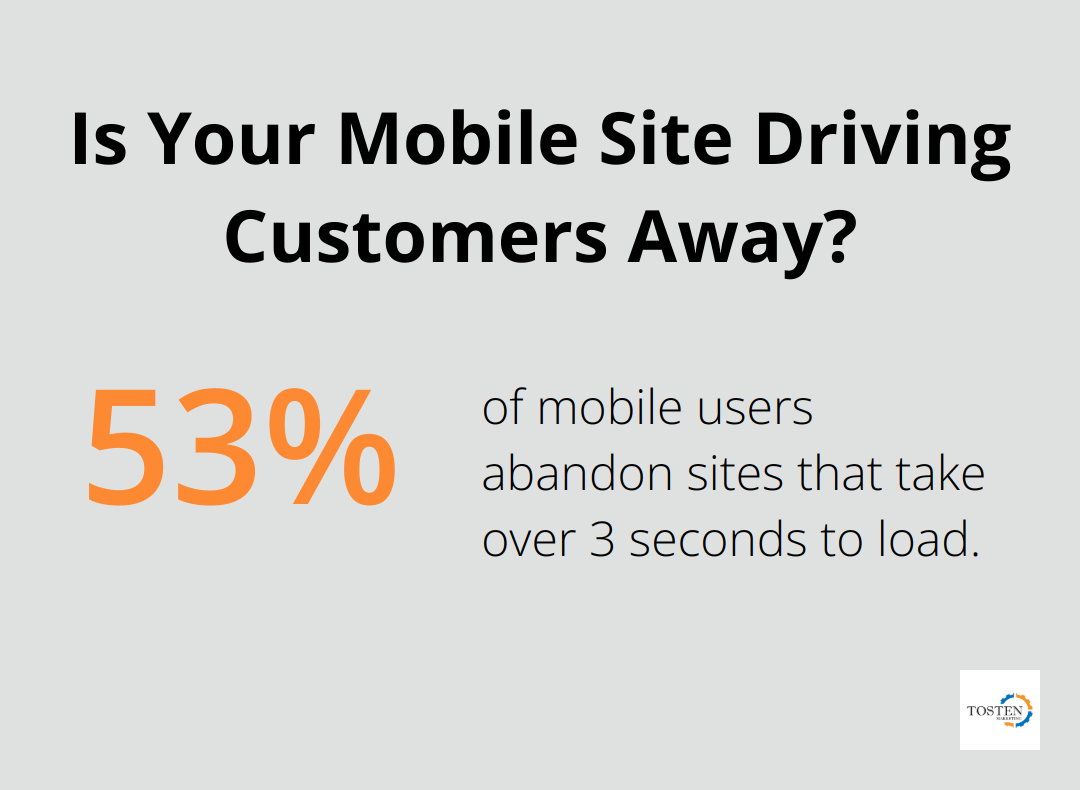
Technical SEO issues can severely hamper your site’s performance. Regular site audits are essential. Common issues to watch for include slow page load times, mobile responsiveness problems, and crawl errors. Given that 53% of mobile users abandon sites that take over 3 seconds to load, improving site speed should be a priority.
Use Google Search Console to identify pages with crawl errors or low impressions despite targeting valuable keywords. These pages might have technical issues preventing them from ranking well.
Learn from the Competition
Competitor analysis is not about copying; it’s about learning and improving. Tools like SEMrush or Ahrefs allow you to see which keywords your competitors rank for that you don’t. This gap analysis can reveal new content opportunities or areas where you need to improve existing content.
Look at your competitors’ backlink profiles. Are there high-quality sites linking to them but not to you? These could be potential link-building opportunities.
SEO is an ongoing process. Regular review and action on your data is key to staying ahead in the ever-evolving search landscape. While many tools exist, partnering with an experienced agency like Tosten Marketing can make a significant difference in interpreting and acting on SEO data effectively.
Final Thoughts
SEO performance marketing requires constant attention and adaptation to stay competitive in the digital landscape. Regular monitoring of key metrics provides valuable insights into effective strategies and areas for improvement. A holistic approach balances multiple factors, including organic traffic growth, keyword rankings, conversion rates, user engagement, and local SEO indicators.
The power of SEO performance marketing lies in the ability to adapt based on collected data. As search algorithms and user behaviors change, strategies must evolve accordingly. Insights gained from performance metrics help refine content, improve technical aspects, and adjust overall SEO approaches.
Tosten Marketing specializes in helping insurance agencies boost online visibility and generate leads (with over two decades of experience). Our comprehensive approach includes custom-built websites, ongoing SEO optimization, and tailored content strategies. Partnering with Tosten Marketing provides access to expert insights and proven strategies that elevate SEO performance and drive real business results.