
At Tosten Marketing, we often field questions about SEO and SEM marketing. These two strategies are cornerstones of digital marketing, but they’re not interchangeable.
Understanding the differences between SEO and SEM is key to crafting an effective online presence. In this post, we’ll break down both approaches and highlight their unique strengths.
What is SEO and How Does it Work?
Search Engine Optimization (SEO) transforms an insurance agency’s online presence. At Tosten Marketing, we witness this transformation firsthand.
The Mechanics of SEO
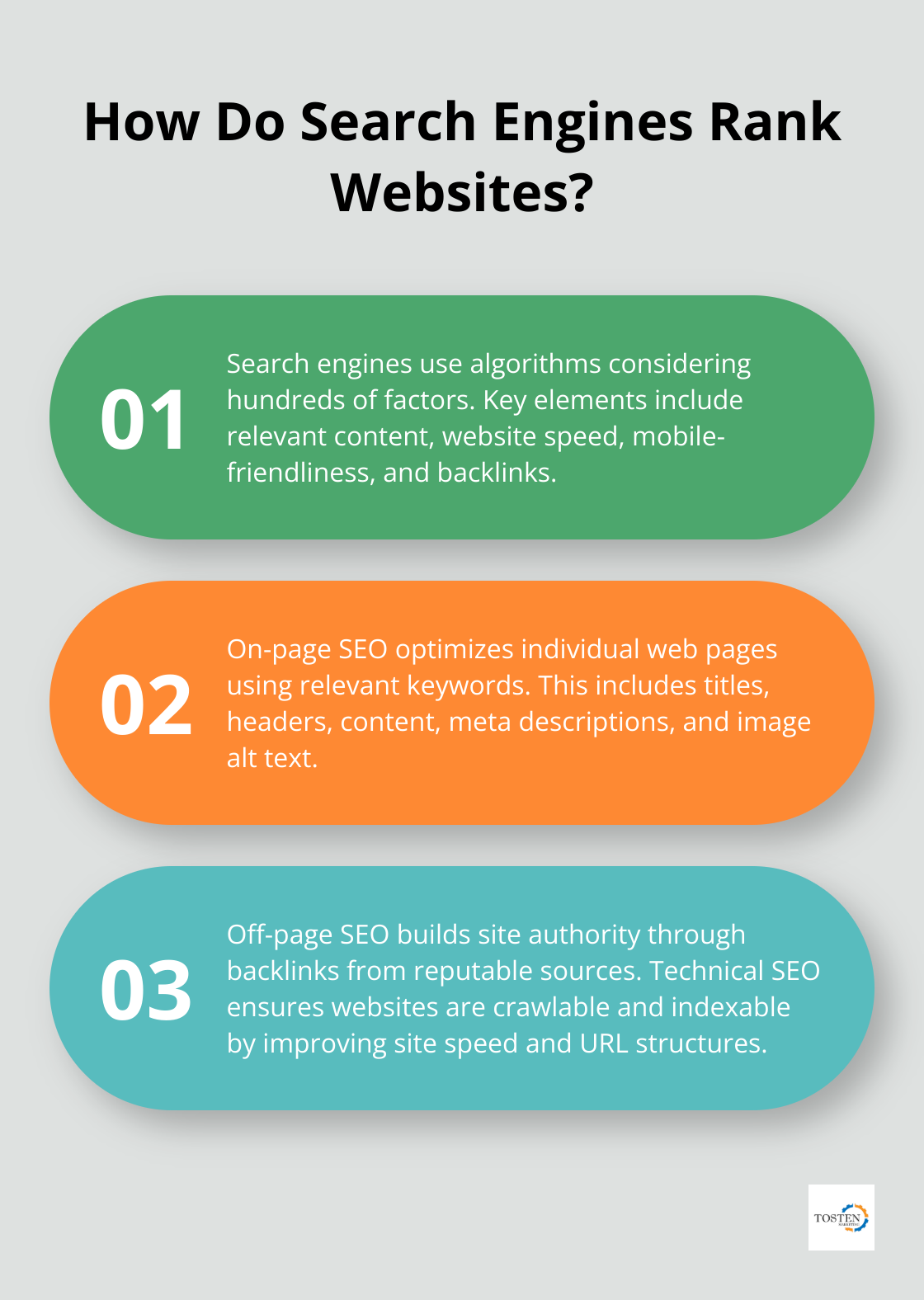
SEO aligns your website’s content and structure with search engine algorithms. These algorithms consider hundreds of factors when ranking websites. Key elements include relevant content, website speed, mobile-friendliness, and backlinks from reputable sources.
On-Page SEO
On-page SEO optimizes individual web pages. This includes:
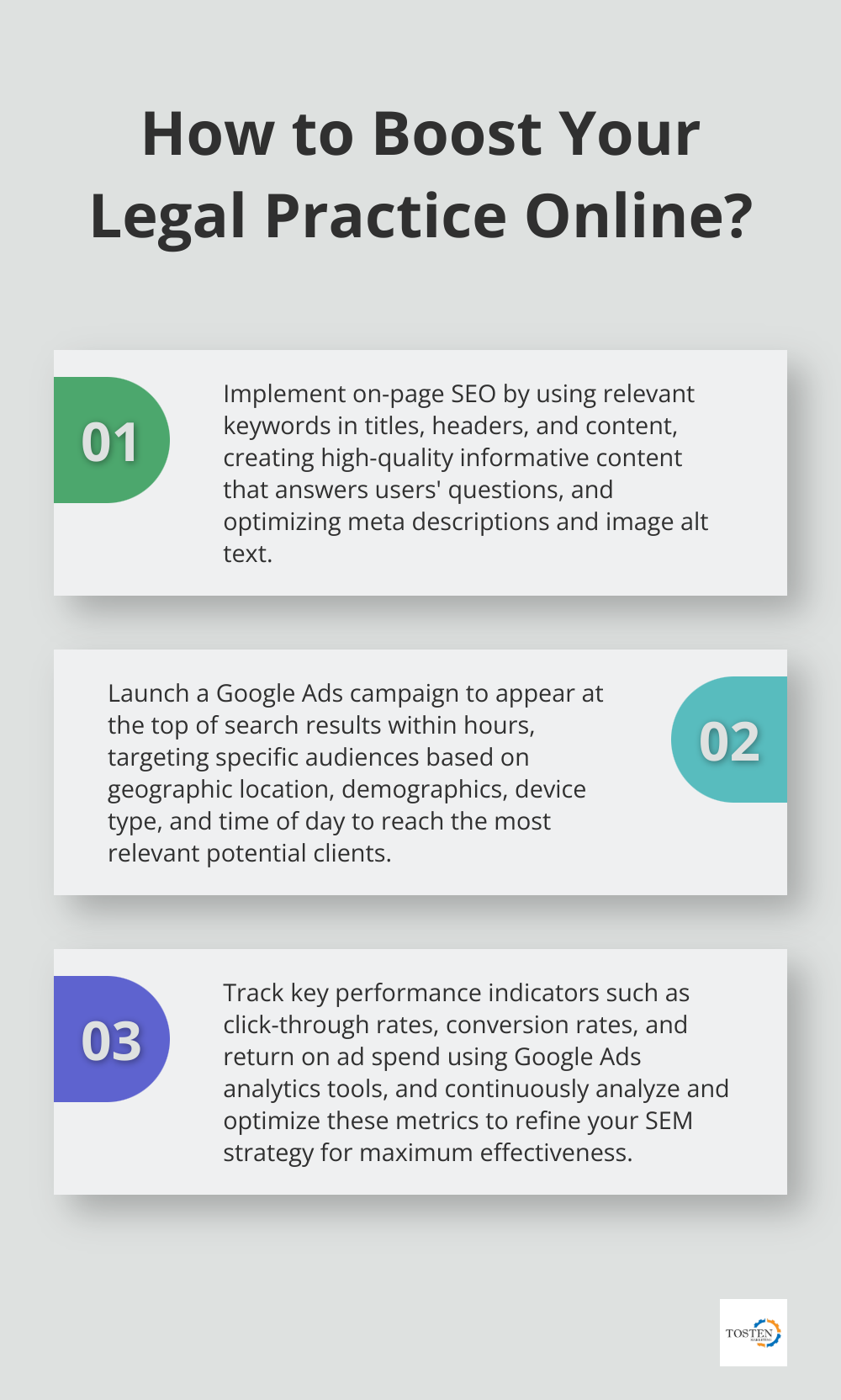
- Using relevant keywords in titles, headers, and content
- Creating high-quality, informative content that answers users’ questions
- Optimizing meta descriptions and image alt text
Off-Page SEO
Off-page SEO builds your site’s authority through backlinks. Backlinko has compiled a comprehensive list of Google’s ranking factors, which includes the importance of backlinks.
Technical SEO
Technical SEO ensures your website is crawlable and indexable by search engines. This includes:
- Improving site speed
- Implementing proper URL structures
- Creating XML sitemaps
Long-Term Benefits of SEO
SEO doesn’t provide instant results, but its benefits compound over time. For insurance agencies, SEO leads to sustained organic traffic growth. This translates to more leads and potential clients finding your services when they need them most.
Measuring SEO Success
To gauge SEO effectiveness, track key metrics like organic traffic, keyword rankings, and conversion rates. Tools like Google Analytics and Google Search Console provide valuable insights into your website’s performance in search results.
The Role of Content in SEO
High-quality, relevant content drives SEO success. For insurance agencies, this could mean creating informative articles about different types of coverage or explaining complex insurance terms.
As we move from SEO to SEM, it’s important to understand how these two strategies complement each other in a comprehensive digital marketing approach.
What is SEM and How Can It Boost Your Insurance Agency?
The Essence of Search Engine Marketing
Search Engine Marketing (SEM) empowers insurance agencies to rapidly increase their online visibility and attract potential clients. SEM primarily involves paid advertising on search engine results pages (SERPs), allowing agencies to appear prominently when users search for relevant insurance-related terms.
Pay-Per-Click Advertising: A Cost-Effective Approach
Pay-per-click (PPC) advertising forms the backbone of SEM. Paid ads are the key to instant first-page visibility, helping to ensure that the right people notice you right away without months of work. Insurance agencies only pay when a user clicks on their ad, making it an efficient way to drive targeted traffic to their website. Google Ads, the most popular PPC platform, enables agencies to bid on specific keywords related to their services.
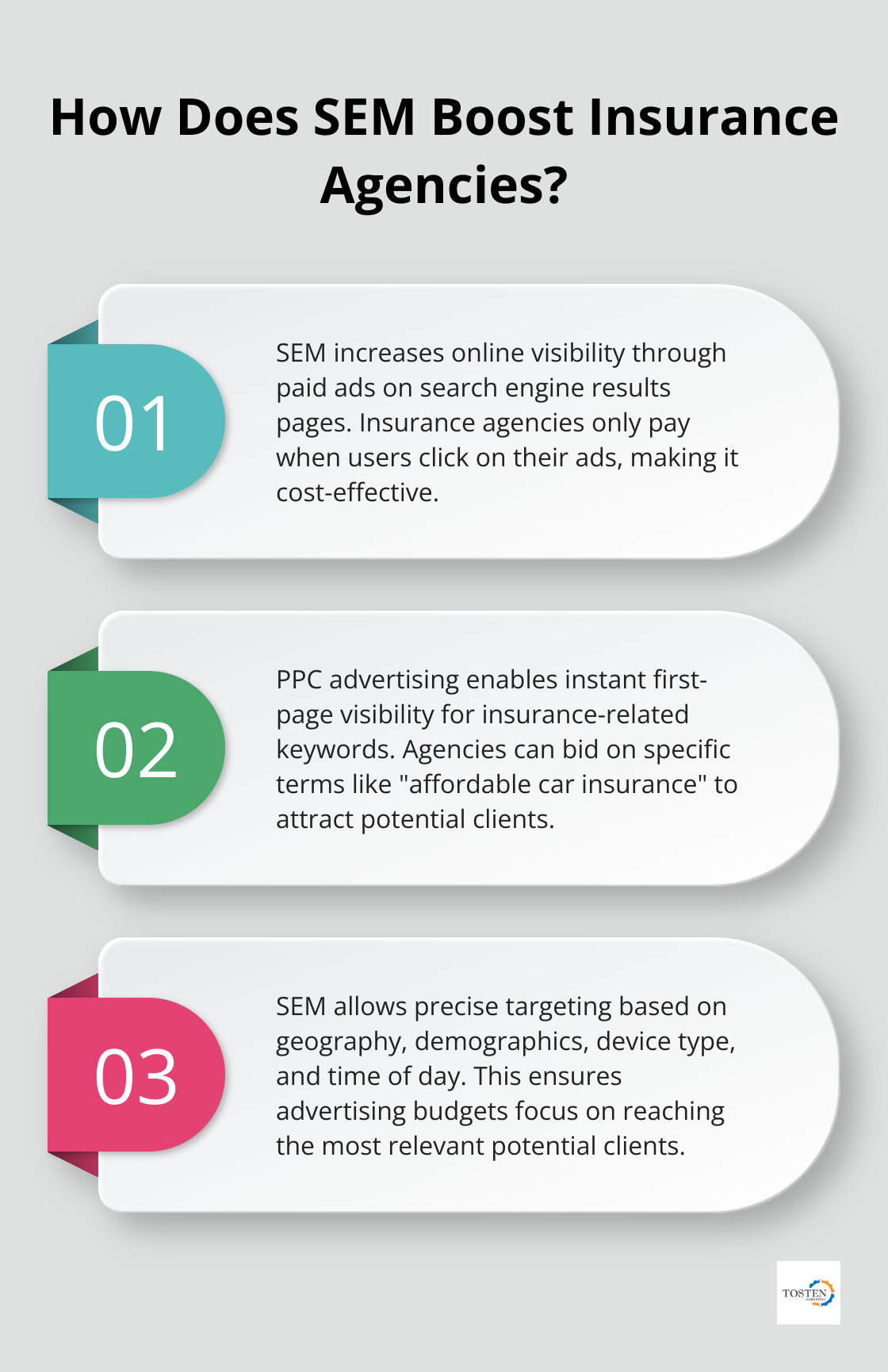
An agency specializing in auto insurance might bid on terms like “affordable car insurance” or “best auto coverage.” When users search for these terms, the agency’s ad may appear at the top of the search results, increasing the chances of attracting potential clients.
Precision Targeting for Maximum Impact
SEM excels in its ability to target specific audiences. Insurance agencies can customize their ads based on various factors:
- Geographic location (target users in specific cities or regions)
- Demographics (focus on age groups or income levels most likely to need your services)
- Device type (optimize ads for mobile users who might be searching on-the-go)
- Time of day (show ads during peak hours when potential clients are most likely to be searching)
This level of targeting ensures that advertising budgets focus on reaching the most relevant potential clients for your agency.
Data-Driven Performance Optimization
SEM provides immediate, measurable results. Platforms like Google Ads offer robust analytics tools that allow agencies to track key performance indicators (KPIs) such as click-through rates (CTR), conversion rates, and return on ad spend (ROAS).
For example, if an insurance agency discovers that their ad for “home insurance quotes” has a high CTR but low conversion rate, they can adjust their landing page or ad copy to better meet user expectations and improve overall performance.
Continuous analysis and optimization of these metrics allow insurance agencies to refine their SEM strategies for maximum effectiveness. This data-driven approach ensures that every dollar spent on advertising contributes to the agency’s growth and success.
As we transition from understanding SEM to comparing it with SEO, it’s important to recognize how these two strategies can work together to create a comprehensive digital marketing approach for insurance agencies.
How SEO and SEM Differ in Practice
Immediate vs. Gradual Results
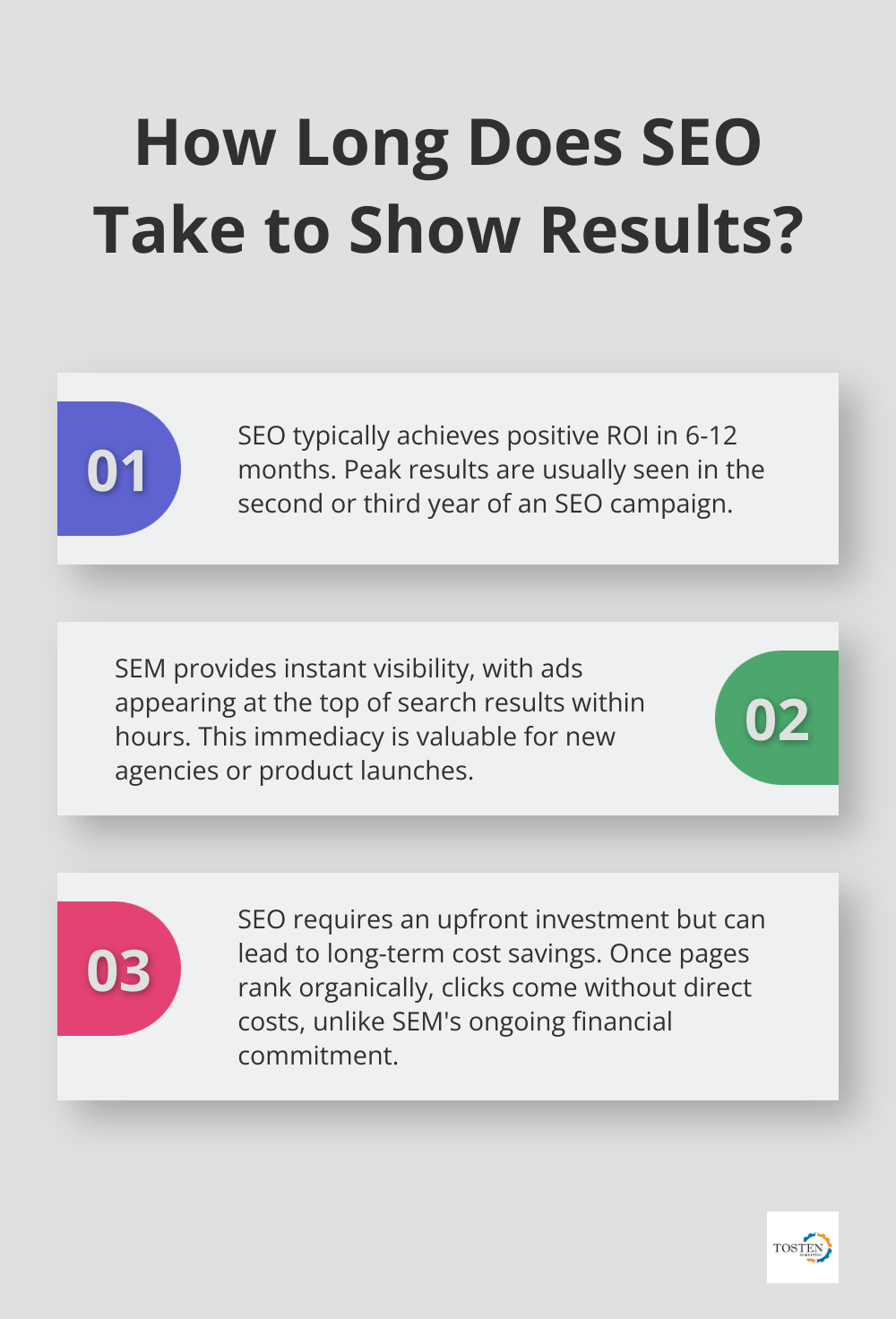
SEM provides instant visibility. When an insurance agency launches a Google Ads campaign, it can appear at the top of search results within hours. This immediacy proves invaluable for new agencies or those introducing new products.
SEO takes a longer-term approach. Positive ROI in an SEO campaign is typically achieved over a 6-12 month period, with peak results in the second or third year of the campaign. However, these results tend to offer more sustainability in the long run.
Investment Structure
SEM demands ongoing financial commitment. Advertisers essentially rent space on search engine results pages. Once payments stop, visibility disappears.
SEO involves an upfront investment of time and resources but can lead to long-term cost savings. Once pages rank organically, clicks come without direct costs. However, maintaining those rankings requires consistent effort and content updates.
Control and Predictability
SEM offers more control over ad appearance. Advertisers can specify geographic targeting, time of day, and even device type. This level of control allows for precise budget allocation and performance tracking.
SEO provides less direct control. Search engines ultimately decide page rankings based on numerous factors. However, SEO delivers more stable traffic over time.
Audience Targeting
SEM allows for highly specific audience targeting. Advertisers can target users based on demographics, interests, and previous website interactions. This precision particularly benefits insurance agencies looking to reach specific customer segments.
SEO targets a broader audience, focusing on users actively searching for information related to services. While less precise, it can capture potential clients at various stages of the buying journey (from initial research to ready-to-purchase).
Measurement and Analytics
SEM provides immediate, detailed performance data. Advertisers can track clicks, impressions, conversions, and return on ad spend in real-time. This data allows for quick adjustments to campaigns for optimal performance.
SEO measurement takes more time and often requires more complex analysis. Metrics like organic traffic, keyword rankings, and backlink profiles provide insights into SEO performance. However, attributing specific actions to SEO efforts can prove challenging.
Final Thoughts
SEO and SEM marketing strategies offer distinct advantages for insurance agencies seeking to enhance their online presence. SEO focuses on long-term organic growth through optimized content and website structure, while SEM provides immediate visibility through paid advertising. The time frame for results, cost structure, level of control, and targeting capabilities differ significantly between these approaches.
A balanced approach to digital marketing integrates both SEO and SEM, leveraging the strengths of each strategy. Insights gained from SEM campaigns can inform keyword strategies for SEO efforts, while high-ranking organic content can provide valuable landing pages for SEM ads. This combination allows insurance agencies to capture both immediate leads and long-term organic traffic.
Tosten Marketing understands the intricacies of both SEO and SEM marketing for insurance agencies. We help agencies create a tailored digital marketing approach that combines the power of organic search optimization and paid advertising (starting at $100 per month). Our comprehensive services aim to boost online visibility, generate leads, and enhance client retention in today’s competitive digital landscape.