
Social media has become a game-changer for insurance agencies looking to expand their reach and connect with potential clients. At Tosten Marketing, we’ve seen firsthand how effective insurance agency social media marketing can be when done right.
In this blog post, we’ll share proven strategies to help you leverage social platforms to grow your insurance business. From choosing the right channels to creating engaging content, you’ll learn practical tips to boost your online presence and attract more leads.
Which Social Media Platforms Are Best for Insurance Agencies?
Selecting the most effective social media platforms is a key step for insurance agencies aiming to make a significant online impact. Not all platforms offer equal benefits, and your target audience isn’t uniformly spread across them. LinkedIn, Facebook, and Twitter have proven to be the most productive platforms for insurance agencies.
LinkedIn: The Professional’s Hub
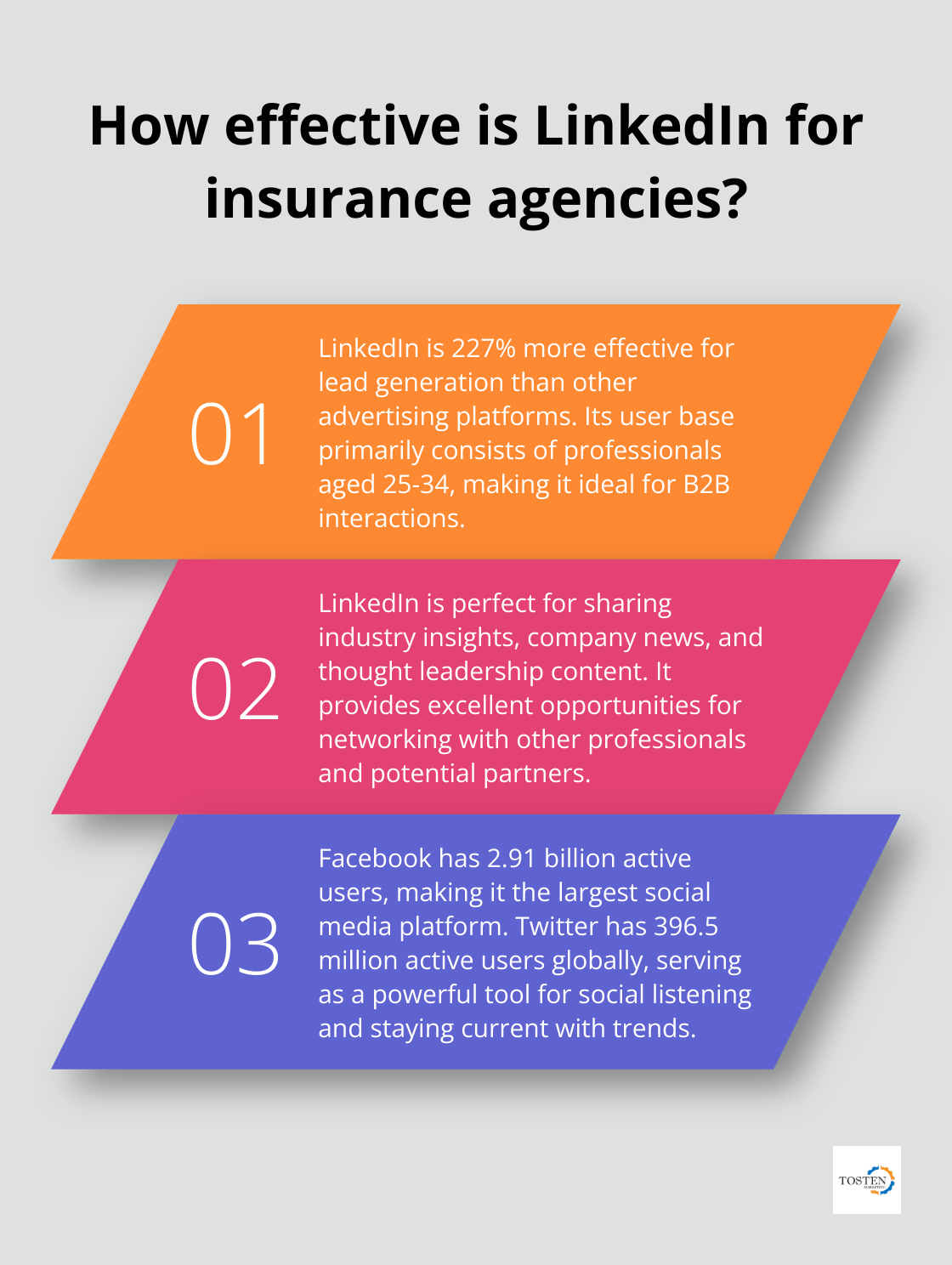
LinkedIn stands out as a valuable resource for insurance agencies. With its user base primarily consisting of professionals aged 25-34, it serves as an ideal platform for B2B interactions and reaching decision-makers. This platform is perfect for sharing industry insights, company news, and thought leadership content. It also provides excellent opportunities for networking with other professionals and potential partners. LinkedIn lead generation is considered to be 227% more effective than other advertising platforms.
Facebook: Reaching a Broad Audience
Facebook maintains its position as the largest social media platform with 2.91 billion active users. Its diverse user base makes it ideal for connecting with potential clients, particularly for life and property insurance needs. Use Facebook to:
- Showcase your agency’s personality
- Share client testimonials
- Run targeted ad campaigns
Facebook’s sophisticated advertising tools allow you to reach specific demographics effectively, maximizing your marketing efforts.
Twitter: Engaging in Real-Time
Twitter’s fast-paced environment makes it ideal for quick updates, industry news, and real-time conversations. With 396.5 million active users globally, it serves as a powerful tool for social listening and staying current with trends. Twitter allows you to:
- Provide customer support
- Share insurance tips
- Participate in relevant hashtag conversations
While these platforms generally work well for insurance agencies, your specific audience might have different preferences. Analyze your target demographic and adjust your strategy accordingly. Start with these three platforms, monitor your performance, and be prepared to adapt if necessary. The goal is to establish a presence where your potential clients are and provide consistent value.
As you select your platforms and begin to develop your social media strategy, the next step is to create engaging and valuable content that resonates with your audience. Let’s explore how to craft content that captures attention and drives engagement in the insurance industry.
How to Create Engaging Insurance Content for Social Media
Blend Industry News with Practical Advice
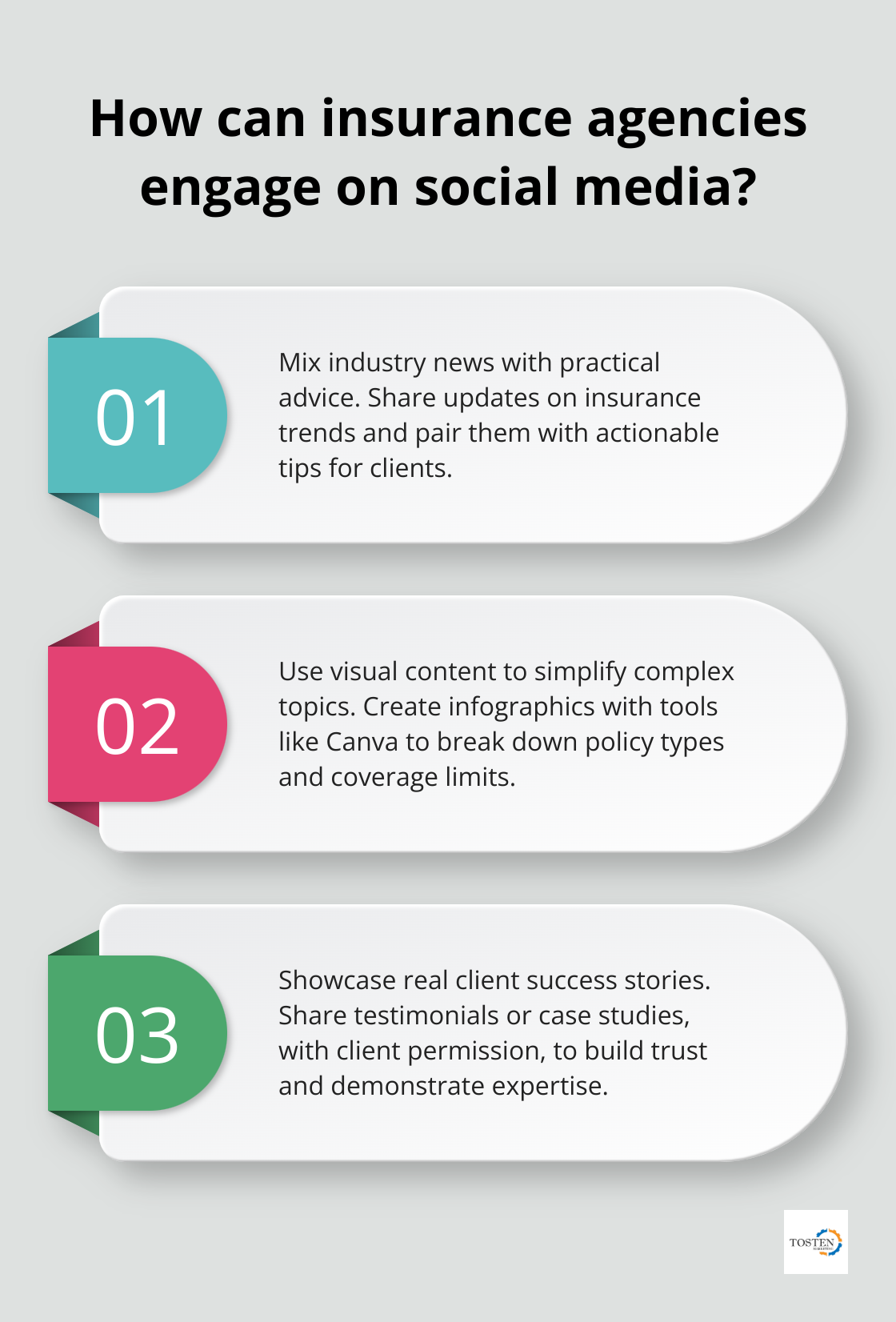
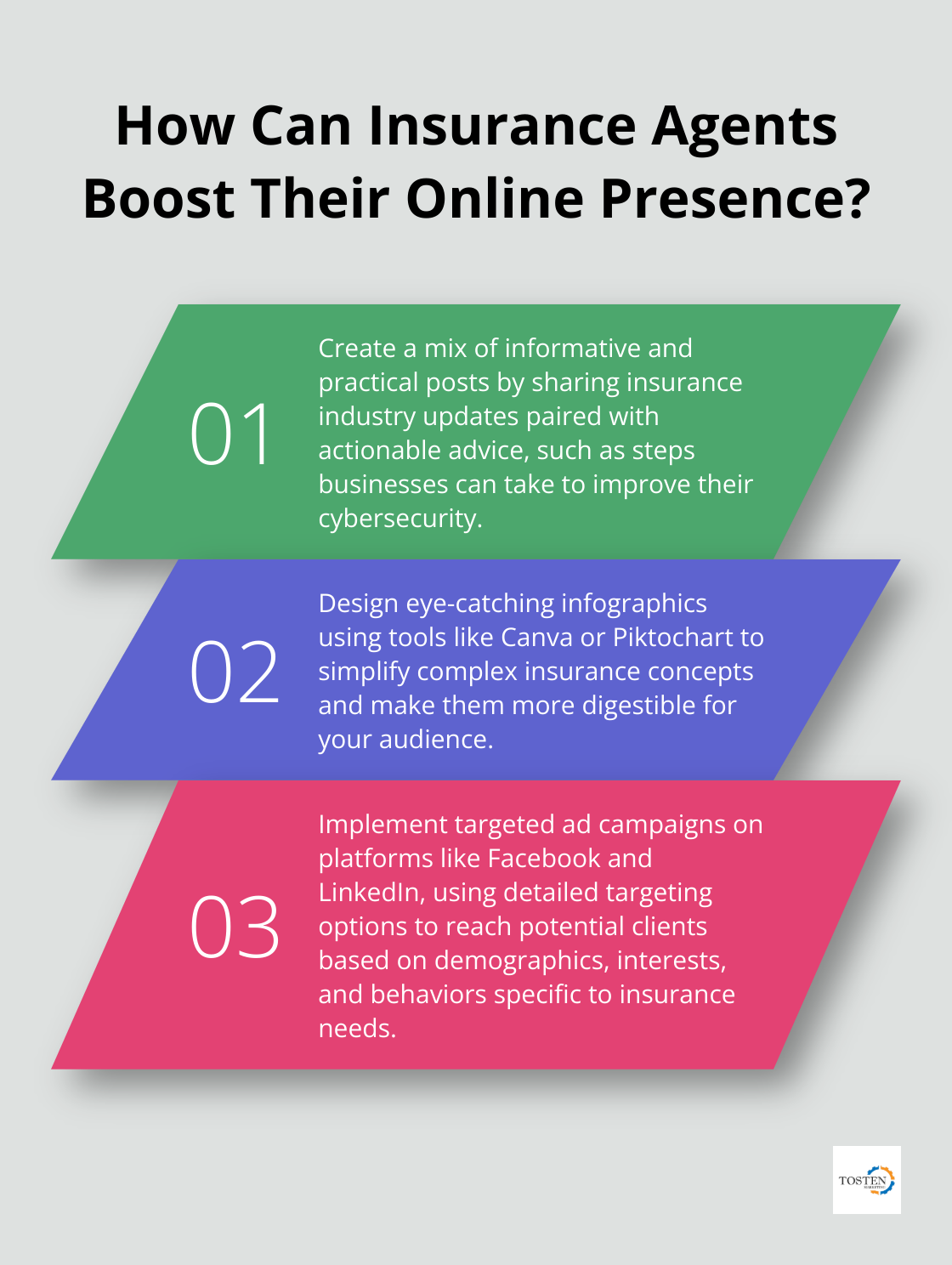
To attract and retain followers, your insurance agency’s social media channels must offer compelling content. A mix of informative and practical posts works best. Stay on top of insurance industry trends and share relevant updates with your audience. For example, if a new type of cyber insurance policy gains traction, explain how it could benefit your clients. Pair this information with actionable advice, such as steps businesses can take to improve their cybersecurity. This approach positions your agency as a leader and adds value for your followers.
Leverage Visual Content for Complex Topics
Insurance can be a complex subject, but visuals make it more digestible. Create infographics that break down policy types, coverage limits, or claims processes. Use tools like Canva or Piktochart to design eye-catching graphics that simplify insurance concepts for your audience.
Showcase Real Client Success Stories
Nothing builds trust like real-life examples of how your agency has helped clients. Share testimonials or case studies that highlight specific ways you’ve assisted customers. You could feature a local business owner who avoided financial ruin thanks to a comprehensive liability policy you recommended. These stories not only demonstrate your expertise but also make your services more relatable and tangible to potential clients.
Always get client permission before sharing their stories and consider offering an incentive (like a small discount on their next premium) for allowing you to feature them.
Utilize Video Content
Video content continues to dominate social media platforms. Create short, informative videos about insurance topics, client testimonials, or behind-the-scenes glimpses of your agency. Try to keep your videos under 2 minutes for optimal engagement.
Engage with Interactive Content
Interactive content encourages audience participation and boosts engagement. Create polls, quizzes, or Q&A sessions related to insurance topics. For instance, you could run a “True or False” quiz about common insurance myths or host a live Q&A session where followers can ask insurance-related questions. This type of content not only educates your audience but also provides valuable insights into their interests and concerns.
As you refine your content strategy, the next step is to implement effective social media tactics to maximize your reach and impact. Let’s explore how to leverage platform-specific features and engagement techniques to grow your insurance agency’s online presence.
How to Maximize Your Social Media Impact for Insurance Agencies
Establish a Consistent Posting Schedule
A strong social media presence requires consistency. Post at least once daily on your primary platforms. Use scheduling tools to plan your content in advance, which ensures a steady stream of posts even during busy periods. These tools can help you track engagement, monitor brand mentions, analyze performance data, and more.
Use Trending Topics and Hashtags
Increase your visibility by tapping into trending topics and using appropriate hashtags. For example, during National Insurance Awareness Day (June 28), create content about the importance of insurance and use hashtags like #InsuranceAwarenessDay. A study by RivalIQ found that posts with hashtags on Instagram see 12.6% more engagement than those without.
Actively Engage with Your Audience
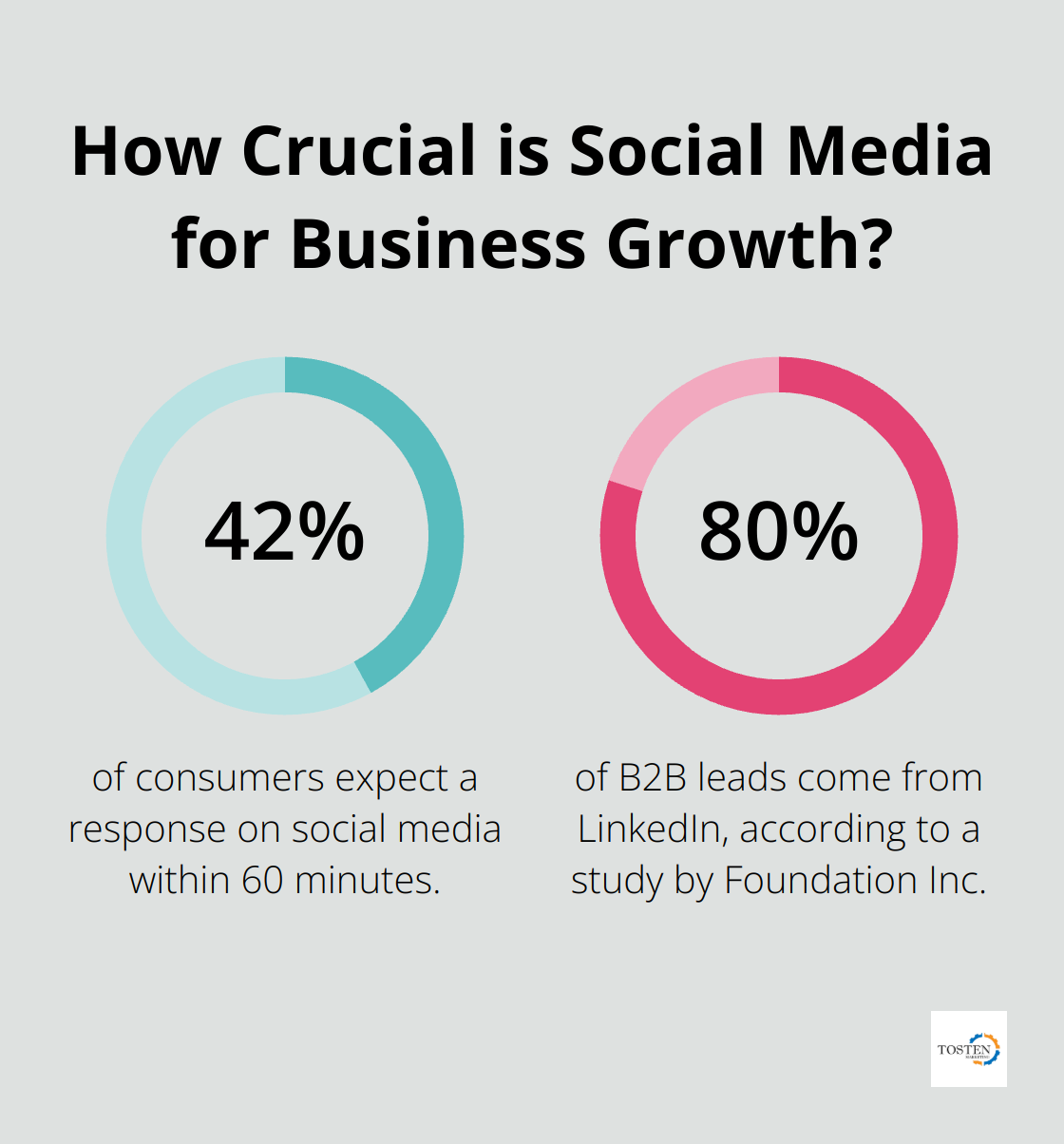
Engagement extends beyond posting content. Respond promptly to comments and messages, preferably within an hour. A survey by Convince & Convert revealed that 42% of consumers expect a response on social media within 60 minutes. Host regular Q&A sessions or live streams to address common insurance queries. This approach builds trust and provides valuable insights into your audience’s needs.
Implement Targeted Ad Campaigns
Paid social media advertising can significantly boost your reach. Facebook’s detailed targeting options allow you to reach potential clients based on demographics, interests, and behaviors. For instance, you could target homeowners in specific zip codes with ads about home insurance. LinkedIn’s sponsored content can be particularly effective for B2B insurance services (with 80% of B2B leads coming from LinkedIn, according to a study by Foundation Inc).
Partner with Industry Influencers
Expand your reach and credibility by partnering with industry influencers. Identify thought leaders in the insurance or financial sector and collaborate on content or webinars. A study by Tomoson found that businesses make $6.50 for every $1 spent on influencer marketing. However, ensure that any partnerships align with regulatory compliance in the insurance industry.
To further enhance your social media impact, consider developing a local search marketing strategy to attract nearby customers and improve your visibility in your target area. Additionally, combining SEO and content marketing can boost your overall digital marketing strategy, driving more traffic and engagement to your social media profiles and website.
Final Thoughts
Social media has transformed insurance agency marketing. We recommend focusing on LinkedIn, Facebook, and Twitter as primary channels to connect with potential clients and showcase expertise. Your content should mix industry news, practical advice, and visuals to keep your audience engaged and informed. Consistency in posting and active follower engagement will increase your visibility and reach.
Insurance agency social media marketing requires dedication and creativity, but it can yield significant results for your business. We at Tosten Marketing specialize in helping insurance agencies maximize their online potential. With over 20 years of experience in digital marketing, we offer tailored strategies to boost your social media presence and overall online visibility.
Learn more about how we can support your insurance agency’s growth. Our comprehensive solutions include custom-built websites and automated social media management to help your agency thrive in the digital landscape. Start implementing these social media tactics today and watch your insurance agency’s online presence flourish.