

Insurance agencies face fierce competition in today’s market. A well-crafted marketing plan can make all the difference in attracting and retaining clients.
At Tosten Marketing, we’ve compiled effective insurance agency marketing plan examples to help you stand out from the crowd. These strategies cover everything from digital presence to partnerships, giving you a comprehensive toolkit for success.
How to Build a Powerful Online Presence
In today’s digital age, a strong online presence is essential for insurance agencies. It’s the foundation of your marketing efforts and often the first point of contact with potential clients. Let’s explore how to create an impactful digital footprint that sets you apart from the competition.
Craft a Website That Converts
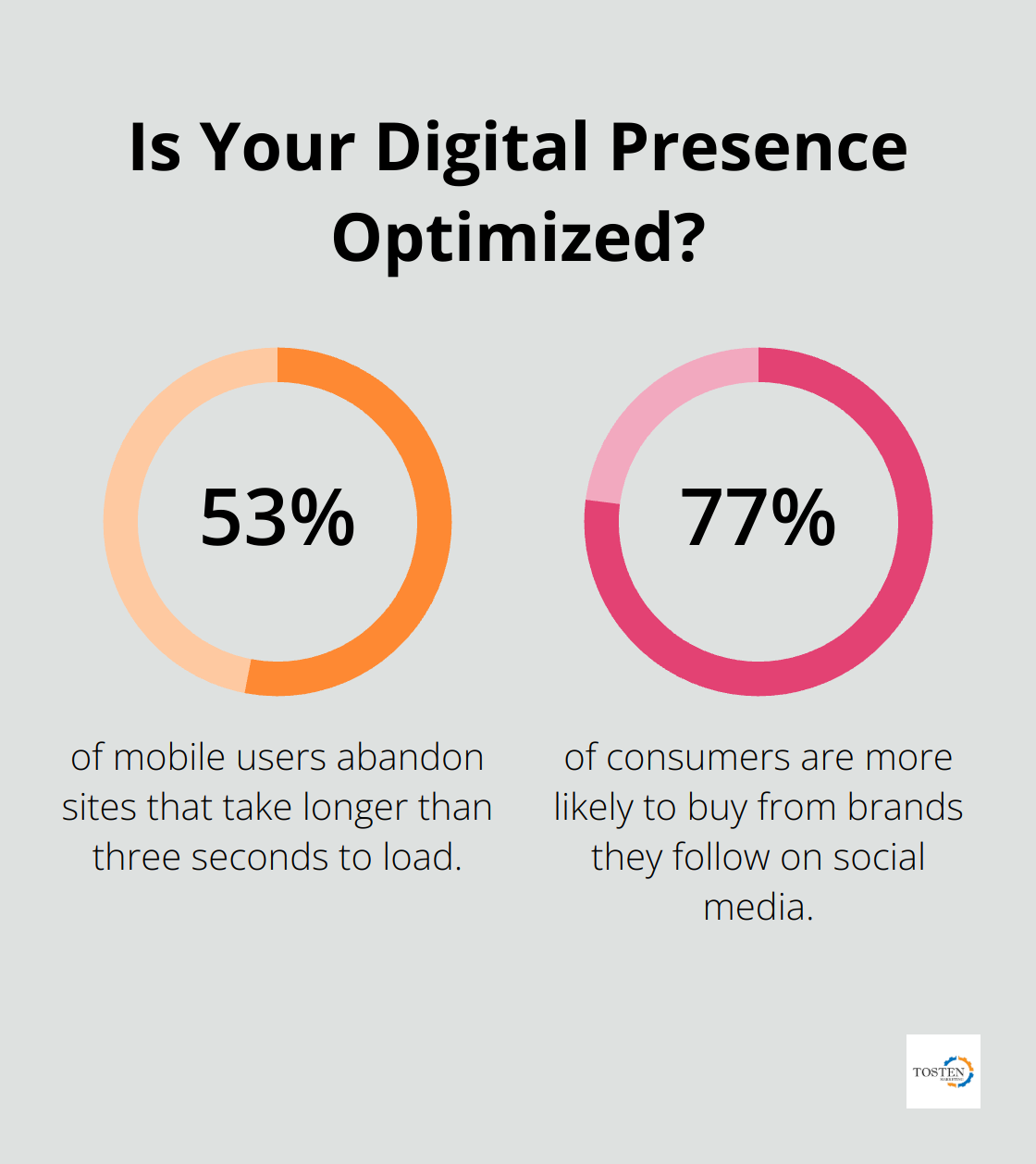
Your website is your digital storefront. It needs to be more than just visually appealing; it must be functional and user-friendly. A study by Google reveals that 53% of mobile users abandon sites that take longer than three seconds to load. This means your site should be lightning-fast and mobile-responsive.
A well-designed website can dramatically increase lead generation. Try to implement clear calls-to-action and streamlined navigation to boost quote requests (some agencies have seen increases of up to 40% with these improvements).
Dominate Local Search Results
Local SEO can transform your insurance agency’s visibility. To capitalize on this, optimize your Google Business Profile with accurate information, photos, and customer reviews.
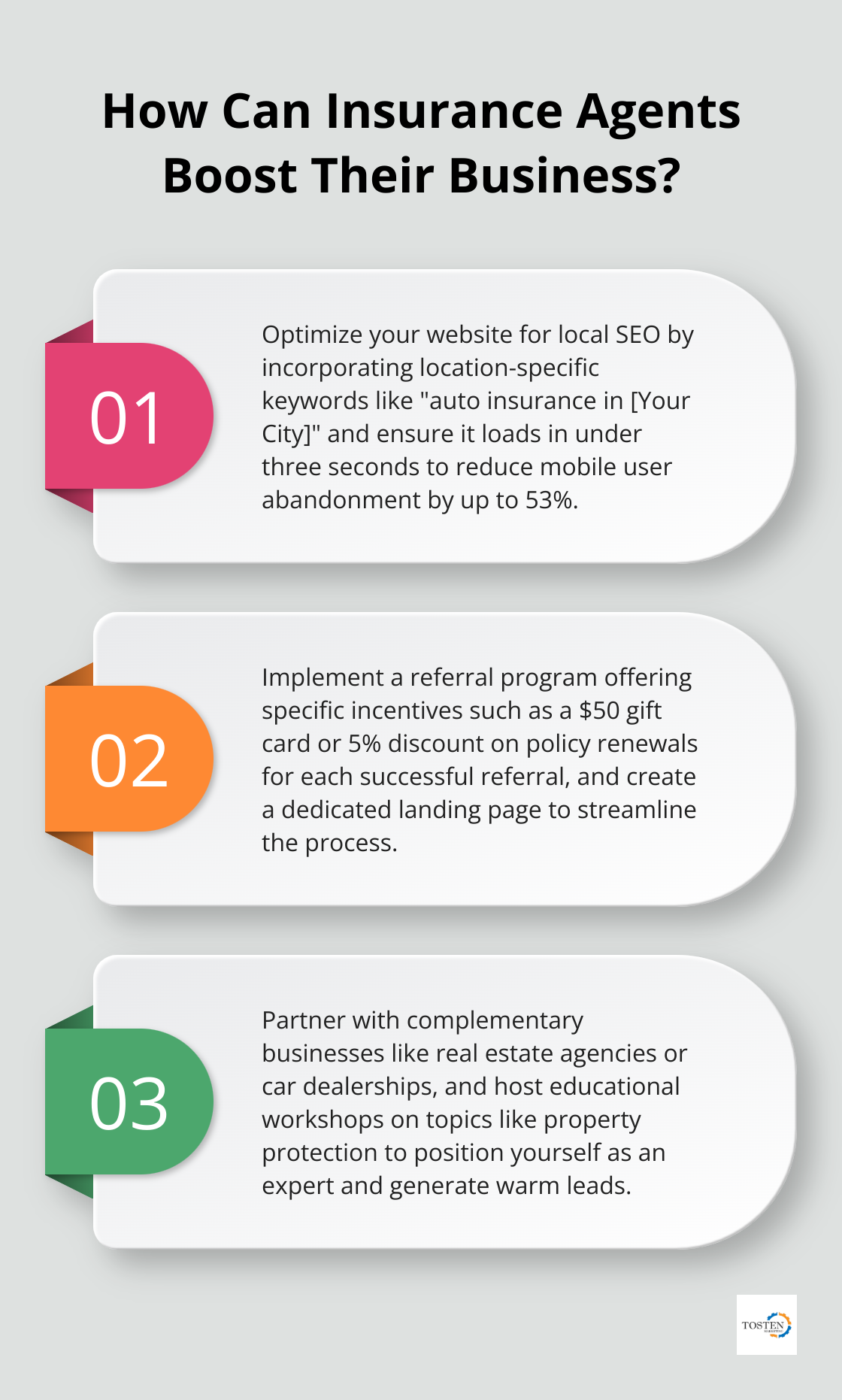
Incorporate location-specific keywords throughout your website content. For example, use “auto insurance in [Your City]” instead of just “auto insurance.” This simple tweak can significantly boost your visibility in local search results.
Harness the Power of Social Media
Social media isn’t just for entertainment; it’s a powerful tool for insurance agencies to connect with their community and showcase their expertise. Sprout Social reports that 77% of consumers are more likely to buy from brands they follow on social media.
Focus on platforms where your target audience spends their time (LinkedIn for B2B connections and Facebook for consumer engagement). Share valuable content, such as tips on choosing the right coverage or explanations of complex insurance terms.
Use social media for customer service. Respond promptly to inquiries and comments. This public display of attentiveness can significantly enhance your agency’s reputation.
Building a strong online presence requires consistent effort and adaptation to changing digital trends. With the right strategies in place, your insurance agency can attract a steady stream of qualified leads. Next, let’s explore how content marketing can further elevate your agency’s online presence and establish you as an industry authority.
How Content Marketing Boosts Your Insurance Agency
Blogging: Your Authority-Building Secret Weapon
Blogs transform insurance agencies into industry authorities. According to research, businesses that blog regularly receive 55% more website visitors than those that don’t. Quality content matters most.
Address common customer concerns in your posts. Write about topics like “5 Hidden Gaps in Home Insurance Coverage” or “Auto Insurance Deductibles Explained.” These articles provide value and showcase your expertise.
Use tools like Google Trends to identify popular search topics. This aligns your content with client needs and improves your SEO performance.
Email Marketing: Convert Leads to Clients
Email marketing excels at nurturing leads and retaining clients. The Data & Marketing Association found that email marketing yields an average ROI of $42 for every $1 spent.
Segment your email list based on policy types, renewal dates, or customer lifecycle stages. This enables you to send targeted content that addresses each group’s specific needs.
Send policy renewal reminders with coverage update suggestions. Create a welcome series for new clients that explains their benefits and introduces additional services.
Video Content: Simplify Complex Insurance Concepts
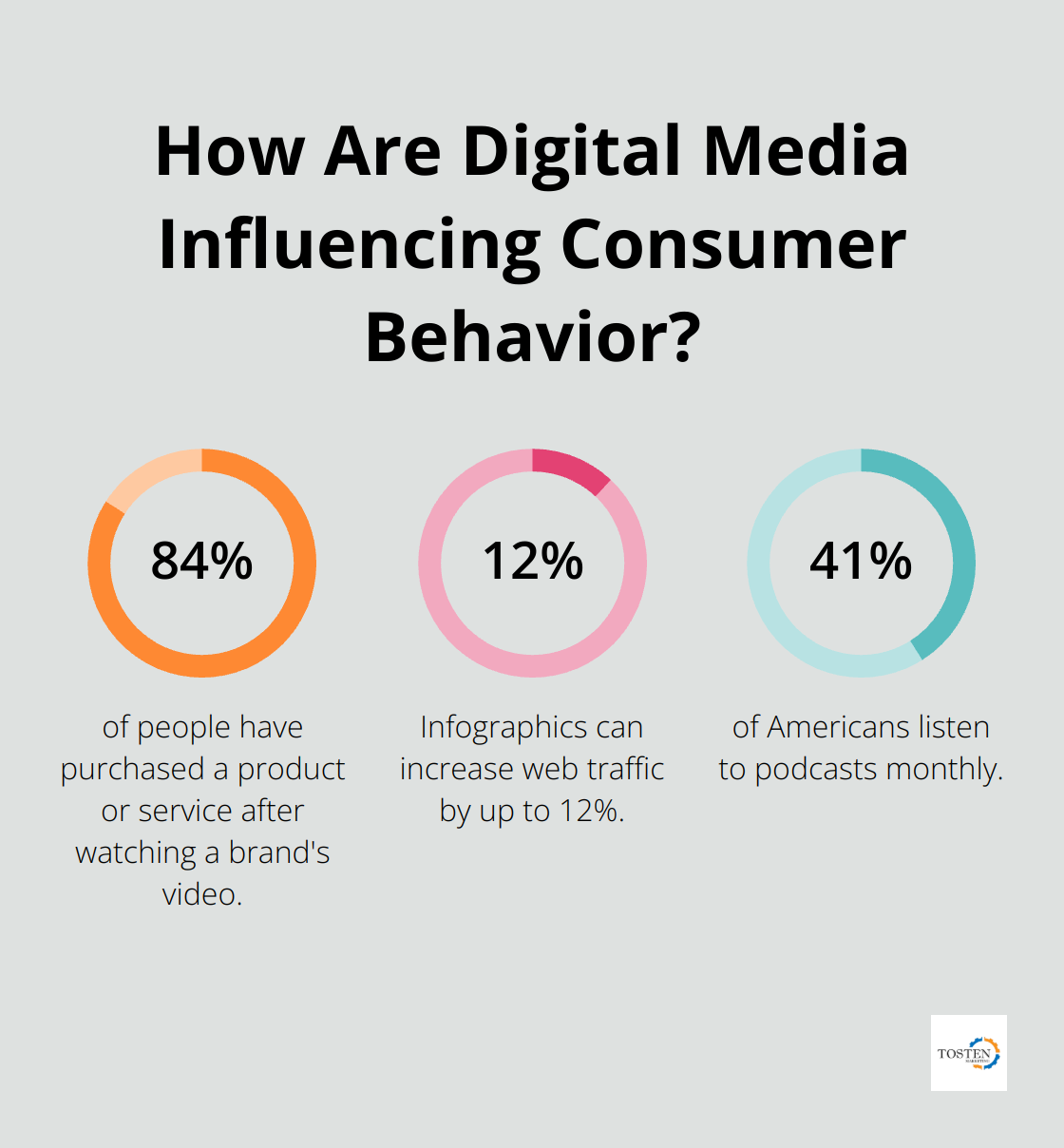
Videos effectively explain complex insurance topics. Wyzowl reports that 84% of people have purchased a product or service after watching a brand’s video.
Produce short, engaging videos that break down insurance jargon. A 60-second explainer on “The Importance of Umbrella Insurance” often outperforms lengthy articles.
Explore platforms like TikTok or Instagram Reels to reach younger audiences. These platforms favor brief, catchy content that makes insurance topics more approachable (and shareable).
Infographics: Visual Data Storytelling
Infographics combine data and design to tell compelling stories. They can increase web traffic by up to 12% (according to Demand Gen Report).
Create infographics that visualize insurance statistics or compare policy types. For example, an infographic titled “The Real Cost of Uninsured Drivers” can quickly convey complex information in an easily digestible format.
Share these infographics on social media and your website to boost engagement and backlinks.
Podcasts: Audio Content for On-the-Go Consumers
Podcasts offer a unique way to connect with your audience. Edison Research found that 41% of Americans listen to podcasts monthly.
Launch a podcast that discusses insurance trends, answers common questions, or interviews industry experts. This format allows you to showcase your expertise while providing value to listeners during their commutes or workouts.
Content marketing requires a strategic, consistent approach across all channels. A well-executed content strategy positions your insurance agency as a trusted resource, attracts qualified leads, and ultimately grows your client base. The next section will explore how referral and partnership programs can further amplify your marketing efforts and expand your reach.
How to Leverage Referrals and Partnerships
Create a Powerful Referral Program
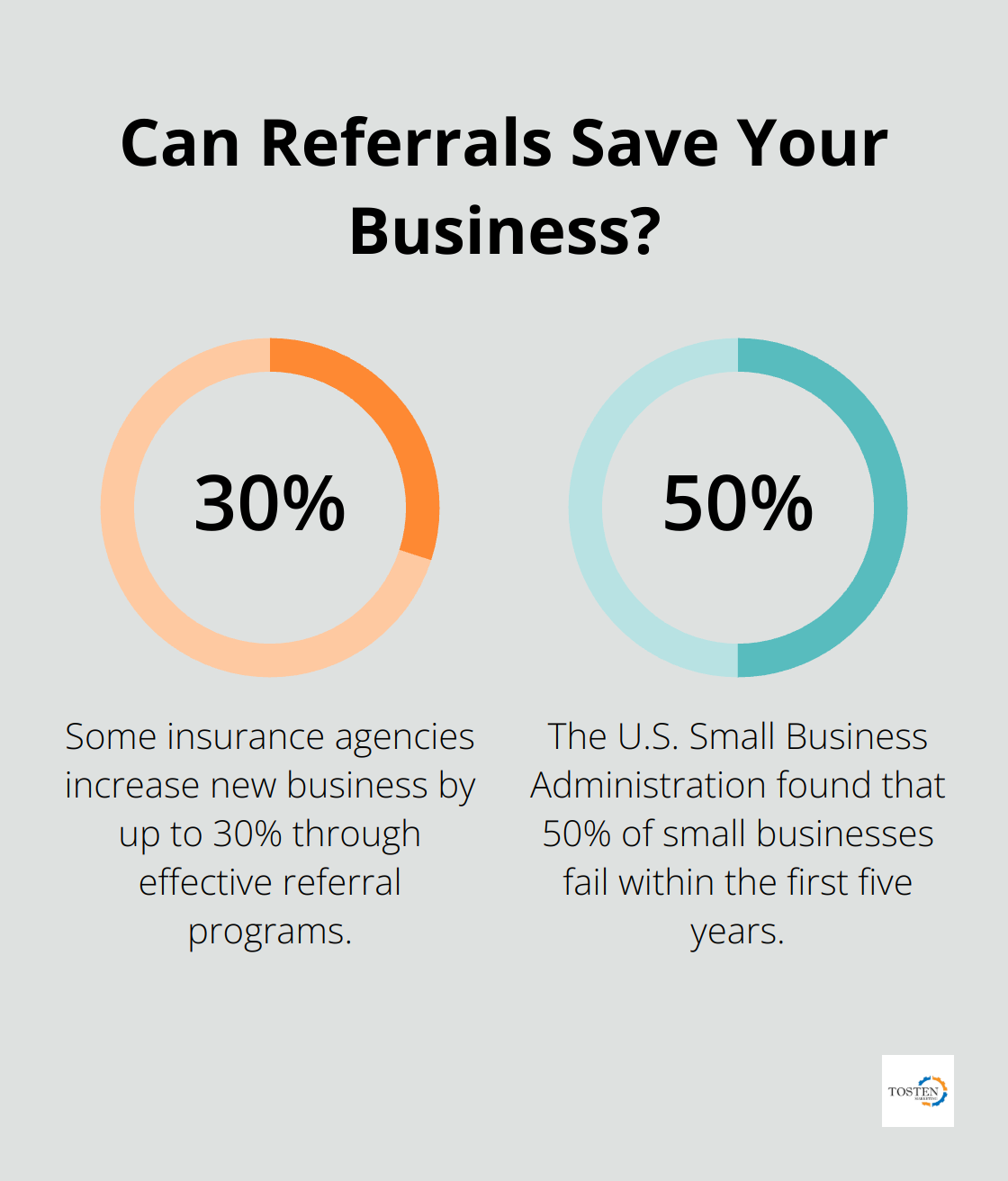
Referral programs can significantly boost your client base. Nielsen reports that people are four times more likely to buy when referred by a friend. Some insurance agencies increase new business by up to 30% through effective referral programs.
Offer incentives that matter to your clients. Cash rewards work well, but non-monetary benefits like premium discounts or value-added services can also be effective. Consider offering a $50 gift card or a 5% discount on the next policy renewal for each successful referral.
Simplify the referral process. Create a dedicated landing page on your website for referrals. Provide easy-to-share links or cards that clients can give to friends and family. A streamlined process encourages more referrals.
Partner with Local Businesses
Local business partnerships can expand your reach exponentially. The U.S. Small Business Administration found that 50% of small businesses fail within the first five years. Insurance plays a vital role in their survival, making this a mutually beneficial relationship.
Identify businesses that complement your services. Real estate agencies, car dealerships, and mortgage brokers often make excellent partners. These collaborations can lead to a steady stream of warm leads.
Host educational workshops for their clients on topics like property protection or business liability. This approach positions you as an expert and provides value to your partner’s clientele.
Collaborate with Complementary Service Providers
Team up with complementary service providers to create a network of trusted professionals. This strategy not only generates leads but also enhances your credibility.
Financial advisors, lawyers, and accountants often have clients who need insurance services. Establish reciprocal referral agreements with these professionals. For every client you refer to them, they refer one back to you.
Create joint marketing materials or co-host events. A “Financial Planning and Protection” seminar co-presented with a financial advisor can attract potential clients for both parties.
Leverage Online Partnerships
Explore online partnerships to expand your digital reach. Collaborate with popular bloggers or influencers in the finance or lifestyle sectors. These partnerships can introduce your services to new audiences (often in a more relatable context).
Guest post on relevant blogs or invite influencers to contribute to your content. This cross-promotion can drive traffic to your website and increase your authority in the insurance space.
Measure and Optimize Your Partnership Efforts
Track the performance of your referral program and partnerships. Use unique tracking codes or dedicated landing pages for each partner to measure the leads and conversions they generate.
Regularly review these metrics and adjust your strategies accordingly. Focus your efforts on the most productive partnerships and refine your approach for those that underperform.
Final Thoughts
Effective insurance agency marketing plan examples encompass a range of strategies. These include building a strong online presence, leveraging content marketing, and forming strategic partnerships. Agencies can significantly boost their visibility and attract potential clients through these methods. Professional assistance can make a significant difference in implementing these strategies effectively.
Tosten Marketing specializes in digital marketing for insurance agencies. We offer custom-built websites, ongoing SEO, local search programs, and automated social media management. Our tailored strategies start at $100 per month, helping insurance agencies enhance their online presence and generate quality leads.
Insurance agencies can navigate the competitive landscape more effectively by embracing these marketing strategies. They can attract and retain clients, and ultimately drive sustainable growth in today’s digital-first world. With the right approach and support, agencies can transform their marketing efforts and achieve remarkable results.