
SEO content marketing strategy is a game-changer for businesses looking to boost their online visibility and attract more customers.
At Tosten Marketing, we’ve seen firsthand how a well-crafted approach can transform an insurance agency’s digital presence.
This blog post will guide you through the essential steps to create an effective SEO content marketing strategy that drives results.
What is SEO Content Marketing?
Defining SEO Content Marketing
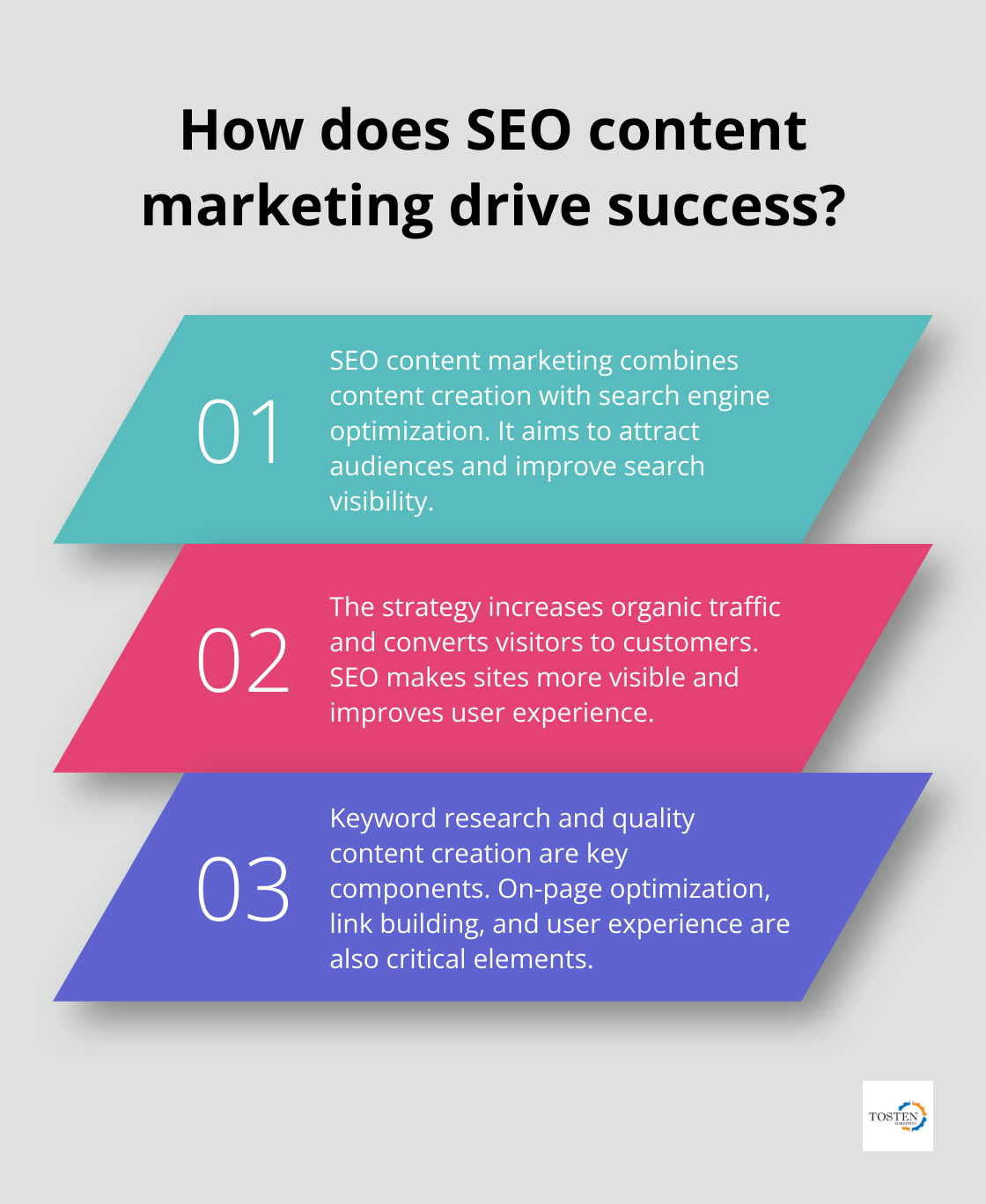
SEO content marketing combines the creation and distribution of valuable, relevant content with search engine optimization techniques. This strategy aims to attract and engage a specific audience while improving visibility in search results. The approach increases organic traffic and converts visitors into customers.
The Synergy of SEO and Content
SEO is the backbone of content marketing, as it makes your site more visible, draws in your specific audience and improves user experience. This partnership is essential for success in the digital landscape.
For instance, when developing content for insurance agencies, we research keywords that potential clients search for (e.g., “affordable home insurance options” or “best auto insurance for new drivers”). We then create informative articles around these topics, naturally incorporating these keywords to improve search rankings.
Key Components of an Effective Strategy
An effective SEO content marketing strategy includes several critical elements:
- Keyword Research: Identify terms and phrases your target audience uses when searching for insurance-related information. Tools like SEMrush or Ahrefs provide insights into search volumes and competition levels for specific keywords.
- Quality Content Creation: Produce high-quality, informative content that addresses your audience’s needs and questions. This can include blog posts, guides, infographics, or videos that provide real value to potential insurance clients.
- On-Page Optimization: Structure your content properly with relevant title tags, meta descriptions, and header tags to help search engines understand and rank your content appropriately.
- Link Building: Acquire high-quality backlinks from reputable sources in the insurance industry to boost your content’s authority and search rankings.
- User Experience: Create a website that’s easy to navigate, mobile-friendly, and loads quickly to satisfy both SEO requirements and user expectations.
Measuring Success and Adapting
To evaluate the effectiveness of your SEO content marketing efforts, track key metrics such as organic traffic growth, keyword rankings, time on page, and conversion rates. Google Analytics and Google Search Console (two essential tools for monitoring these metrics) provide valuable insights into your content’s performance.
Continuous analysis of these metrics allows you to refine your approach and maximize the impact of your SEO content marketing efforts. SEO is an ongoing process of optimization and improvement, not a one-time task.
As we move forward, let’s explore how to develop a targeted content strategy that aligns with your audience’s needs and search behavior.
How to Create a Targeted Content Strategy
Master Keyword Research
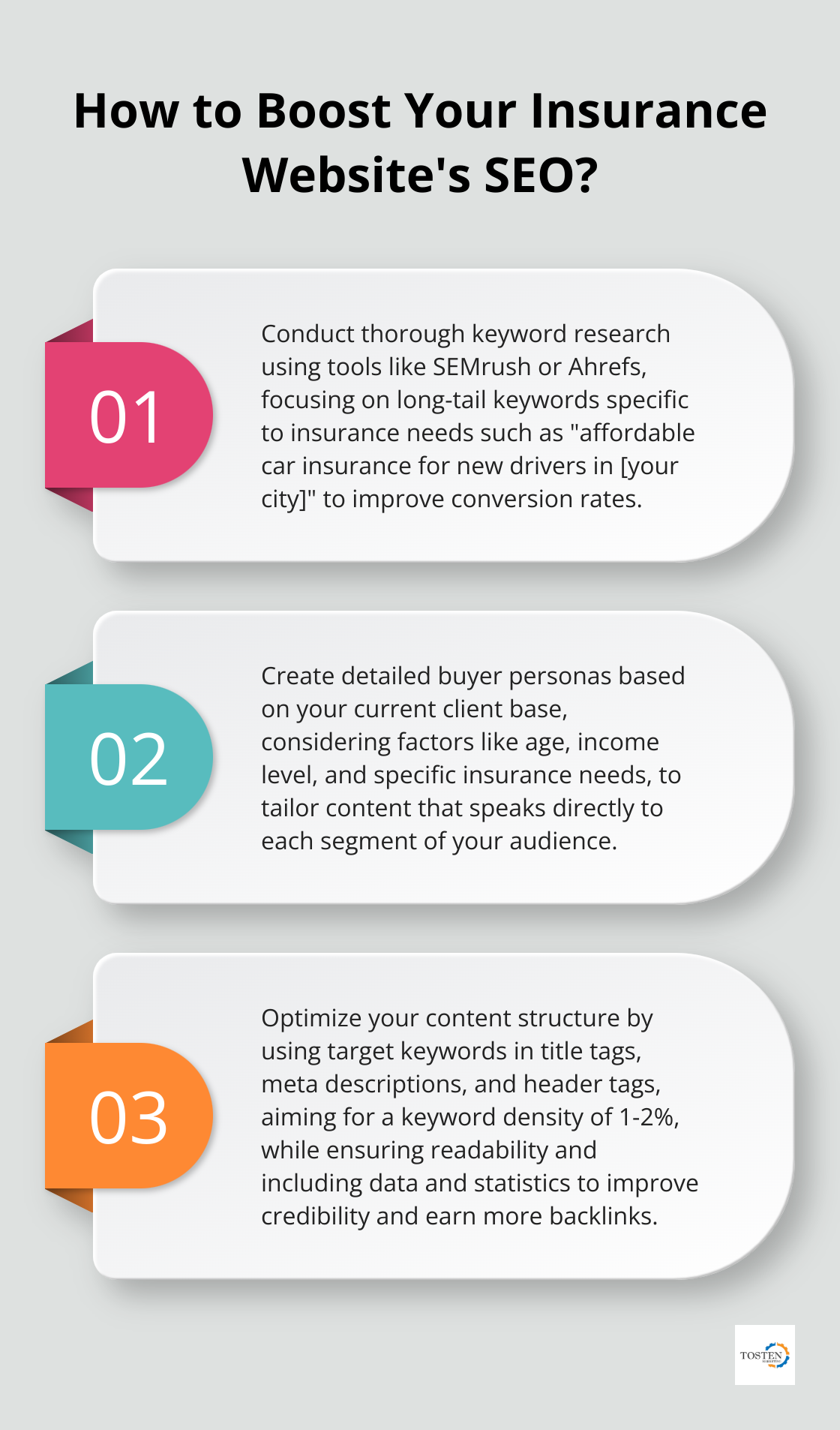
Keyword research forms the foundation of any successful SEO content strategy. Identify the terms your potential clients use when searching for insurance services. Tools like SEMrush or Ahrefs provide valuable insights into search volumes and competition levels.
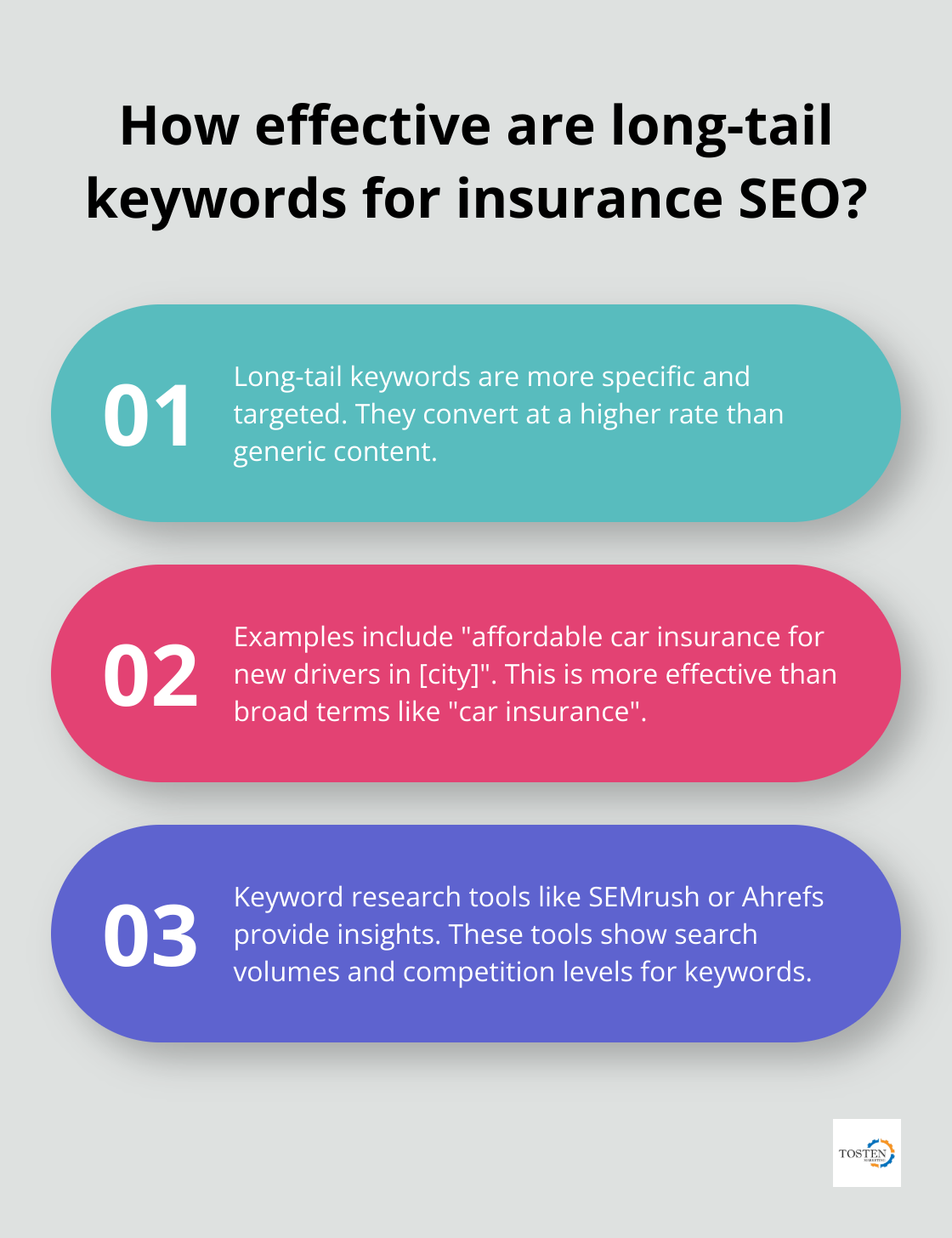
For insurance agencies, focus on long-tail keywords that reflect specific customer needs. Try to target more specific phrases such as “affordable car insurance for new drivers in [your city]” instead of broad terms like “car insurance.” Statistics underscore the value of this approach: content that addresses specific queries has been shown to convert at a higher rate than generic content.
Understand Your Audience
Create detailed buyer personas to tailor your content to your audience’s needs. Analyze your current client base and identify common characteristics, pain points, and preferences. Consider factors such as age, income level, family status, and specific insurance needs.
A young professional in an urban area might look for renters insurance and basic auto coverage, while a suburban family may show more interest in comprehensive home and life insurance packages. Understanding these differences allows you to create content that speaks directly to each segment of your audience.
Align Content with the Customer Journey
Map your content to the customer journey after you identify your keywords and understand your audience. This approach ensures you provide valuable information at every stage of the decision-making process.
Create educational content that addresses common insurance questions or concerns for the awareness stage. Develop comparison guides or detailed explanations of different policy types for the consideration stage. Showcase customer testimonials, case studies, or specific policy benefits that set your agency apart for the decision stage.
Optimize each piece of content for your target keywords while ensuring it provides genuine value to your readers. This balance is key to ranking well in search results and converting visitors into clients.
Leverage Different Content Formats
Diversify your content strategy by incorporating various formats to cater to different preferences and learning styles. Consider the following options:
- Blog posts (for in-depth explanations and updates)
- Infographics (to visualize complex insurance concepts)
- Videos (for tutorials or client testimonials)
- Podcasts (to discuss industry trends or answer FAQs)
- Ebooks or whitepapers (for comprehensive guides on specific insurance topics)
By offering a mix of content types, you’ll appeal to a broader audience and improve your chances of ranking for different search queries.
Monitor and Adjust Your Strategy
Implement a system to track the performance of your content strategy. Use tools like Google Analytics and Google Search Console to monitor key metrics such as organic traffic, keyword rankings, and conversion rates. Regularly analyze this data to identify what’s working and what needs improvement.
Don’t hesitate to adjust your strategy based on these insights. The digital landscape evolves rapidly, and your content strategy should adapt accordingly. This proactive approach will help you stay ahead of the competition and continue to attract and convert high-quality leads.
As you refine your targeted content strategy, the next step is to implement SEO and content marketing best practices in your content creation process. This will ensure that your well-researched and audience-focused content achieves maximum visibility in search engine results.
How to Optimize Your Content for SEO Success
Master On-Page SEO Techniques
Start by optimizing your content’s structure. Use your primary keyword in the title tag, preferably near the beginning. Include it in the first paragraph and distribute it naturally throughout the content. Try for a keyword density of 1-2%, but prioritize readability over keyword stuffing.
Craft compelling meta descriptions that include your target keyword and a clear call-to-action. While meta descriptions don’t directly impact rankings, they can significantly improve click-through rates from search results pages.
Structure your content with header tags (H1, H2, H3) to improve readability and help search engines understand your content’s hierarchy. Include your target keyword and related terms in these headers where appropriate.
Create Engaging, High-Quality Content
Search engines favor content that provides value to users. For insurance agencies, this means creating informative, actionable content that addresses your clients’ pain points and questions.
Instead of a generic post about auto insurance, write a detailed guide on “How to Lower Your Auto Insurance Premiums in [Your State].” Include specific tips, local regulations, and real examples to make your content more valuable and shareable.
Use data and statistics to support your points. A study by Backlinko found that content with statistics and data earns 2.3 times more backlinks than content without. This not only improves your content’s credibility but also boosts its SEO value.
Optimize for User Experience
Google’s algorithm increasingly prioritizes user experience signals. Ensure your content is easy to read by using short paragraphs, bullet points (when necessary), and relevant images or infographics.
Pay attention to your content’s readability score. Try for a Flesch Reading Ease score of 60-70 for general audience content. This ensures your insurance-related information is accessible to a broad range of potential clients.
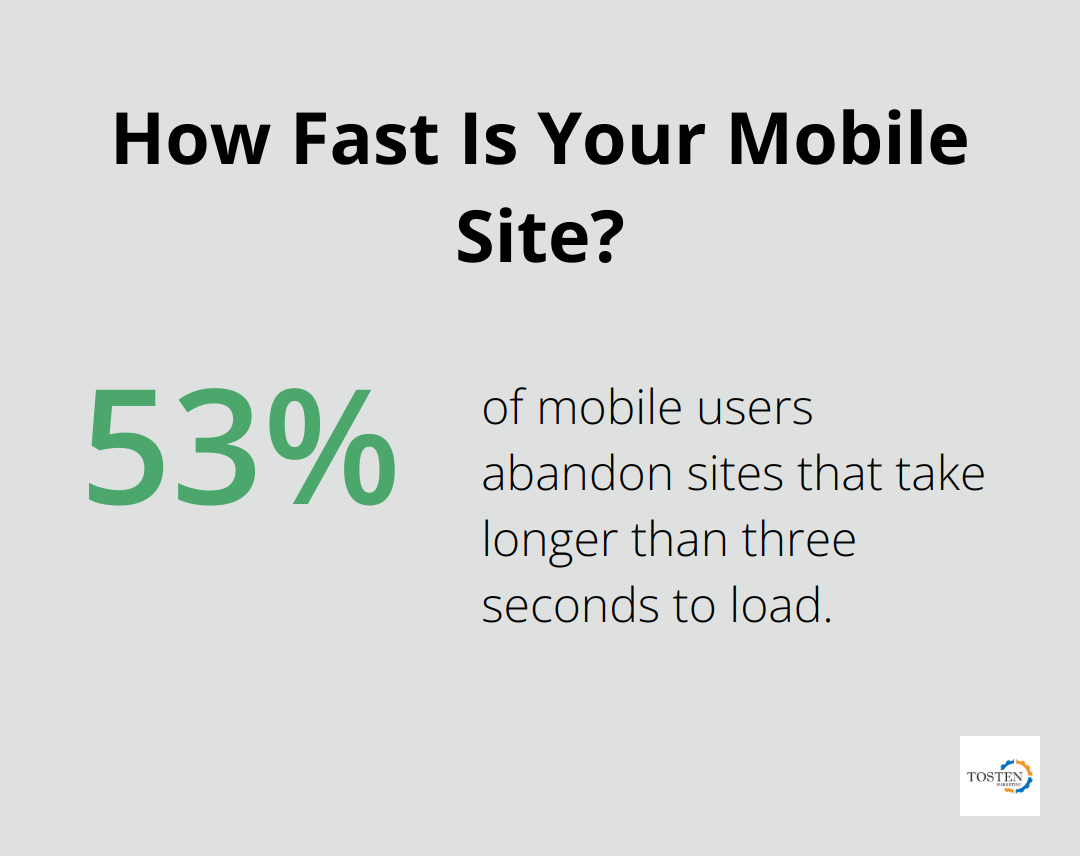
Website speed is important for both user experience and SEO. Google reports that 53% of mobile users abandon sites that take longer than three seconds to load. Optimize your images using tools like TinyPNG, ImageOptim, or ShortPixel to reduce file sizes without sacrificing quality. Use a content delivery network (CDN), and minimize unnecessary scripts to improve load times.
Leverage Diverse Content Formats
While written content remains important, diversifying your content types can significantly boost your SEO efforts. Video content is 50 times more likely to drive organic search results compared to plain text, according to Forrester Research.
Consider creating explainer videos about complex insurance topics or client testimonial videos to build trust. Host these videos on YouTube and embed them on your site to benefit from YouTube’s strong domain authority.
Infographics are another powerful tool, especially for explaining insurance concepts visually. A study by Venngage found that infographics are liked and shared on social media 3x more than any other type of content, potentially increasing your backlink profile and social signals.
By implementing these strategies and focusing on creating engaging content, you can significantly improve your SEO performance and attract more potential clients to your insurance agency’s website.
Final Thoughts
An effective SEO content marketing strategy will boost your insurance agency’s online presence and attract more clients. You can improve your visibility in search engine results and engage your target audience through targeted content strategies and SEO best practices. The digital landscape constantly changes, so you must analyze performance metrics, adjust your approach, and stay current with industry trends.
Implementing a successful SEO content marketing strategy challenges busy insurance professionals. We at Tosten Marketing offer comprehensive services tailored to your specific needs (including custom-built websites optimized for speed and user engagement). Our expertise can elevate your online presence and generate more leads for your insurance agency.
Our SEO content marketing strategies help insurance agencies succeed in the competitive digital landscape. We create high-quality, engaging content that resonates with your target audience and ranks well in search results. Don’t let the complexities of SEO content marketing hold you back from transforming your agency’s digital presence and achieving lasting success in the online marketplace.