

At Tosten Marketing, we’ve seen firsthand how automated content analysis can revolutionize SEO strategies.
This powerful tool uses advanced algorithms to dissect and evaluate web content, providing invaluable insights for digital marketers.
In this post, we’ll explore how automated content analysis works, its benefits, and how you can harness its potential to supercharge your SEO efforts.
What is Automated Content Analysis?
The Foundation of Modern SEO
Automated content analysis revolutionizes SEO strategies. This process employs advanced algorithms and machine learning to evaluate web content at scale. The technology examines various aspects of your content, from keyword usage to readability, providing insights that would require countless hours to gather manually.
Automation vs. Manual Analysis
Unlike manual content analysis, which consumes time and invites human error, automated systems process vast amounts of data in minutes. A tool might analyze 1,000 web pages in the time it takes a person to review just one. This efficiency allows marketers to make data-driven decisions quickly, outpacing competitors.
Critical Components of Analysis
Most automated content analysis tools focus on several key areas:
- Keyword density and placement
- Content structure and readability
- Meta tags and descriptions
- Internal and external linking
- Competitor content comparison
These components work in concert to provide a comprehensive view of your content’s SEO performance.
Tangible SEO Benefits
The benefits of automated content analysis for SEO are substantial.
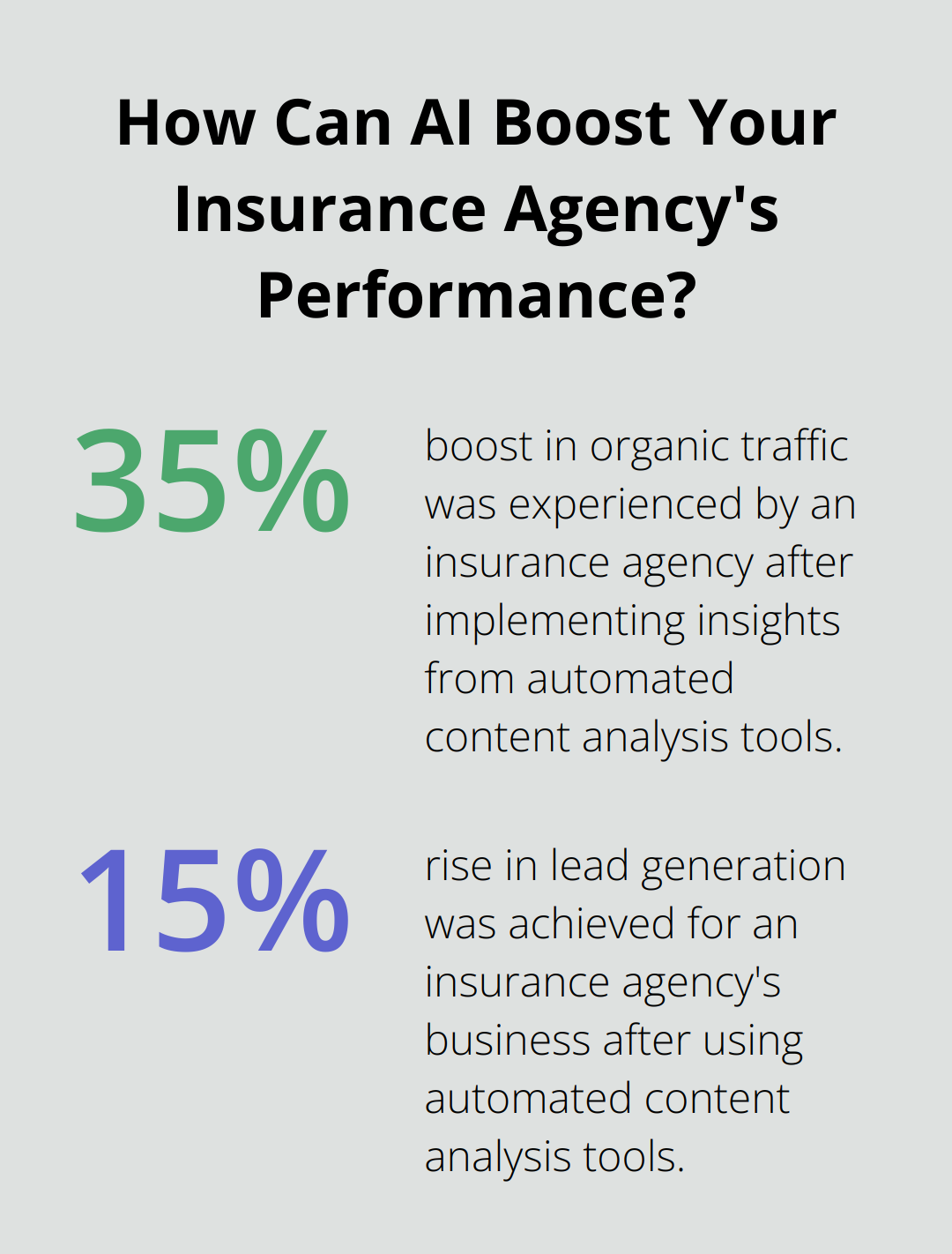
One insurance agency experienced a 35% boost in organic traffic after implementing insights from automated content analysis tools. This increase translated to a 15% rise in lead generation for their business.
Actionable Insights for Marketers
Automated content analysis doesn’t just provide data – it offers actionable insights. It might suggest specific keywords to include in your content or identify gaps in your topic coverage compared to top-ranking competitors.
A practical example: If you’re an insurance agency writing about home insurance, an automated tool might reveal that top-ranking pages include sections on flood protection – a topic you may have overlooked. Adding this information could significantly improve your content’s performance.
Continuous Optimization
One of the most powerful aspects of automated content analysis is its ability to provide ongoing optimization suggestions. As search algorithms and user behaviors change, these tools adapt, ensuring your content remains relevant and competitive.
Leveraging automated content analysis transforms your entire digital marketing strategy. The insights gained can inform everything from content creation to paid advertising, creating a cohesive and data-driven approach to online marketing.
Now that we understand what automated content analysis is and its benefits, let’s explore the tools and techniques that make this process possible.
Powerful Tools for Automated Content Analysis
Top Performers in Content Analysis
SEMrush stands out as a comprehensive platform for content analysis. Its Content Audit tool examines your website’s pages and provides actionable recommendations for improvement. A mid-sized e-commerce company saw a 28% increase in organic traffic after implementing SEMrush’s suggestions over three months.
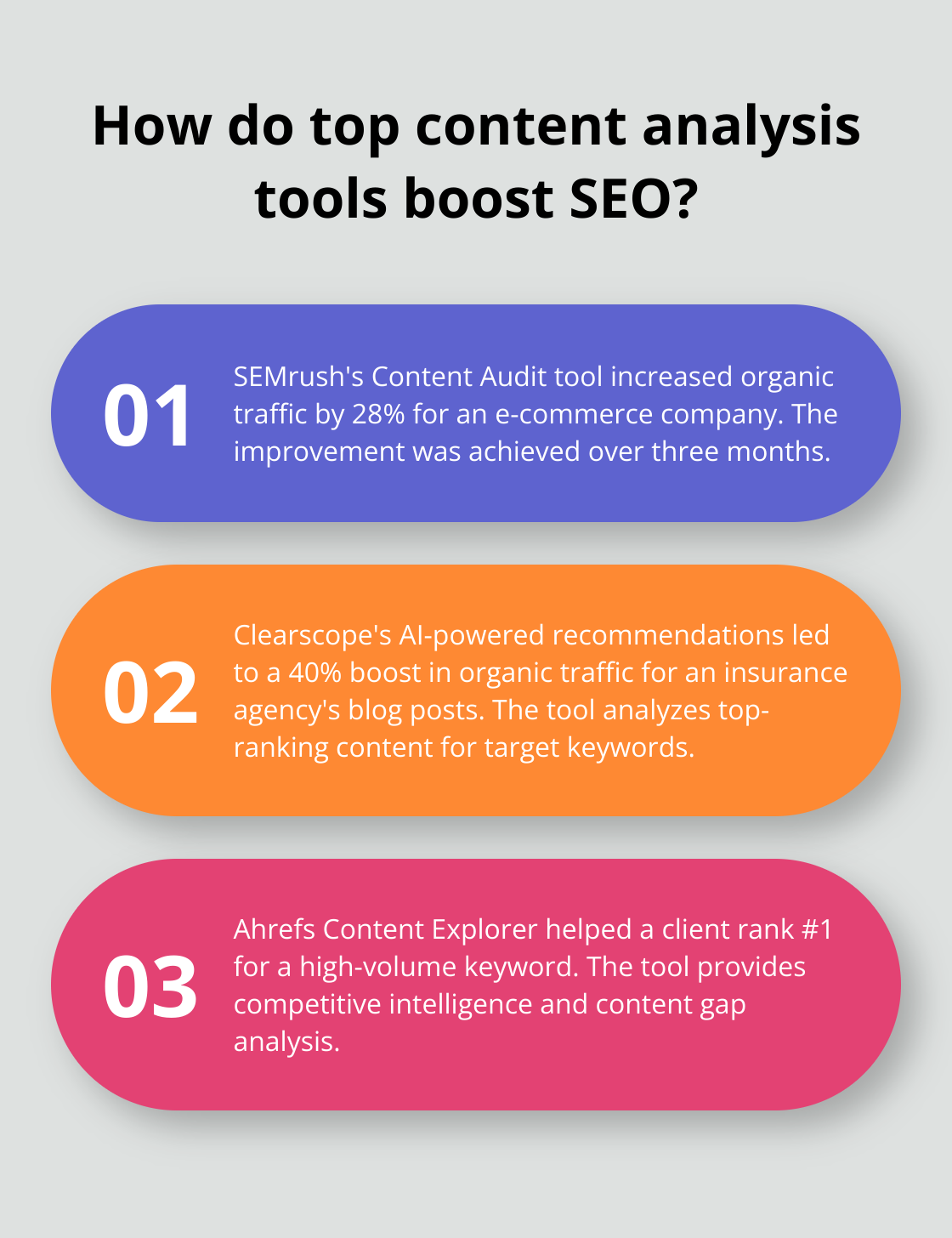
Clearscope excels in content creation and optimization. It uses AI to analyze top-ranking content for your target keywords, offering insights on word count, readability, and topic coverage. An insurance agency client experienced a 40% boost in organic traffic to their blog posts after incorporating Clearscope recommendations.
Ahrefs Content Explorer offers an all-in-one solution. It analyzes your content and provides competitive intelligence. This tool helped a client identify a content gap in their industry, leading to the creation of a resource that now ranks #1 for a high-volume keyword.
AI and Machine Learning in Action
The real power of these tools lies in their AI and machine learning capabilities. They don’t just count keywords; they understand context and user intent. MarketMuse, for example, uses AI to create content briefs that go beyond simple keyword suggestions. It analyzes the competitive landscape to identify subtopics and questions your content should address to be comprehensive.
Google’s Natural Language API (while not a standalone tool) can integrate into custom solutions. It uses machine learning to extract entities, analyze sentiment, and categorize content. This proves particularly useful for large-scale content audits.
Essential Features for Effective Analysis
When selecting a content analysis tool, look for these key features:
- Comprehensive keyword analysis: The tool should provide insights on keyword difficulty, search volume, and related terms.
- Content quality scoring: Evaluate factors like readability, engagement potential, and topical relevance.
- Competitive analysis: Benchmark your content against top-performing pages.
- Integration capabilities: Tools that integrate with your CMS or other marketing platforms can streamline your workflow.
- Customizable reports: Generate reports that focus on the metrics most relevant to your goals.
- Real-time suggestions: Some advanced tools offer real-time optimization suggestions as you write (a game-changer for content creators).
A combination of SEMrush for overall SEO strategy and Clearscope for content optimization provides a comprehensive solution for many insurance agency clients. This pairing consistently delivers results, with an average 35% increase in organic traffic for new clients within the first six months.
Now that we’ve explored the tools available for automated content analysis, let’s examine how to implement these insights into your SEO strategy effectively.
How to Implement Automated Content Analysis
Create a Systematic Workflow
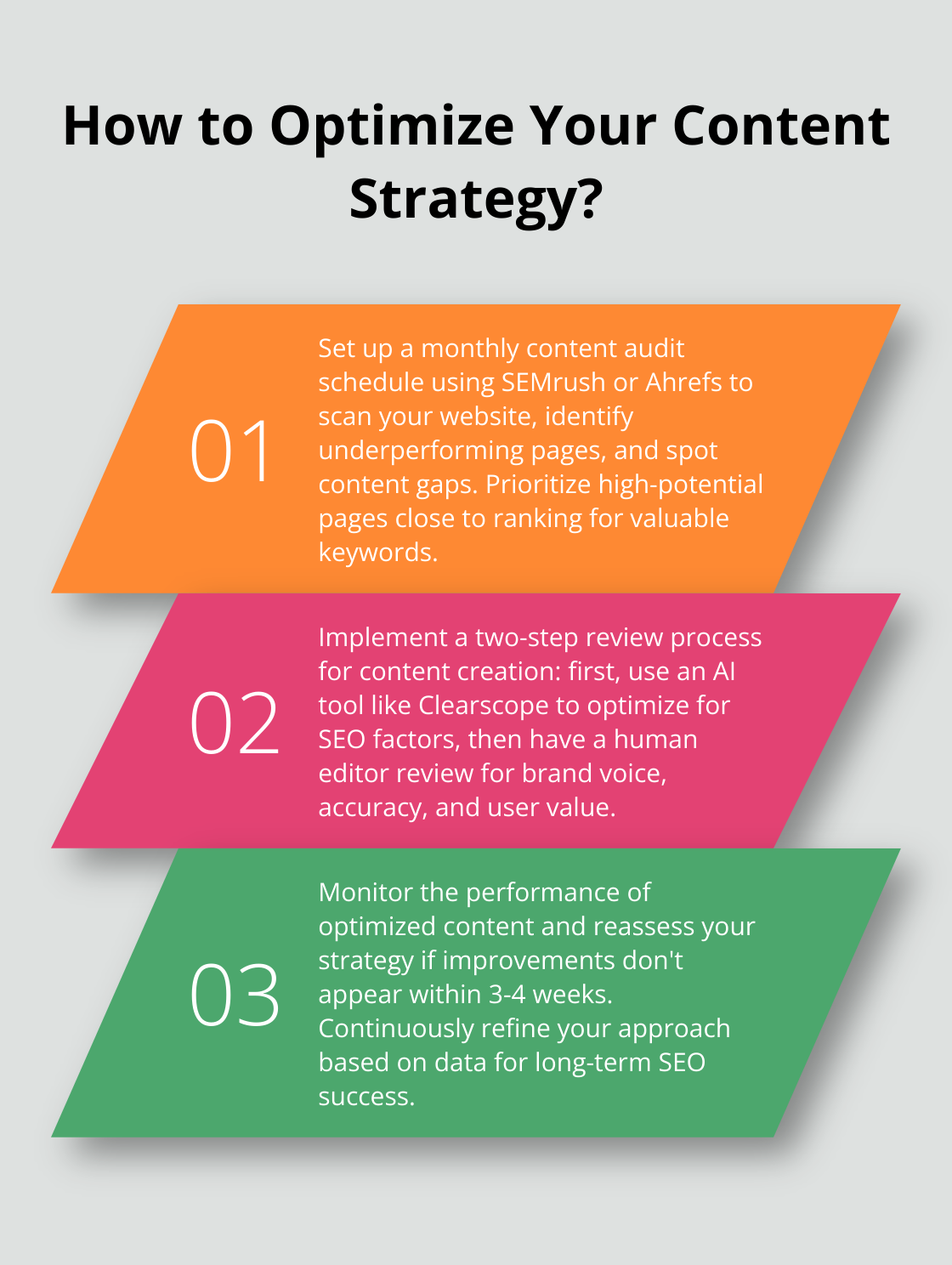
Start with a regular content audit schedule. Monthly audits work well for most insurance agencies. Use SEMrush or Ahrefs to scan your website, identify underperforming pages, and spot content gaps.
Prioritize your content. Focus on high-potential pages close to ranking for valuable keywords. For example, a home insurance page ranking on page two for a high-volume keyword is a prime optimization candidate.
Set up Google Alerts for significant changes in content performance. This allows quick reactions to algorithm updates or shifts in user behavior.
Turn Data into Action
Interpret analysis results effectively. Look for patterns in top-performing content. What do these pages share? They might have a certain word count, specific media types, or cover particular subtopics.
Pay attention to user engagement metrics. A high bounce rate might indicate a mismatch with user intent. Use tools like Clearscope to understand what top-ranking pages for your target keywords cover that you don’t.
Don’t limit your focus to keywords. Analyze content structure, readability scores, and internal linking. Some insurance agencies improve their organic traffic by optimizing their internal linking structure based on automated analysis insights.
Integrate Insights into Content Creation
Use analysis insights to create content briefs for new articles. Include target keywords, suggested word count, topics to cover, and types of media to include. This ensures optimization of every piece of content from the start.
Implement a two-step review process. First, use an AI tool (like Clearscope) to optimize for SEO factors. Then, have a human editor review for brand voice, accuracy, and user value. This balance of automation and human touch proves highly effective for many insurance agency clients.
Track the performance of your optimized content. If improvements don’t appear within 3-4 weeks, reassess and adjust your strategy. SEO requires an iterative process, and continuous refinement based on data is key to long-term success.
Leverage Advanced Tools
Utilize advanced features of content analysis tools. For instance, SEMrush’s Content Audit tool (a top choice in the industry) examines your website’s pages and provides actionable recommendations for improvement. A mid-sized e-commerce company saw a 28% increase in organic traffic after implementing SEMrush’s suggestions over three months.
Try AI-powered tools like MarketMuse to create comprehensive content briefs. These tools analyze the competitive landscape to identify subtopics and questions your content should address to be thorough.
Adapt and Refine Your Strategy
Monitor industry trends and algorithm updates. Adjust your content strategy accordingly. For example, if voice search becomes more prevalent in your industry, optimize your content for conversational queries.
Regularly review and update your content analysis process. As new tools and techniques emerge, incorporate them into your workflow to stay ahead of the competition.
Final Thoughts
Automated content analysis has revolutionized modern SEO strategies. It provides marketers with invaluable insights through advanced algorithms and machine learning. This technology enables rapid evaluation of vast amounts of web content, leading to data-driven decisions that boost organic traffic and lead generation.
The future of automated content analysis promises even more sophisticated advancements. We expect improvements in natural language processing to enhance understanding of context and user intent. The integration of AI-powered content creation tools with analysis platforms will streamline the optimization process, allowing real-time adjustments.
Tosten Marketing has witnessed the transformative power of automated content analysis for insurance agencies. Our approach combines cutting-edge technology with industry expertise to deliver measurable results. With services starting at $100 per month and a high client retention rate, we help insurance agencies thrive in the digital landscape.