
At Tosten Marketing, we know that crawling in SEO is a fundamental process for online visibility. It’s the first step search engines take to understand and index your website.
Without effective crawling, even the best content can remain hidden from potential visitors. In this post, we’ll explore what crawling is, why it matters, and how you can optimize your site for better crawling results.
How Search Engines Crawl Websites
At Tosten Marketing, we understand the importance of effective crawling for SEO success. Search engine crawling is the process where automated bots (often called spiders or crawlers) systematically browse the web to find and catalog web pages. These bots start with a list of known web addresses and follow links on those pages to discover new content.
The Mechanics of Web Crawling
When a search engine bot visits a website, it reads the HTML code and stores relevant information about the page’s content. This includes the text, images, videos, and other media files. The bot also looks for links to other pages, both within the same website and on external sites. These links are added to the bot’s list of pages to visit next, creating a continuous cycle of discovery.
Crawl Budget and Its Impact
Search engines allocate a specific amount of time and resources to crawl each website, known as the crawl budget. This budget depends on factors such as the site’s size, update frequency, and overall importance. For large websites or those with frequently changing content, optimizing the crawl budget is essential to ensure that the most important pages are crawled and indexed regularly.
From Crawling to Indexing
Once a page is crawled, the search engine processes the gathered information and adds it to its index. This massive database of web pages allows search engines to quickly return relevant results when users perform searches. However, not all crawled pages make it into the index. Search engines use complex algorithms to determine which pages are valuable enough to be included.
Optimizing for Better Crawling
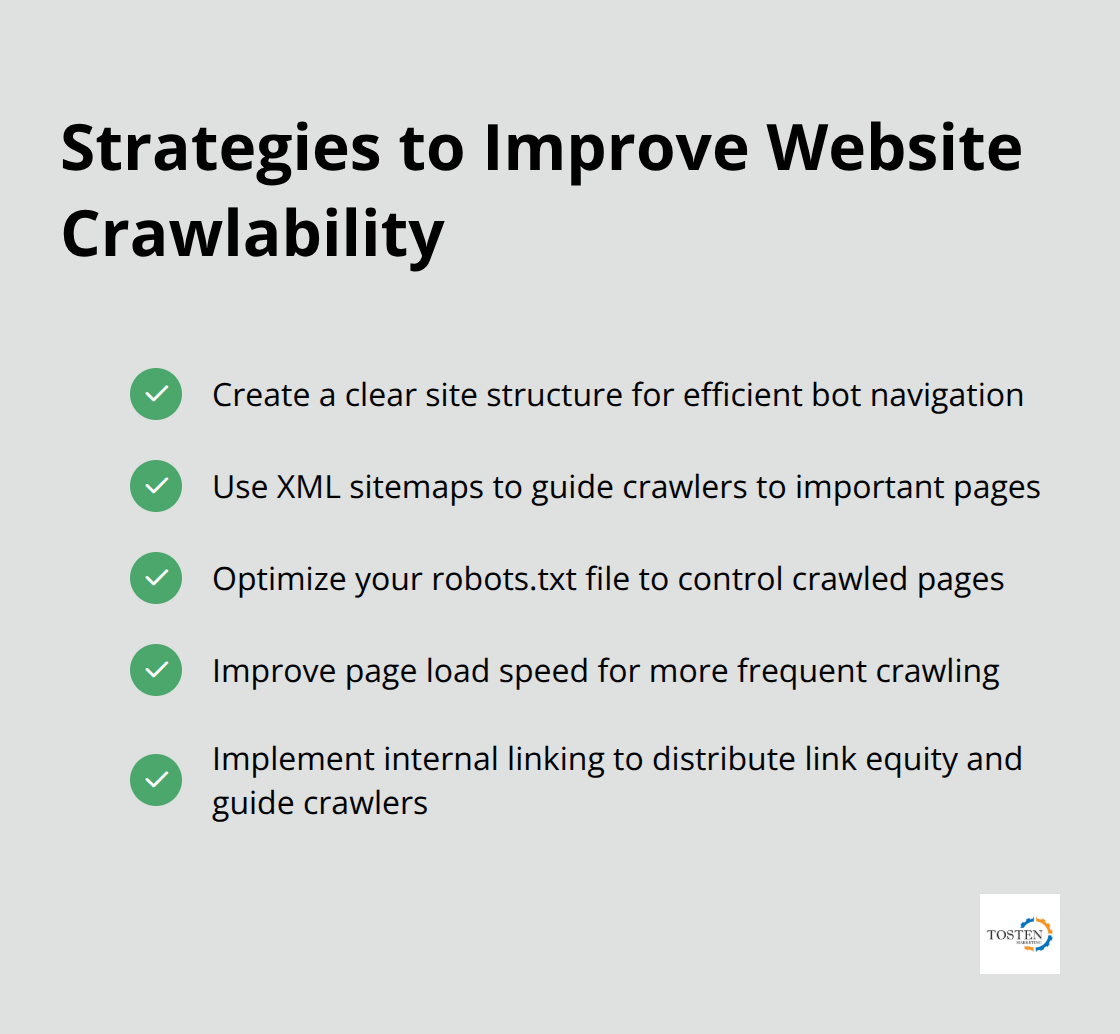
To improve your website’s crawlability, try these strategies:
Understanding how search engines crawl websites is the first step in optimizing your online presence. In the next section, we’ll explore the importance of crawling for SEO and its impact on your website’s visibility and rankings.
To ensure your website is technically sound and easily accessible to search engine bots, consider implementing a comprehensive technical SEO strategy. This will help improve your site’s crawlability and overall search performance.
Why Crawling Matters for Your SEO Success
The Direct Link Between Crawling and Search Rankings
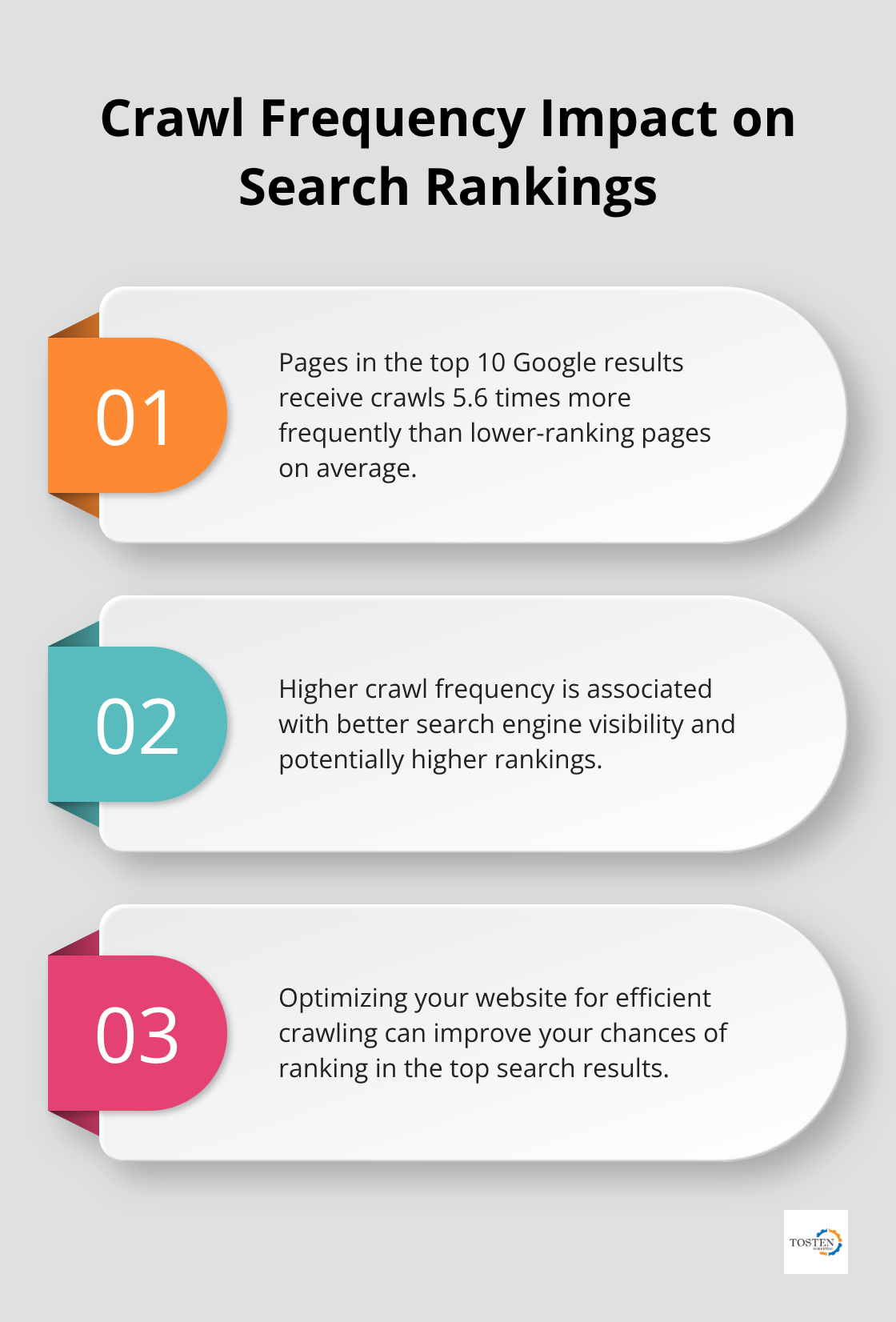
Effective crawling can make or break a website’s SEO performance. Crawling forms the foundation of search engine visibility, and its significance cannot be overstated. When search engines crawl your site frequently and thoroughly, they index your latest content quickly. This rapid indexing proves crucial for time-sensitive information, especially in competitive industries like insurance. A study by Ahrefs revealed that pages crawled more frequently tend to rank higher in search results. In fact, pages in the top 10 Google results receive crawls 5.6 times more frequently than lower-ranking pages (on average).
Crawling Frequency and Organic Traffic Growth
The frequency of crawling directly impacts your organic traffic potential. One eCommerce brand increased its organic revenue by more than 100% in just a few months after implementing a post-migration technical SEO audit. This occurs because search engines discover and index new or updated content faster, making it available to searchers sooner.
User Experience and Crawling Efficiency
Efficient crawling doesn’t just benefit search engines; it enhances user experience too. When search engines navigate your site easily, it often indicates that human visitors will have a smooth experience as well. Google’s Page Experience update in 2021 made it clear that user-friendly websites receive preferential treatment in rankings.
Optimizing Your Crawl Budget
Every website has a crawl budget – the number of pages a search engine will crawl in a given timeframe. SEMrush data shows that websites that optimize their crawl budget see a 23% increase in indexed pages on average. To maximize your crawl budget:
- Prioritize your most important pages
- Remove or noindex low-value content
- Fix broken links and redirect chains
- Improve site speed (pages that load faster get crawled more often)
These aspects not only improve crawling but also set the stage for better overall SEO performance. In the competitive world of insurance marketing, every edge in search visibility counts.
The Role of Technical SEO in Crawling
Technical SEO plays a vital role in ensuring effective crawling. It involves optimizing your website’s infrastructure to make it easier for search engines to access, crawl, and index your content. This includes:
- Implementing a clear site structure
- Using XML sitemaps (to guide crawlers to important pages)
- Optimizing robots.txt files
- Improving page load speed
- Implementing proper internal linking
Companies like Tosten Marketing specialize in technical SEO services that can significantly enhance your website’s crawlability and overall search performance.
The next section will explore specific strategies to optimize your website for better crawling and indexing, ensuring that search engines – and potential clients – can easily find and access your valuable content.
How to Optimize Your Website for Better Crawling
Create a Clear Site Structure
A logical site structure improves crawling efficiency. Organize your content into well-defined categories and use a flat hierarchy. Try to keep your pages within three clicks from the homepage. This approach helps search engines understand your content better and enhances user experience.
An insurance agency might structure their site like this:
Home > Auto Insurance > Comprehensive Coverage
This simple structure allows users and search engines to find relevant information quickly.
Use XML Sitemaps and Robots.txt Effectively
XML sitemaps guide search engines to your most important pages. Including an XML sitemap can help improve crawl efficiency because it ensures Google can access every link from at least one place. Create and update your XML sitemap regularly, including all your critical pages.
Your robots.txt file directs search engines away from unimportant pages, focusing their attention on valuable content. You might want to block crawlers from accessing your thank-you pages or administrative areas.
Improve Page Load Speed
Page speed affects crawling efficiency and user experience. Google’s research shows that as page load time increases from 1 to 3 seconds, the probability of bounce increases by 32%. To improve your page speed:
- Optimize images (compress them and use appropriate formats)
- Minify CSS, JavaScript, and HTML
- Leverage browser caching
- Use a Content Delivery Network (CDN)
Tools like Google’s PageSpeed Insights can help you identify specific areas for improvement.
Prioritize Mobile-Friendliness
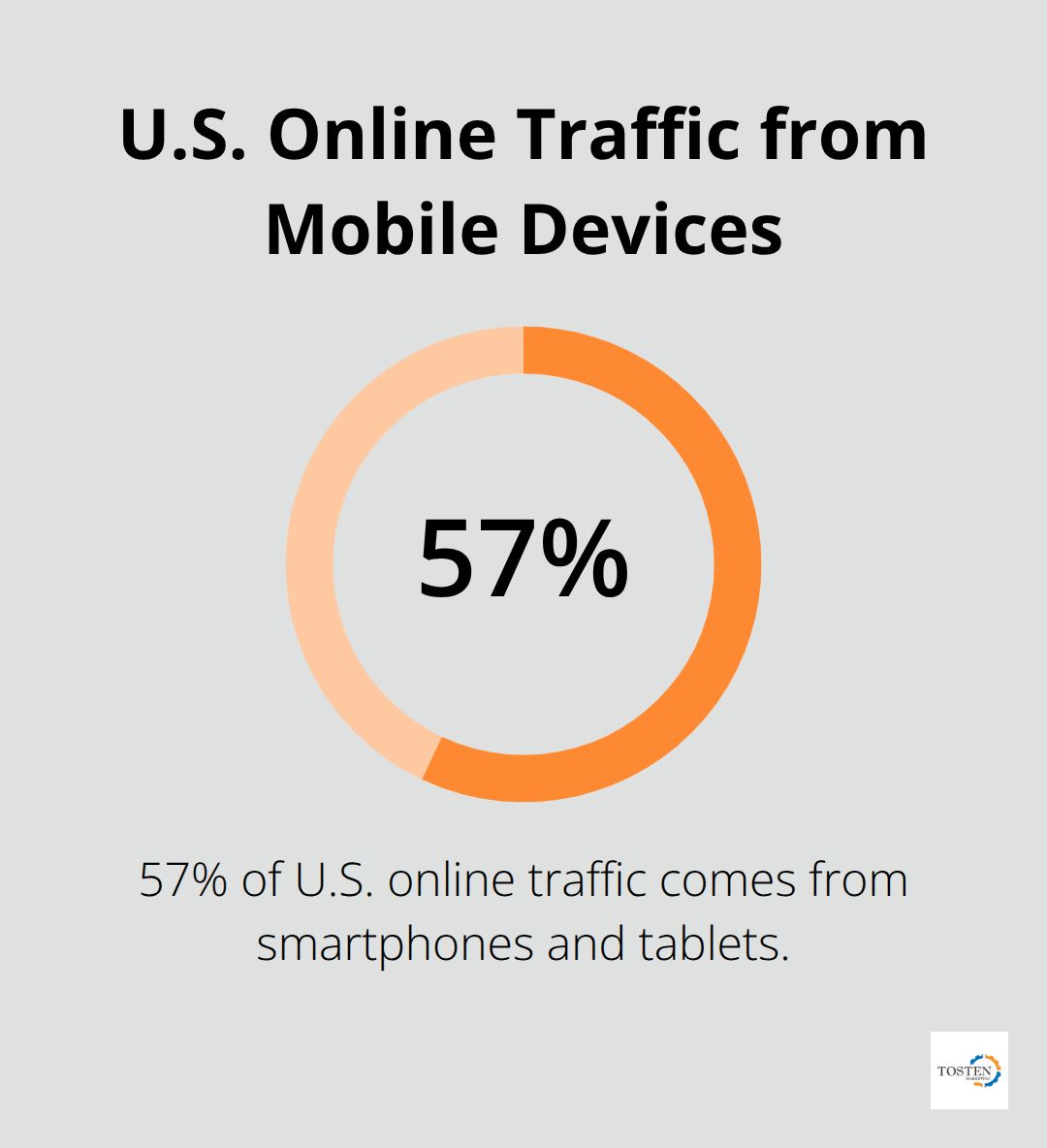
Google’s mobile-first indexing makes a mobile-friendly website essential. A study by BrightEdge found that 57% of all U.S. online traffic now comes from smartphones and tablets. Ensure your website provides a seamless experience across all devices.
Test your site’s mobile-friendliness using Google’s Mobile-Friendly Test tool and address any issues it identifies. Pay special attention to text size, button placement, and overall layout on smaller screens.
Implement Proper Internal Linking
Internal linking helps distribute link equity and guides crawlers through your site. It also helps users navigate your content more easily. Create a strategic internal linking structure that connects related pages and highlights your most important content.
For example, link from general insurance pages to specific policy types, or from blog posts to relevant service pages. This practice not only improves crawlability but also enhances the overall user experience on your site.
By implementing these strategies, you can significantly boost your online presence and improve your website’s crawlability, leading to better search engine rankings and increased organic traffic.
Final Thoughts
Crawling in SEO forms the foundation of online visibility. It allows search engines to discover, understand, and index your website’s content. Without effective crawling, valuable information remains hidden from potential visitors. The digital landscape evolves constantly, and search engines regularly update their algorithms. This necessitates ongoing optimization to maintain and improve your website’s performance in search results.
Search engines will likely become more sophisticated in how they crawl and interpret web content. We expect increased emphasis on understanding context and user intent, as well as improved capabilities in crawling JavaScript-heavy websites and dynamic content. As these changes occur, adapting your SEO strategies will help you maintain a competitive edge.
Effective crawling is just the beginning of a successful SEO strategy. Tosten Marketing specializes in helping insurance agencies boost their online visibility. We offer tailored digital marketing solutions that drive results (based on our experience in the industry). Our team can help you navigate the complexities of SEO and improve your website’s crawlability, leading to better rankings and increased organic traffic.