
Search engines drive 53% of all website traffic, making SEO optimization essential for business growth. Most websites lose potential customers due to poor search visibility and technical issues.
We at Tosten Marketing have identified the key strategies that consistently improve search rankings. Learning how to improve SEO requires focusing on technical foundations, content quality, and authority building.
Technical SEO Fundamentals
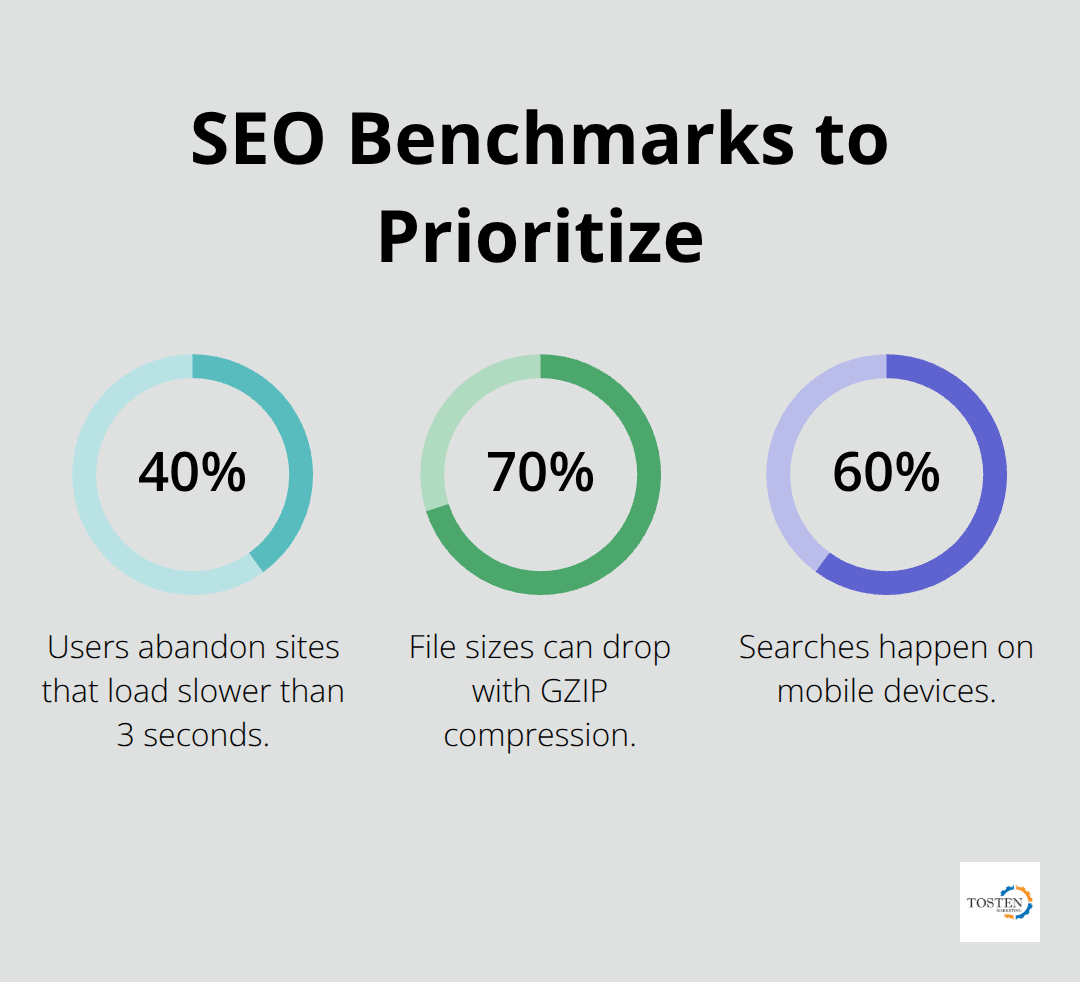
Website speed directly impacts 40% of users who abandon sites that load slower than 3 seconds, according to Google research. Core Web Vitals is a set of metrics that measure real-world user experience for loading performance, interactivity, and visual stability of the page. Google PageSpeed Insights reveals specific optimization opportunities, while tools like GTmetrix provide detailed performance breakdowns.
Speed Optimization That Actually Works
Compress images with WebP format, minify CSS and JavaScript files, and implement browser caching to achieve load times under 2 seconds. Remove unused plugins and themes that slow loading times by 30-50%. Enable GZIP compression to reduce file sizes by 70%, and use content delivery networks like Cloudflare to serve content from locations closer to users.
Database optimization through regular cleanups and query optimization reduces server response times significantly. These technical improvements directly correlate with better search rankings and higher conversion rates.
Mobile Performance Standards
Mobile responsiveness affects 60% of searches that happen on mobile devices, making responsive design non-negotiable for rankings. Mobile-first indexing means Google primarily uses mobile versions for ranking decisions. Test mobile usability through Google Search Console to identify specific issues that affect user experience.
Site Structure and URL Optimization
Clean URL structures use hyphens instead of underscores, implement logical hierarchies, and create XML sitemaps that help search engines crawl efficiently. Breadcrumb navigation and internal links with descriptive anchor text strengthen site architecture while they improve user navigation paths.
Proper site structure creates the foundation for content strategy success. Your technical foundation must support the high-quality content and keyword optimization strategies that drive organic traffic growth.
Content Strategy for Better Rankings
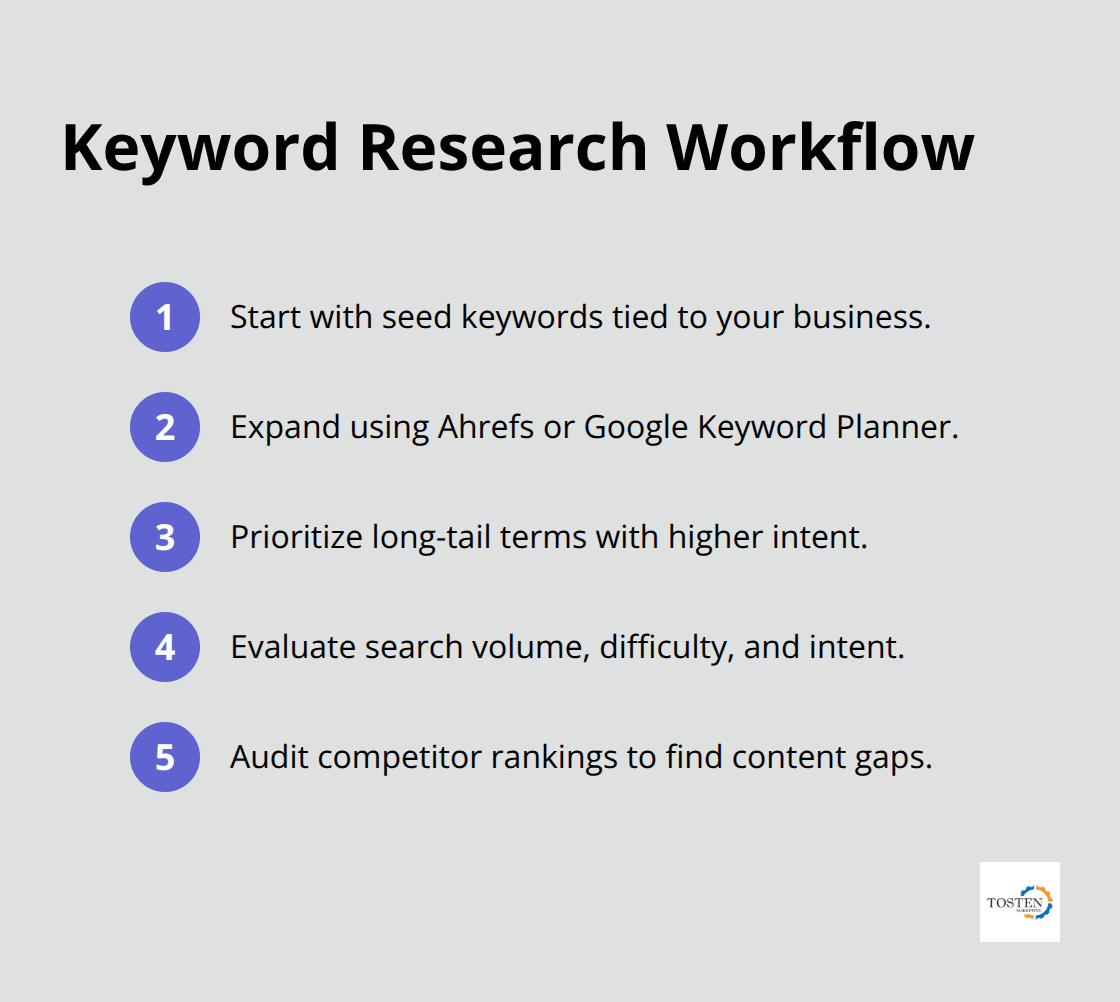
Keyword research forms the backbone of content strategy, yet many webpages receive no organic traffic from Google due to poor keyword targeting. Start with seed keywords related to your business, then use tools like Ahrefs Keywords Explorer or Google Keyword Planner to expand your list. Focus on long-tail keywords with lower competition but higher intent – these often convert better than broad terms.
Analyze search volume, keyword difficulty, and user intent to prioritize opportunities. Check what keywords your competitors rank for with tools like SEMrush or Ahrefs Site Explorer to identify content gaps you can fill.
Target Audience Research That Works
Search intent beats keyword volume every time. Transactional keywords like “buy insurance quotes” indicate purchase readiness, while informational queries like “how does car insurance work” target education needs. Monitor industry forums, social media groups, and customer service inquiries to discover the exact language your audience uses.
Google Search Console shows which queries already bring traffic to your site and reveals optimization opportunities you might miss otherwise. This data helps you understand what your audience actually searches for (not what you think they search for).
Content Creation Standards
Create comprehensive content that addresses multiple related keywords simultaneously through topic clustering. Each piece should target a primary keyword while naturally incorporating 3-5 related terms. Write content that exceeds competitor length while maintaining quality – longer content typically ranks higher.
Use heading tags strategically with H1 for main topics and H2-H3 for subtopics. Incorporate keywords naturally without forcing them into awkward positions.
Internal Link Architecture
Internal links with descriptive anchor text connect related content and distribute page authority throughout your site. This helps search engines understand your content relationships and improves user navigation paths. Link to relevant pages within your site using specific anchor text rather than generic phrases like “click here.”
Strategic internal links create content clusters that boost topical authority. These connections prepare your site architecture for the external authority signals that come through quality backlink acquisition.
Link Building and Authority Development
Backlinks from authoritative websites remain the strongest ranking factor, with websites that earn quality links seeing higher search visibility. Focus on creating linkable assets like original research, industry surveys, or comprehensive guides that provide unique value to your audience.
Strategic Link Acquisition Methods
The Skyscraper technique works when you identify popular content in your niche, create superior versions, then reach out to sites that link to inferior versions. Guest posts on relevant industry publications generate quality backlinks while they build thought leadership, but avoid low-quality guest post networks that Google penalizes.
Create content that naturally attracts links through data-driven insights or industry analysis. Original research studies and comprehensive resource guides earn links because other sites reference your findings and recommendations.
Local SEO Optimization
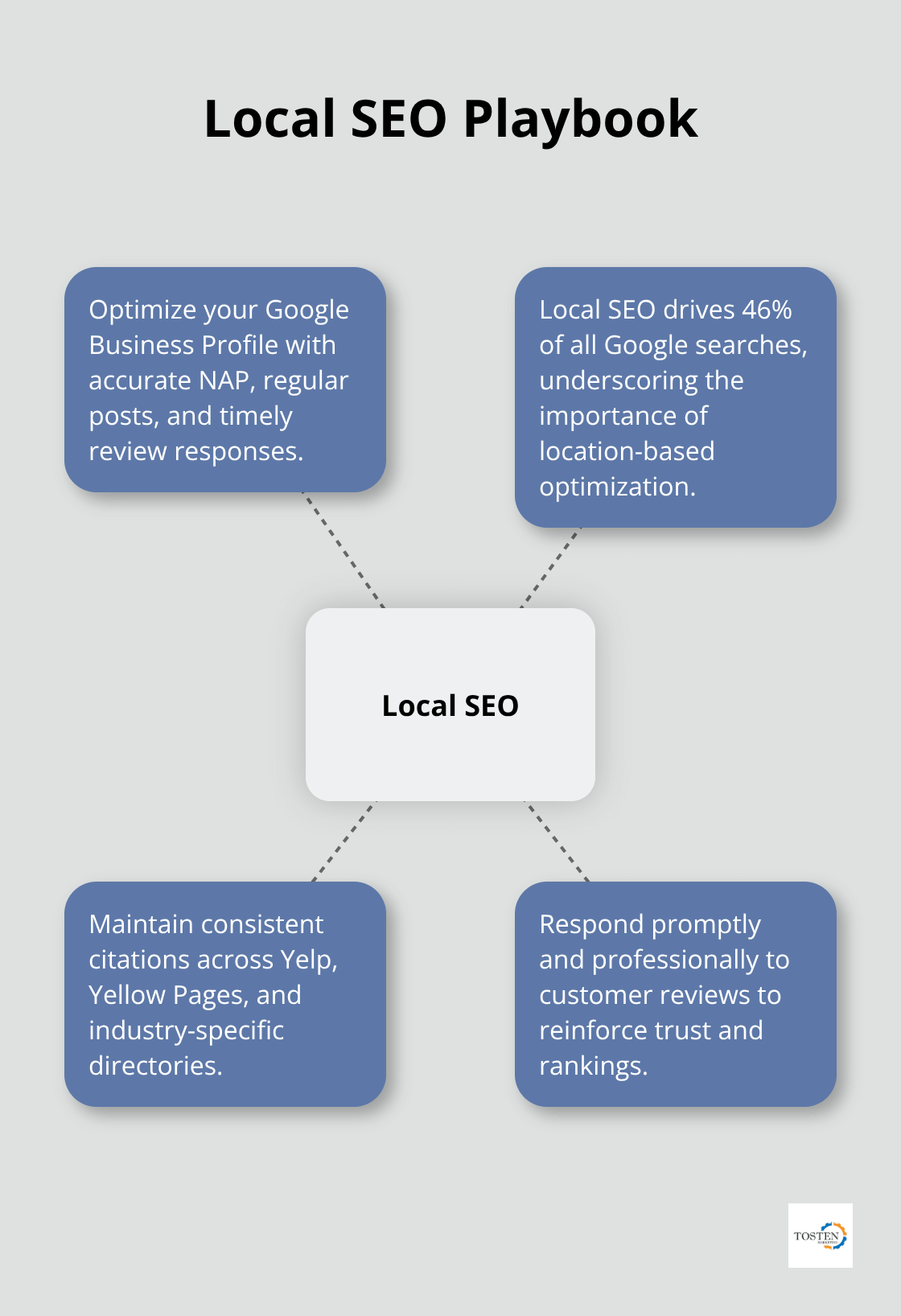
Local businesses must optimize their Google Business Profile completely with accurate NAP information (name, address, phone number), regular posts, and customer review responses to dominate local search results. Local SEO drives 46% of all Google searches, making location-based optimization essential for service businesses.
Consistent citations across directories like Yelp, Yellow Pages, and industry-specific platforms build local authority signals. Respond to customer reviews promptly and professionally to maintain positive reputation signals that influence local rankings.
Authority Metrics and Monitoring
Domain authority grows through sustained link acquisition from diverse, relevant sources combined with technical excellence and content quality. Monitor your backlink profile monthly with tools like Ahrefs or SEMrush to identify toxic links that need disavowal and track authority metrics like Domain Rating and Page Authority scores.
Quality beats quantity in link acquisition – one link from a high-authority industry publication provides more value than dozens of low-quality directory links. Focus on earning links from websites that your target audience actually visits and trusts.
Final Thoughts
SEO success demands consistent execution across technical foundations, content strategy, and authority development. The strategies we outlined work when you implement them systematically over months, not weeks. Google updates its algorithm 500-600 times annually, which makes adaptability essential for sustained rankings.
You should track progress through Google Analytics 4 and Search Console to monitor organic traffic growth, keyword rankings, and user behavior patterns. Set monthly benchmarks for page speed improvements, content publication schedules, and backlink acquisition targets. These metrics reveal which tactics drive actual business results (versus vanity metrics that look impressive but don’t generate revenue).
Understanding how to improve SEO requires sustained effort rather than quick fixes that promise overnight results. Focus on valuable content that serves your audience while you maintain technical excellence and earn quality backlinks from relevant sources. Tosten Marketing specializes in comprehensive SEO strategies that combine technical optimization with content creation and local search programs for long-term business growth.