

SEO can be a game-changer for small businesses, but hiring an expert isn’t always in the budget. That’s where DIY SEO marketing comes in.
At Tosten Marketing, we’ve seen firsthand how small business owners can boost their online visibility with some simple, yet effective strategies.
In this post, we’ll share practical tips to help you improve your search engine rankings, attract more local customers, and grow your business online – all without breaking the bank.
How to Optimize Your Website for Search Engines
On-page SEO forms the foundation of any successful online marketing strategy. Small businesses can improve their search engine rankings through simple yet effective on-page optimizations. Here are some practical tips to get you started:
Craft Compelling Title Tags and Meta Descriptions
Your title tag and meta description are the first things potential customers see in search results. Make them count! Keep your title tags under 60 characters and include your primary keyword. For meta descriptions, try to write a compelling summary of your page content in 150-160 characters.
For example, if you’re an insurance agency in Chicago, your homepage title tag could be: “Chicago Insurance Agency | Auto, Home & Life Insurance”. Your meta description might read: “Find reliable insurance in Chicago. Our agency offers competitive rates on auto, home, and life insurance. Get a free quote today!”
Create High-Quality, Relevant Content
Search engines love fresh, valuable content. Update your website regularly with informative blog posts, case studies, or industry news. Focus on topics your customers care about and include relevant keywords naturally throughout your content.
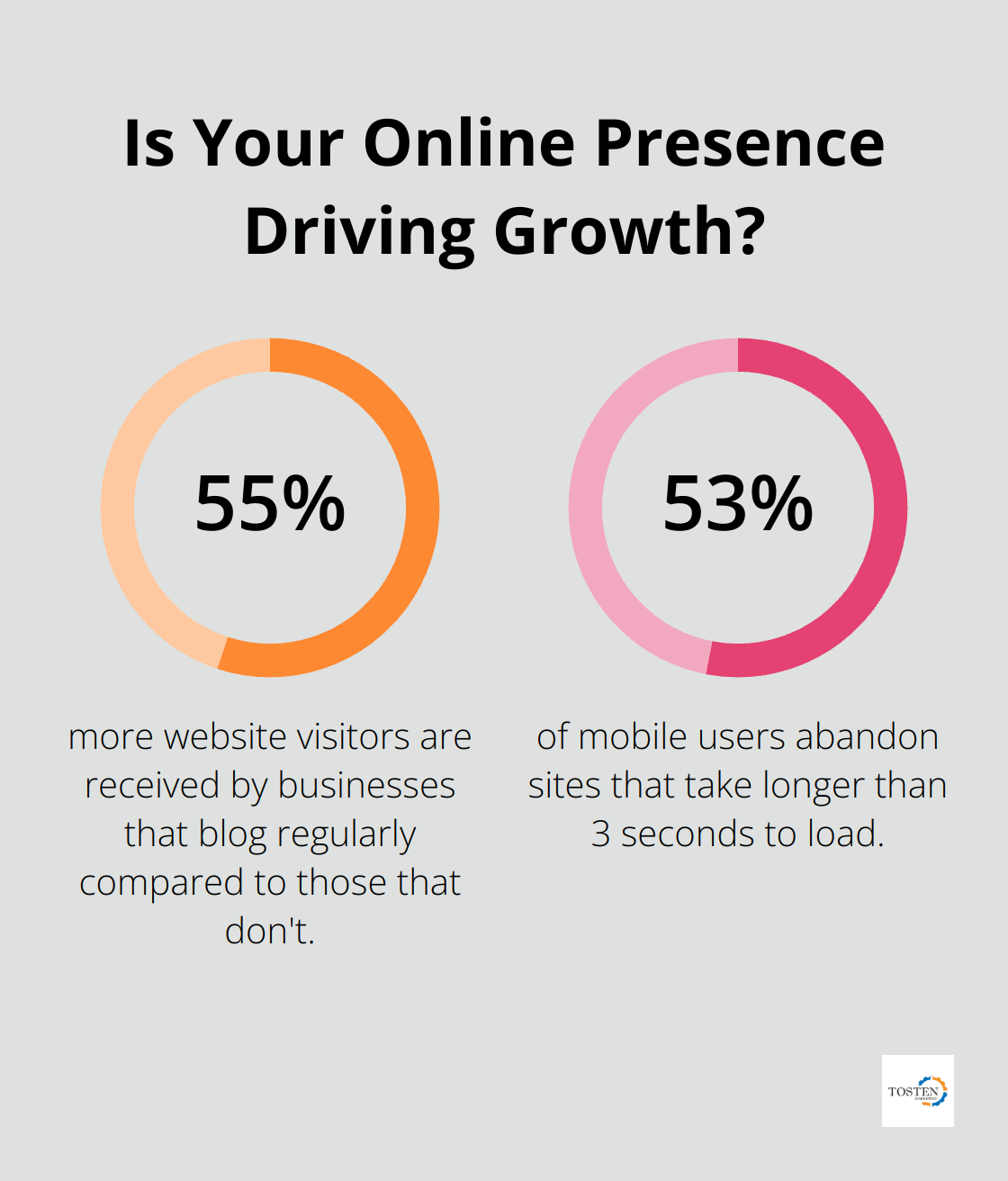
A study by HubSpot found that businesses that blog regularly receive 55% more website visitors than those that don’t. If you’re not already blogging, now’s the time to start!
Speed Up Your Website
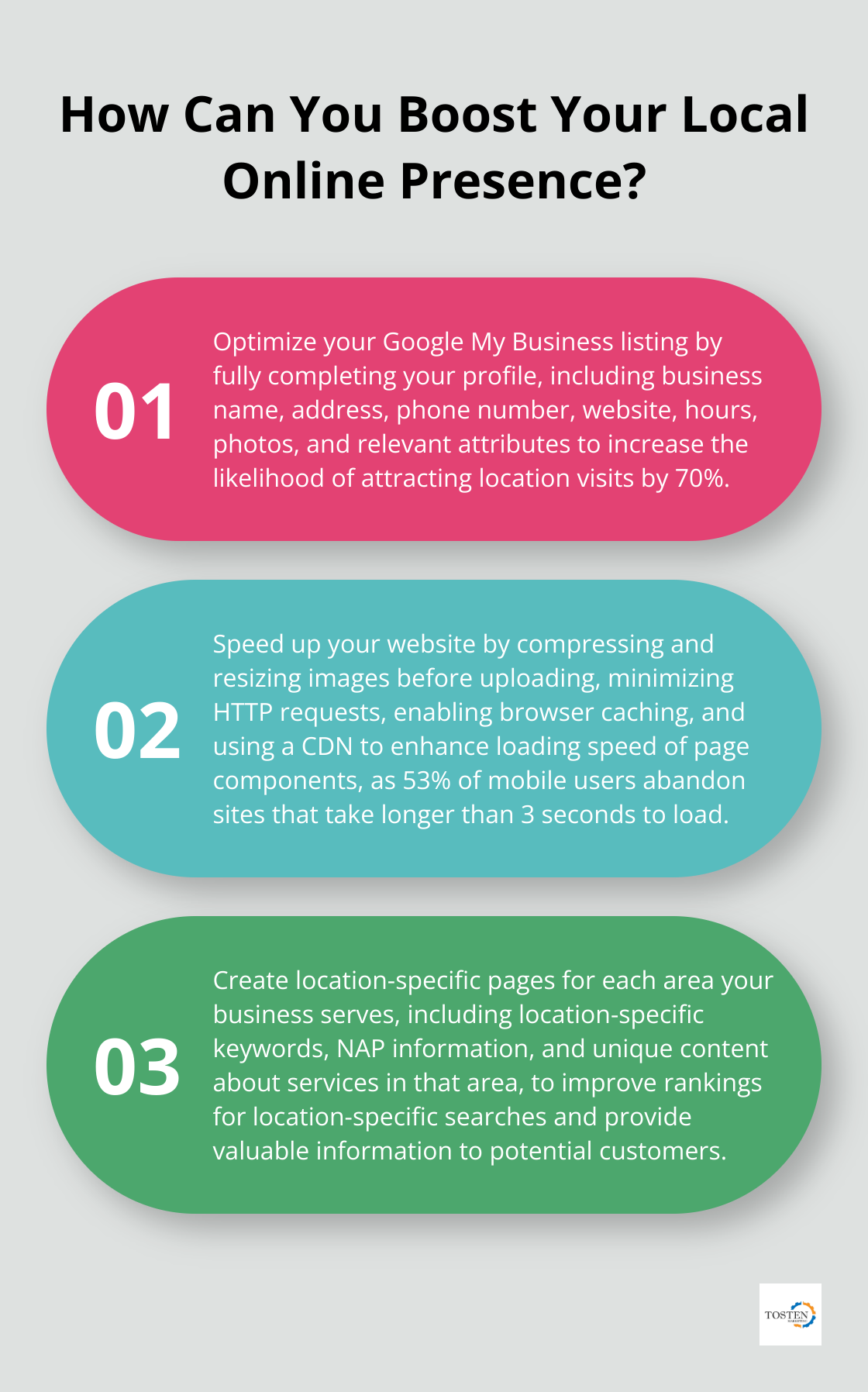
Website speed is essential for both user experience and SEO. Google reports that 53% of mobile users abandon sites that take longer than 3 seconds to load. Use Google’s PageSpeed Insights tool to check your site’s speed and get specific recommendations for improvement.
Some quick wins for speeding up your site include:
- Optimize images (compress and resize before uploading)
- Minimize HTTP requests
- Enable browser caching
- Use a CDN to assist in caching page components such as images and videos to enhance their loading speed
Implement a Clear Header Structure
Proper use of header tags (H1, H2, H3) helps search engines understand your content’s structure and improves readability for users. Use only one H1 tag per page, typically for your main title. Use H2 tags for main sections and H3 tags for subsections.
For instance, on a page about auto insurance, your structure might look like this:
H1: Comprehensive Auto Insurance Coverage
H2: Types of Auto Insurance We Offer
H3: Liability Coverage
H3: Collision Coverage
H3: Comprehensive Coverage
H2: Factors That Affect Your Auto Insurance Rates
H3: Driving Record
H3: Vehicle Type
H3: Location
On-page SEO requires ongoing effort. Review and update your website regularly to ensure it continues to meet both user needs and search engine requirements. With consistent work, you’ll see improvements in your search rankings and online visibility.
Now that we’ve covered on-page SEO essentials, let’s move on to local SEO strategies that can help boost your visibility in your specific geographic area.
How to Dominate Local Search Results
Local SEO empowers small businesses to attract nearby customers. Optimizing your online presence for local search increases your visibility to potential customers in your area.
Optimize Your Google My Business Listing
Your Google My Business (GMB) profile is essential for local SEO success. Claim and verify your listing, then complete it fully. Include your business name, address, phone number, website, business hours, and photos. Select the most accurate category for your business and add relevant attributes.
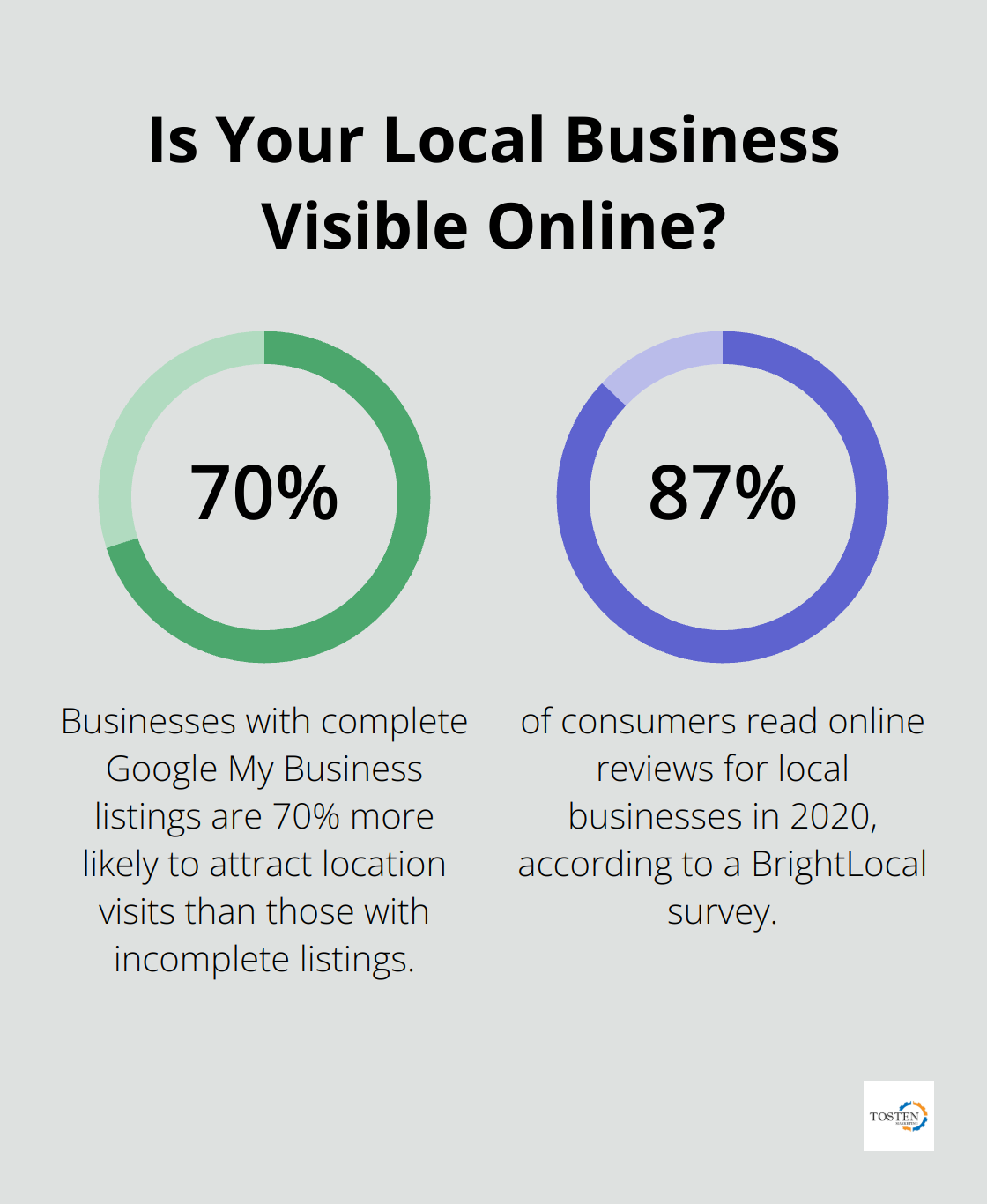
A BrightLocal study found that businesses with complete GMB listings are 70% more likely to attract location visits than those with incomplete listings. Update your information regularly and post updates about your business (e.g., special offers or events).
Build a Strong Citation Network
Citations are mentions of your business name, address, and phone number (NAP) on other websites. Consistent citations across the web help search engines verify your business information and improve your local search rankings.
Submit your business to major directories like Yelp, Yellow Pages, and BBB. Then, focus on industry-specific and local directories. (For example, a restaurant in New York might want to be listed on NYCgo.com or Zagat.)
Leverage Customer Reviews
Reviews significantly impact local SEO. A BrightLocal survey revealed that 87% of consumers read online reviews for local businesses in 2020. Encourage satisfied customers to leave reviews on your GMB profile and other relevant platforms.
Respond to all reviews, both positive and negative, professionally. This demonstrates that you value customer feedback and actively engage with your audience. A steady stream of positive reviews can improve your local search rankings and attract more customers.
Create Location-Specific Content
If your business serves multiple locations, create dedicated pages for each area. These pages should include location-specific keywords, your NAP information, and unique content about your services in that area.
(For instance, a plumber serving multiple neighborhoods in Chicago might create pages like “Emergency Plumbing Services in Lincoln Park” or “Bathroom Remodeling in Wicker Park.”) This strategy helps you rank for location-specific searches and provides valuable information to potential customers in each area.
Now that you’ve mastered local SEO, it’s time to expand your online presence further. The next chapter will explore effective link building tactics that can boost your website’s authority and improve your overall search engine rankings.
How Small Businesses Can Build Quality Backlinks
Create Link-Worthy Content
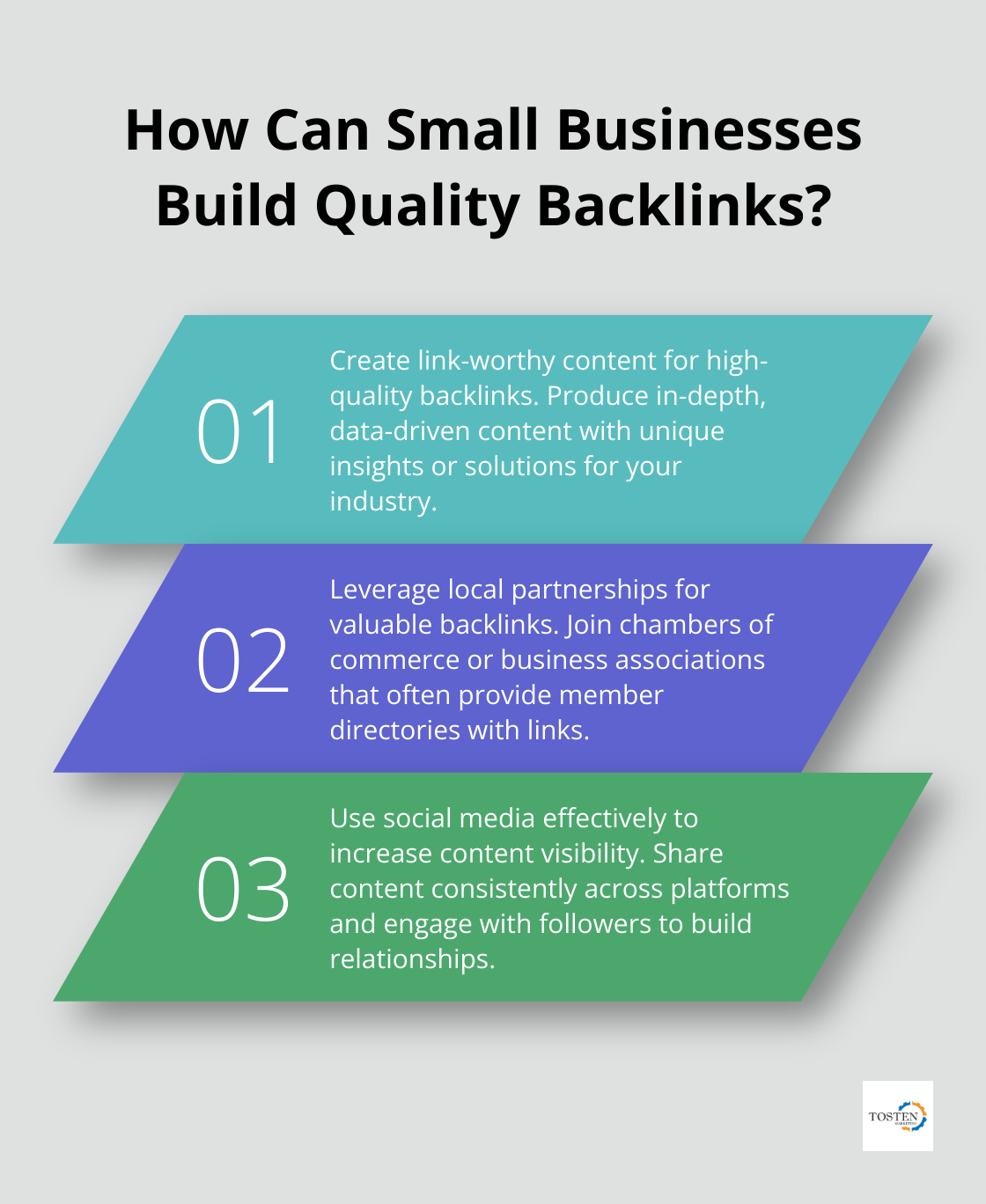
The foundation of successful link building starts with content that others want to reference. Create valuable content consistently and be active on social channels to aim for high-quality backlinks. Produce in-depth, data-driven content that provides unique insights or solves specific problems in your industry. For example, a local real estate agent might create a comprehensive guide on housing market trends in their area, complete with statistics and expert analysis.
Leverage Local Partnerships
Small businesses can obtain valuable backlinks through partnerships with other local organizations. Sponsor a local event or charity and request a link on their website. Join your local chamber of commerce or business association (which often provide member directories with links).
A local bakery could partner with a nearby coffee shop to create a special promotion. Both businesses could then link to each other’s websites when promoting the collaboration online.
Use Social Media Effectively
Social media links can drive traffic and increase your content’s visibility, potentially leading to natural backlinks. Share your content consistently across platforms where your audience is most active.
Don’t just share links; engage with your followers, participate in industry discussions, and build relationships that can lead to linking opportunities.
Contribute Guest Posts to Industry Blogs
Guest posting remains an effective way to build high-quality backlinks while establishing your expertise. Identify reputable blogs in your industry that accept guest contributions. Pitch unique, valuable content ideas that align with their audience’s interests.
When guest posting, focus on providing genuine value rather than just trying to get a link. This approach will lead to more opportunities and stronger relationships in your industry.
Link building requires patience and consistency. Focus on creating value and building genuine relationships, and the links will follow naturally. As you implement these tactics, you’ll see your website’s authority grow, leading to better search rankings and increased visibility for your small business.
Final Thoughts
DIY SEO marketing empowers small business owners to enhance their online presence without substantial financial investment. On-page SEO, local search strategies, and quality backlink building form the foundation of effective SEO efforts. These tactics will improve your website’s visibility and attract more customers over time.
SEO demands consistent effort and patience, as results take time to materialize. You will observe gradual improvements in search rankings and organic traffic with persistent work. We at Tosten Marketing offer specialized services for insurance agencies to boost their online visibility through custom-built websites and tailored digital marketing strategies.
Your commitment to SEO will yield increased traffic, leads, and customers for your small business. Every step you take brings you closer to improved online visibility and business growth. Stay dedicated to your SEO journey, and you will reap the rewards in the long run.